

Open-source drivers add HDMI, Wi‑Fi, and print support

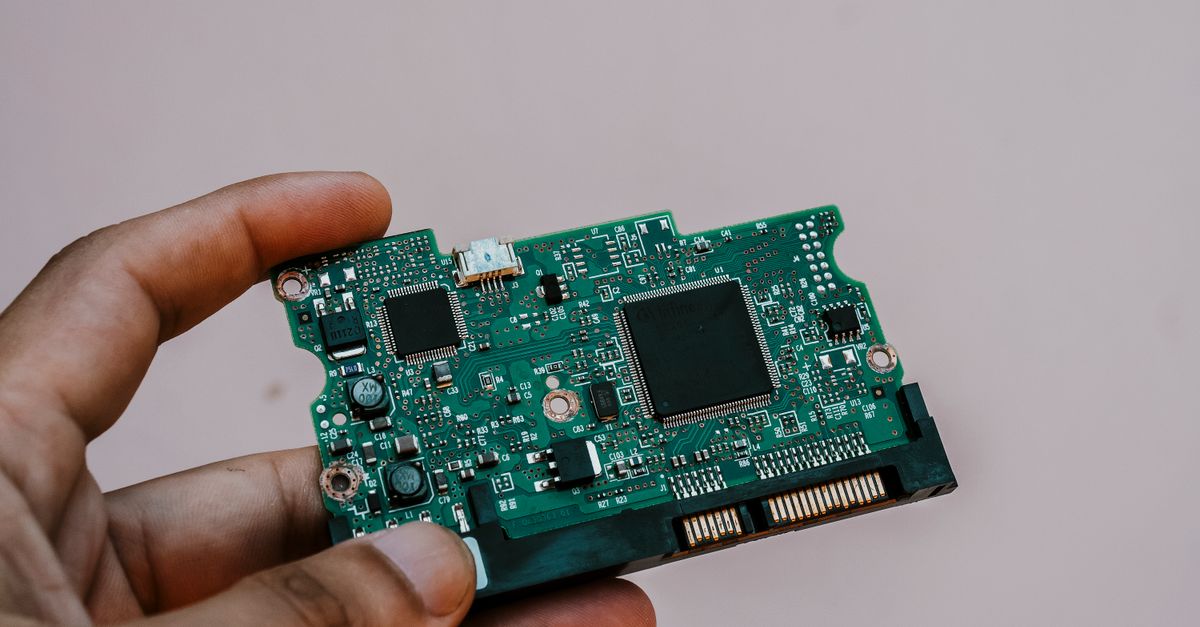
Photo by Arturo Añez. on Pexels
Linux gains a native driver for Silicon Motion’s SM750 GPU
A community maintainer released a fully open-source HDMI framebuffer driver for the SM750 graphics chip. The code lives at https://github.com/KodeMunkie/sm750hdmifb and attracted 110 up‑votes on Hacker News. The driver implements the basic mode‑setting and framebuffer interfaces required to drive an HDMI monitor directly from the GPU. It bypasses the proprietary binary blobs that have historically limited Linux support for this low‑cost chip.
The repository includes a Makefile, a kernel module, and a short README that explains how to compile the driver against the current kernel tree. No external firmware is needed; the driver talks to the chip over the standard PCIe registers documented in the SM750 datasheet. Early testers report stable output at 1080p60 on a range of cheap HDMI panels. The project does not claim to support 4K or advanced power‑saving features, but it provides a functional baseline for developers who need a reliable video output on embedded devices.
Driverless printing for legacy hardware
UoWPrint ships as a plug‑and‑play print server that turns USB‑only printers into networked devices without installing any vendor drivers. The device runs Debian 12 on a single‑board computer, presents a web UI for Wi‑Fi or Ethernet configuration, and advertises itself via AirPrint and Mopria. Compatibility spans Windows, macOS, Linux, Android, and iOS, including Apple Silicon Macs (M1‑M5) and Windows on Qualcomm Snapdragon.
The project’s HN post earned 188 points and a long comment thread that highlights its focus on e‑waste reduction. Older laser models from 2004‑2010, which many users consider more reliable than modern consumer printers, work out of the box. HP devices show the best results, while Samsung and Xerox are also solid. Canon support varies by generation. The server does not expose any internet‑facing services, stores no telemetry, and blocks inbound traffic with a default firewall. IPv6 is enabled, and the firmware is fully open‑source, allowing enthusiasts to audit or extend the code.
An open‑source SDR Wi‑Fi chip design
Openwifi presents the first full‑stack, open‑source Wi‑Fi implementation that runs on a software‑defined radio platform. The design targets Xilinx Zynq SoCs paired with an AD9361 RF front‑end and is released under AGPL‑v3. It implements 802.11a/g/n on both the PHY and MAC layers, conforming to the Linux mac80211 framework. The project supplies a Linux driver that registers a virtual Wi‑Fi device, making the SDR appear identical to a commercial chip from the kernel’s perspective.
The reference implementation includes DMA handling, register maps, low‑MAC logic, and a user‑space toolchain that mirrors the standard ifconfig and iwconfig commands. A live demo showed an AP on channel 44 communicating with a TL‑WDN4200 N900 USB adapter, achieving throughput comparable to low‑end commodity adapters in iperf tests. Because the design is open, researchers can modify PHY parameters, experiment with non‑standard modulation schemes, or embed custom security extensions without reverse‑engineering a closed‑source chipset.
Privacy‑first AI platform runs locally
Nosia delivers a self‑hosted AI service that runs inference models on the user’s own hardware while exposing an OpenAI‑compatible API. The platform bundles a Docker‑based installer that supports macOS, Debian, Ubuntu, and Windows. By default it loads the granite‑embedding‑multilingual model for document vectorization, but any Docker‑available completion model can be swapped via the LLM_MODEL environment variable.
The key differentiator is the Model Context Protocol (MCP), an open specification that lets the AI call external tools, services, or data sources during a conversation. MCP servers appear in the web UI under a catalog of pre‑configured integrations, and users can add custom endpoints through a simple configuration file. Nosia validates required environment variables at startup, aborting with clear error messages if a mismatch occurs. The default deployment uses a self‑signed TLS certificate; production users must replace it with a trusted certificate as documented.
What to watch
The four projects illustrate a growing willingness to replace proprietary hardware stacks with community‑maintained code. Adoption will hinge on three factors: upstream kernel integration of the SM750 driver, the availability of affordable single‑board computers for UoWPrint at scale, the performance gap between Openwifi’s SDR implementation and mass‑produced Wi‑Fi chips, and Nosia’s ability to attract enterprise contributors who need on‑premise LLM inference. Tracking the Linux kernel’s next merge window for SM750, the release cadence of Debian images for UoWPrint, benchmark reports from the Openwifi demo, and Nosia’s GitHub star growth will indicate whether these open solutions move from niche projects to viable alternatives for mainstream hardware.
Related Articles

Huawei targets affordable chips by 2031
Huawei says its next‑gen semiconductors will be feasible and affordable by 2031, while Hacker News debates C‑extension portability and Android device longevity.

Texas arrests over water-quality post
A roundup of recent tech‑law clashes, vintage microcode research, open‑source shell launch, and a major anti‑piracy sweep.

AI agents get $45B boost and open-source toolkits
Seed funding and Amazon chips fuel new multi‑agent AI ventures while open‑source frameworks democratize financial and corporate research.