

NVIDIA unveils four AI inference platforms with Ada

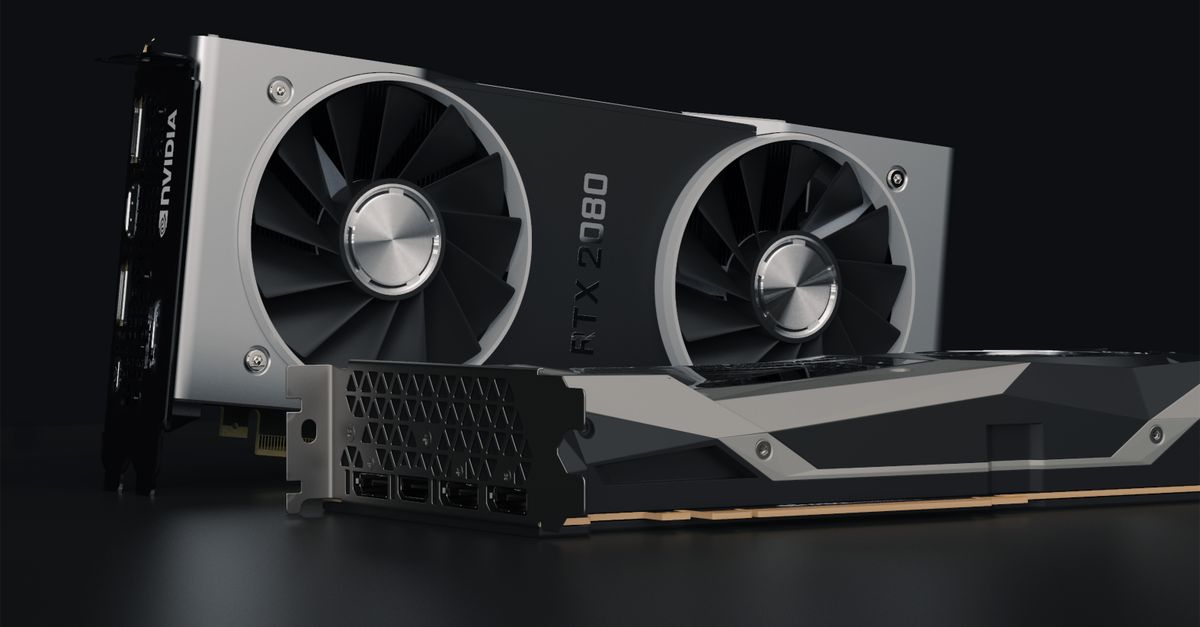
NVIDIA rolls out four new inference platforms
NVIDIA announced four inference platforms built on its Ada, Hopper and Grace Hopper processors. The platforms ship with the L4 Tensor Core GPU and the H100 NVL GPU, both released on the same day. Jensen Huang said the rise of generative AI forces developers to need more powerful inference hardware.
The platforms pair NVIDIA’s full‑stack inference software with the new silicon. They target AI video, image generation, large language model (LLM) deployment and recommender inference. The software layer includes the AI Enterprise suite, TensorRT and Triton Inference Server. Early cloud partner Google Cloud will offer L4 instances on Vertex AI and preview its G2 VMs.
Early adopters put the hardware to work
Descript, a creator‑focused AI startup, is among the first to run L4 on Google Cloud. The company uses generative AI to edit video and podcast content. WOMBO, known for its Dream text‑to‑image app, also received early access.
Kuaishou, a Chinese short‑video platform, integrated L4 GPUs to decode live streams, extract key frames and run a transformer‑based model for click‑through‑rate prediction. Yue Yu, Kuaishou’s senior vice president, reported an 11× increase in end‑to‑end throughput and a 20% latency drop compared with CPU‑only deployments.
D‑ID, a generative‑AI video platform, evaluated the L40 GPU for photorealistic digital‑human generation. Or Gorodissky, VP of R&D at D‑ID, said the hardware doubled inference speed while cutting compute costs.
Technical mechanics behind the platforms
Each platform bundles a specific GPU with a tuned software stack. The L4 GPU is optimized for mixed‑precision inference and low‑power data‑center workloads. The H100 NVL GPU adds NVLink and higher memory bandwidth for large‑scale LLM serving.
TensorRT compiles models into highly efficient kernels that exploit the GPUs’ tensor cores. Triton provides a unified endpoint for serving multiple model versions, handling request batching and dynamic scaling. Together they reduce per‑token latency and improve throughput for multi‑modal models.
The platforms also expose the NVIDIA AI Enterprise suite, which bundles monitoring, security and model‑management tools. This integration lowers the engineering effort required to move from research prototypes to production services.
Competitive context: CDLMs, Chinese regulation, and the AI race
The launch arrives as the community experiments with new model families such as Continuous Diffusion Language Models (CDLMs). CDLMs aim to blend diffusion‑based generation with language modeling, promising smoother token‑level control. Their emergence underscores the need for flexible inference stacks that can handle both diffusion and transformer workloads.
China’s AI ecosystem faces a different set of pressures. The Cyberspace Administration of China recently drafted rules that require real‑name registration and data‑legitimacy checks for LLM platforms. Companies like Baidu and Alibaba are racing to build ChatGPT‑style services while navigating export controls on high‑end GPUs. The new NVIDIA platforms could become a focal point for Chinese firms that can acquire the hardware under existing licensing regimes.
OpenAI’s rapid product cadence has shown how a lean organization can outpace larger incumbents in deploying generative AI. NVIDIA’s hardware strategy mirrors that approach: provide a flexible, high‑performance foundation that lets startups iterate quickly without building custom silicon.
What to watch next
Track adoption of the H100 NVL GPU in large‑scale LLM deployments over the next quarter. Watch for announcements from cloud providers expanding L4 or H100 instances beyond Google Cloud. Monitor the Chinese CAC draft rules for enforcement actions that could affect the supply chain for these GPUs. Finally, keep an eye on early benchmarks of CDLM inference performance on the new platforms, as they will reveal whether the hardware can keep pace with emerging model architectures.
Related Articles

Laya runs offline on M4, ChatGPT tracks ads
New offline inference benchmarks, cross‑site data collection, and rescue services raise fresh questions for AI developers.

VCs, Nvidia, Fusion and a CEO Return Mark Tech’s Unlikely Moves
From venture capital buying a soccer stadium to Nvidia’s 70% growth forecast, a German startup’s $4M raise, a €140M fusion plant, and Automattic’s CEO comeback.
Nvidia’s $12.9 B Hugging Face Deal Signals a Shift Toward
Nvidia buys Hugging Face for $12.9 B as rivals push AI to the edge and the cloud, from Ugreen’s local hubs to Google’s satellite‑fed weather model.