

Ford backs Redwood to close the loop on EV batteries

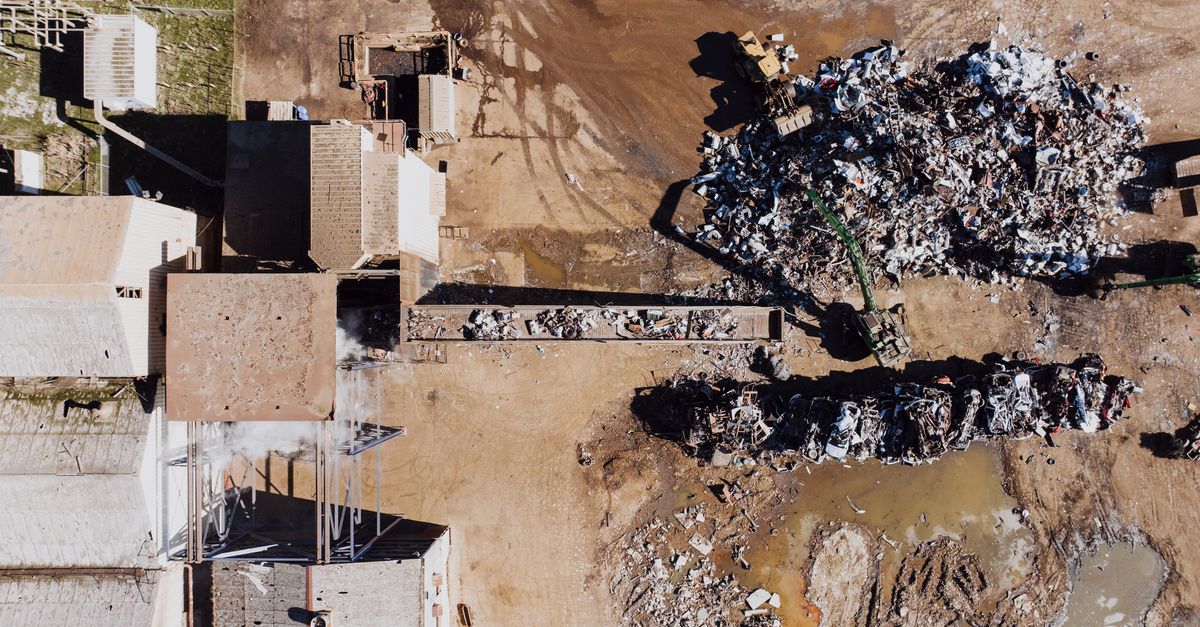
A bold bet on battery reuse
Ford announced a $50 million investment in Redwood Materials, the recycling firm founded by former Tesla CTO JB Straubel, and named Redwood as its exclusive partner for handling end‑of‑life electric‑vehicle batteries. The deal ties the Detroit automaker’s upcoming F‑150 Lightning and Mustang Mach‑E line‑up to a nascent circular supply chain that could curb reliance on imported lithium, nickel, cobalt and copper.
Redwood, headquartered in Carson City, Nevada, already processes scrap from Nissan, Specialized e‑bikes, Tesla and Panasonic at the Reno Gigafactory. The partnership expands Redwood’s role from a recycler to a co‑developer of processes that recover usable material, repurpose partially‑degraded cells, and eventually feed salvaged lithium, nickel, cobalt and copper back into new battery packs. The move aligns with the Biden administration’s push to build a domestic battery ecosystem and mirrors General Motors’ recent contract with Li‑Cycle for its SK Innovation‑sourced packs.
The mineral bottleneck behind the EV surge
The United States is watching the global EV boom with a mixture of optimism and anxiety. The F‑150 Lightning’s debut drew nearly 45,000 pre‑orders in its first 48 hours, a volume that represented roughly 20 percent of all EV registrations in the country last year. If the market follows the International Energy Agency’s projection of 145 million EVs on the road by 2030, the demand for battery minerals will skyrocket. Today, most lithium, nickel, cobalt and copper come from Russia, Indonesia and the Democratic Republic of Congo—regions where environmental oversight is thin and mining has historically fueled conflict.
Payal Sampat, mining programs director at Earthworks, warned that “the way that this has been flipped is, ‘We’re going to need to deal with these climate issues, let’s develop new mines, let’s extract this out as quickly as possible,’” highlighting the risk of a new mining rush that could undermine the climate benefits of electric transport. Recycling offers a way to decouple EV growth from fresh extraction, but the technology and policy framework remain under‑developed.
Redwood’s technical playbook
At a basic level, an EV battery is a stack of thousands of lithium‑ion cells, each containing a metal cathode, graphite anode, separator and liquid electrolyte. When a battery reaches the end of its useful life for a vehicle, the cells still retain a significant fraction of their capacity. Redwood’s process aims to harvest that residual capacity, recondition cells for secondary markets, and strip the cathode material for reuse. The company’s existing operations already handle scrap from the original Gigafactory, where Tesla and Panasonic once produced cells, proving that large‑scale recovery is technically feasible.
The partnership with Ford pushes Redwood toward a more integrated model. Beyond simply shredding packs, the two firms will explore “closed‑loop” pathways: converting recovered lithium, nickel, cobalt and copper into feedstock for new cells, and identifying second‑life applications for modules that still meet performance thresholds. While the specifics remain under wraps, the joint effort could set a template for other automakers seeking to internalize material loops rather than depend on volatile overseas supply chains.
Lessons from past industrial pivots
Ford’s strategy echoes earlier moments when a dominant industry reshaped its supply chain in response to geopolitical pressure. The 1973 oil shock forced automakers to accelerate fuel‑efficiency research and spurred the U.S. Strategic Petroleum Reserve. In the 1996 Telecom Act, incumbent carriers were compelled to open their networks, birthing a competitive broadband market. Both episodes show that external scarcity can catalyze structural change when incumbents commit capital to new infrastructure.
Similarly, the post‑World‑War II era saw the U.S. steel industry develop scrap‑recycling loops to meet defense demand, a practice that later migrated to consumer metals. Ford’s $50 million injection into Redwood mirrors those historic infusions of capital aimed at securing raw material independence. The difference today is the speed of market adoption; the EV fleet is expanding by millions of units each year, compressing the timeline for a functional recycling ecosystem.
What to watch
The next quarter will reveal whether Redwood can scale its recovery processes to meet Ford’s projected demand for the Mustang Mach‑E and the 2024‑2025 F‑150 Lightning production ramps. Key indicators include the volume of recovered lithium‑ion cells reported by Redwood, any announced joint‑development milestones, and regulatory moves by the Department of Energy on recycling subsidies. If the partnership delivers a reliable supply of reclaimed material, other OEMs may follow suit, forcing miners in the DRC, Indonesia and Russia to renegotiate contracts or face reduced demand. A failure to meet targets, however, could reinforce the current reliance on imported minerals and expose the EV supply chain to new geopolitical shocks.
Related Articles
China’s EV surge strains battery recycling chains
China’s electric‑vehicle boom is flooding the waste stream with batteries, exposing a fragile recycling ecosystem and prompting new consumer‑level fixes.

Apple tweaks EU fees, iPhone battery tools
Apple rolls out new EU commission rates, clarifies iPhone battery health access, and leaks a HomePod display via macOS beta code.

Mac Mini scarcity, AI vending drama, and unexpected EV sales
A look at Mac Mini shortages, top Ethernet switches, a ruthless AI vending test, Ferrari’s EV sales surge, and recent corporate lawsuits.