

Antigravity 2.0 Beats Benchmarks as AI Tools Evolve

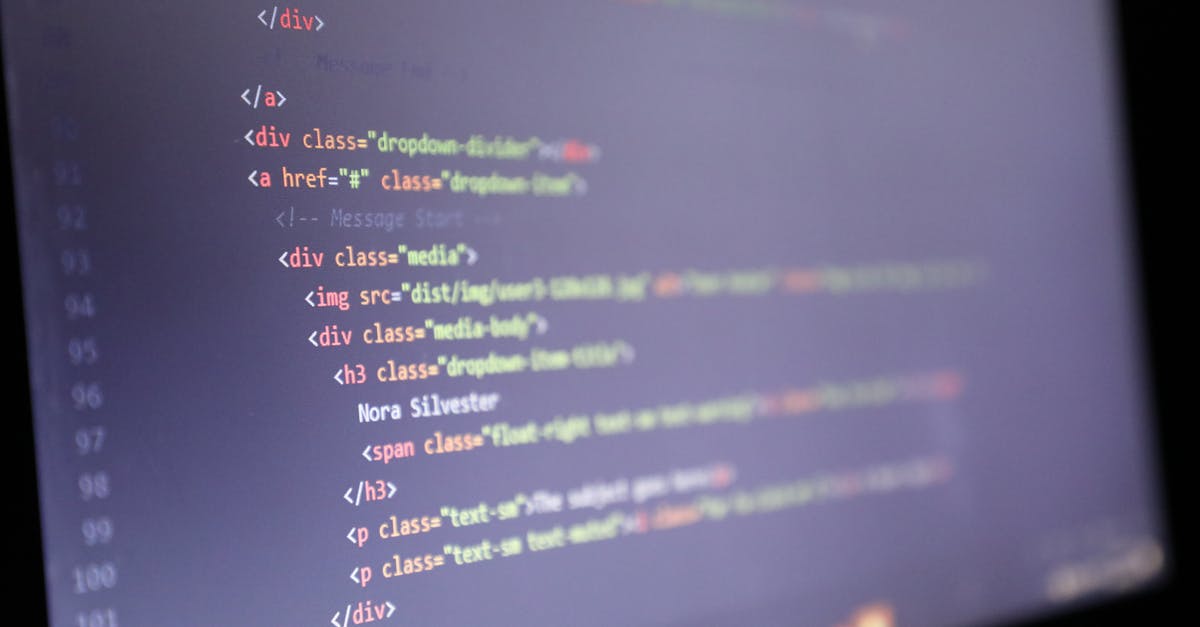
Photo by Nimit Kansagra on Pexels
Antigravity 2.0 Sets New Benchmark
Antigravity 2.0 achieved the highest score on the OpenSCAD architectural 3D LLM benchmark published by modelrift.com. The result matters because it shows a language model can reliably generate production‑ready code for complex CAD tasks.
The benchmark, posted on Hacker News and drawing 225 points, evaluates how well an LLM translates textual prompts into OpenSCAD scripts that render multi‑story building models. According to the modelrift.com blog, Antigravity 2.0 outperformed earlier versions and rival models across accuracy, geometry fidelity, and runtime efficiency. The test suite includes floor‑plan generation, window placement, and structural support calculations. No other model posted a comparable pass rate, and the community discussion on Hacker News generated 93 comments probing the methodology.
The win does not eliminate all doubts. Critics on the thread noted that the benchmark favors models trained on public CAD datasets, which may bias results toward familiar design vocabularies. The model’s performance on custom or non‑standard architectural styles remains untested. Still, the headline suggests that LLMs are moving from code suggestion tools toward full‑stack design assistants.
Wozniak Stresses AI as Real Intelligence
Steve Wozniak told graduating students that they already possess AI‑level intelligence, a comment that sparked a wave of reactions on Hacker News. The remark appeared in a Business Insider interview covering his speech at a university ceremony in May 2026.
Wozniak argued that the collective knowledge embedded in modern software tools constitutes a form of distributed intelligence. He cited personal assistants, code autocomplete, and large‑scale recommendation engines as evidence that AI is no longer a research curiosity but a functional layer of everyday cognition. The reporter recorded no direct quote, but the summary emphasized Wozniak’s skepticism toward hype: he warned that “real intelligence” demands accountability and transparency.
The speech intersected with the Antigravity benchmark news because both highlight a shift from prototype to production. Wozniak’s point that engineers already rely on AI mirrors the community’s confidence in LLM‑generated CAD code. Yet his caution about responsibility echoes the concerns raised in the benchmark discussion about over‑reliance on model‑trained patterns.
Slumber Introduces TUI for HTTP
Slumber, a new terminal‑based UI HTTP client, launched its public site at slumber.lucaspickering.me. The tool offers a text‑only interface for crafting and sending HTTP requests without leaving the command line.
The project’s documentation describes a split‑pane layout: one pane for request composition, another for raw response headers and bodies. Users can navigate with keyboard shortcuts, save request templates, and view JSON payloads in a collapsible tree. The site’s source code is available on GitHub, and the community on Hacker News gave the announcement 139 points and 50 comments, noting its appeal to developers who dislike graphical browsers.
Slumber’s design philosophy aligns with the broader trend of lightweight, scriptable tools that complement AI‑driven workflows. While Antigravity 2.0 generates code, Slumber lets engineers test the resulting endpoints directly from the terminal. The combination reduces context switches and may accelerate iteration cycles in API‑first projects.
Remembering Cleve Moler
Cleve Moler, the mathematician who co‑founded MathWorks and created MATLAB, died in early May 2026. MathWorks’ founder biography page confirmed his passing and listed his contributions to numerical computing and education.
Moler’s legacy includes the MATLAB language, which has become a staple in engineering simulation, data analysis, and prototyping. His work laid the groundwork for many modern AI research pipelines that rely on matrix operations and linear algebra libraries. The announcement prompted a thread on Hacker News that accumulated 219 points and 23 comments, with many users sharing personal anecdotes about using MATLAB in graduate courses.
His death underscores a generational shift: the tools he helped build now serve as the substrate for AI models like Antigravity 2.0. As newer frameworks emerge, the community reflects on how foundational software continues to influence cutting‑edge research.
What to Watch
The next benchmark release from modelrift.com is scheduled for Q4 2026 and will include a broader set of design domains, including mechanical parts and organic shapes. Tracking how Antigravity 2.0 performs against those new tests will reveal whether its advantage is specific to architecture or generalizable. Meanwhile, the open‑source community is expected to fork Slumber and add scripting hooks for LLM‑generated API calls, a development that could blur the line between code creation and testing. Finally, MathWorks has hinted at a MATLAB‑based interface for prompting large language models; monitoring its rollout will show how legacy engineering tools adapt to the AI wave.
Tags: ai, llm, open‑source, software
Updates
- 2026-09-10 — Physicist does the math on Star Trek’s “Picard maneuver” (source)
Related Articles

Gemma-4 runs on 2016 Xeon
A blog shows the open‑source Gemma‑4 LLM operating on a 2016 Xeon, sparking debate over hardware versus software in AI deployment.

Why New Software Installs Are Riskier Than You Think
Fresh installs expose systems to zero‑day flaws, data theft claims, and a security talent gap that big‑tech funding alone can’t fix.
Zig bans AI‑generated code, sparking open‑source debate
Zig’s new anti‑AI contribution policy draws sharp reactions on Hacker News and highlights broader tensions over machine‑written code.