

Uber revives own AVs to feed robotaxi partners

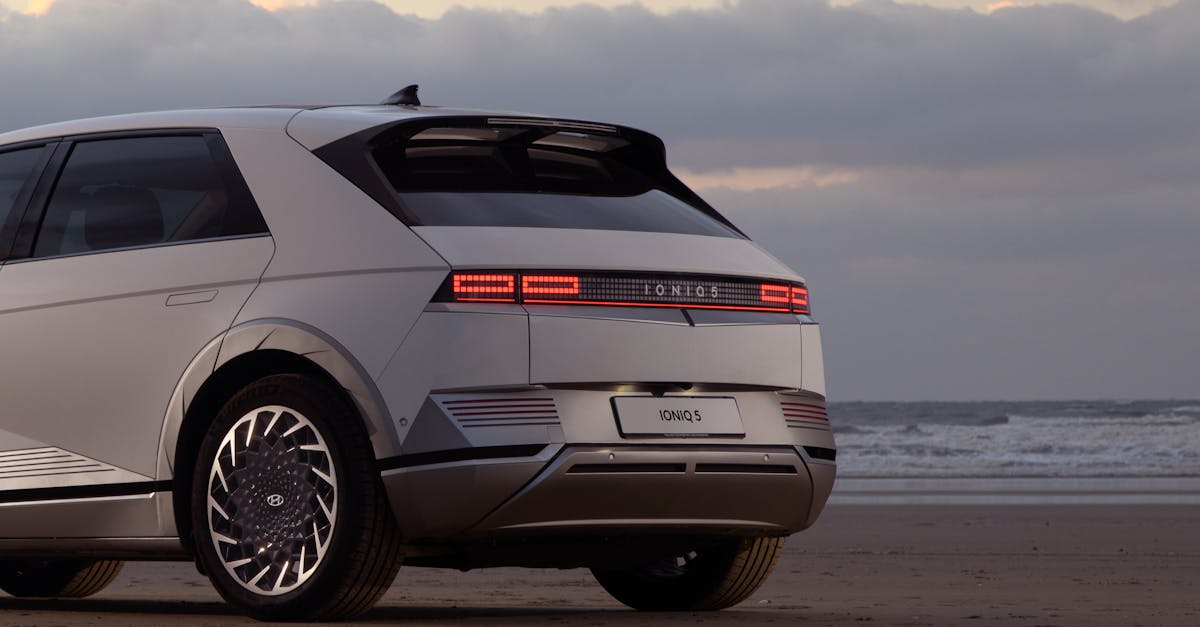
Photo by Hyundai Motor Group on Pexels
Uber has placed a single Hyundai Ioniq 5 equipped with lidar, cameras and radar back on public streets, not to run rides itself but to collect sensor data for the dozens of robotaxi partners that rely on its platform. The move marks the first time the ride‑hailing giant has fielded its own autonomous vehicle since selling its Advanced Technologies Group to Aurora Innovation.
The AV Lab project, announced in a brief statement, says the Ioniq 5 is merely a testbed and that Uber is “not wedded to that model.” The car will drive in a limited area, gathering raw perception data that Uber can then distribute to partners such as Waymo‑affiliated services, Lyft‑aligned fleets, and other third‑party operators. No passenger‑facing service will be offered from this vehicle; it functions solely as a data‑collector.
Data‑driven comeback
Uber’s decision to field a sensor‑rich vehicle reflects a pragmatic shift from building a proprietary robotaxi fleet to becoming a data broker for the broader autonomous‑vehicle ecosystem. By stripping the vehicle of any passenger‑service intent, Uber sidesteps the regulatory scrutiny that haunted its earlier self‑driving program, which was halted after a fatal crash in Tempe, Arizona, in March 2018.
The crash, which claimed the life of Elaine Herzberg, led the National Transportation Safety Board to assign blame across Uber, its safety driver, the victim and the state of Arizona. Uber settled the family’s lawsuit for an undisclosed sum and later resumed limited testing in closed loops in Pittsburgh. The new AV Lab does not attempt to replace human drivers; instead, it supplies raw perception streams—lidar point clouds, camera frames, radar returns—to partners who already operate robotaxi services.
Legal backdrop and IP battle
Uber’s renewed presence on the road arrives while the company remains entangled in the Waymo lawsuit that alleges it stole proprietary self‑driving technology. Waymo’s filing on February 23 accused Uber, through its Otto acquisition, of appropriating “Waymo’s intellectual property so that they could avoid incurring the risk, time and expense of independently developing their own technology.”
The lawsuit quotes Waymo: “Otto and Uber have taken Waymo’s intellectual property so that they could avoid incurring the risk, time and expense of independently developing their own technology.” The case also references the $680 million sale of Otto—originally founded by former Google executive Anthony Levandowski—to Uber in August 2016. Levandowski, who later served as head of Uber’s self‑driving program, was sentenced to 18 months in jail for trade‑secret theft.
Wharton professor John Paul MacDuffie called the dispute “a big deal,” noting that analysts are comparing it to the Apple‑Samsung patent wars. Law professor Sharon Sandeen warned that the case could end in a cross‑licensing settlement or “an all‑out war to see who would win.” The core technology at issue is lidar, a laser‑based mapping system that Waymo refined to lower costs, while competitors such as Ford and Baidu have poured $150 million into Velodyne, a lidar maker, according to the lawsuit.
Industry push for fleet‑only autonomy
While Uber gathers data, the broader autonomous‑vehicle industry is coalescing around a shared‑fleet model. A coalition that includes Lyft, Uber and Zipcar recently signed a ten‑point “shared mobility principles” charter, the final point insisting that autonomous vehicles in dense urban areas operate only as part of shared fleets. Lyft’s vice president for government relations, Joseph Okpaku, said the company “definitely envisions a future where the vast majority of autonomous vehicle rides will be done as part of a shared network.”
Critics argue the principle is self‑serving. University of Washington professor Don MacKenzie called it “very convenient” for firms that already dominate ride‑hailing, while UCLA urban‑planning professor Michael Manville noted that the language “blunt and vague” leaves open questions about private ownership, enforcement zones, and the line between a shared‑fleet AV and a human‑driven car with the software disabled. The principle also dovetails with corporate strategies: Waymo’s partnership with Fiat Chrysler to supply “thousands” of minivans, Cruise’s steering‑wheel‑less prototype, and Lyft’s alliances with drive.ai and nuTonomy all assume a fleet‑centric deployment.
What to watch
The next few months will reveal whether Uber’s data‑first approach can coexist with the ongoing Waymo litigation and the industry’s fleet‑only push. Key indicators include any court rulings on Waymo’s IP claims, the volume of sensor data Uber distributes to partners, and whether regulators adopt the shared‑fleet principle into municipal codes. Track the rollout of Uber’s AV Lab vehicle, any expansion beyond the single Ioniq 5, and Aurora’s integration plan, which promises to run Aurora‑built self‑driving cars on Uber’s platform after the $400 million investment closes. Those moves will signal whether Uber is merely a data conduit or preparing to re‑enter the robotaxi arena under a different banner.
Updates
Related Articles
Judge Bars Waymo Overnight Charging After Resident Noise
A Los Angeles judge halted Waymo’s 24‑hour charging in Santa Monica, citing resident sleep disruption and raising questions about autonomous fleet operations.
Waymo finally puts robotaxis on freeways
Waymo resumes freeway robotaxi service in Phoenix, LA and SF after a recall, reshaping its expansion and safety roadmap.
Waymo’s robotaxi woes spill from theft to battery reuse
Waymo grapples with a burglary, street‑level safety glitches, a battery‑to‑grid deal, and a $2.5 billion Hyundai order as regulators stare down the AV boom.