

Psyche’s Unexpected Mars Snapshots Offer Fresh Planetary

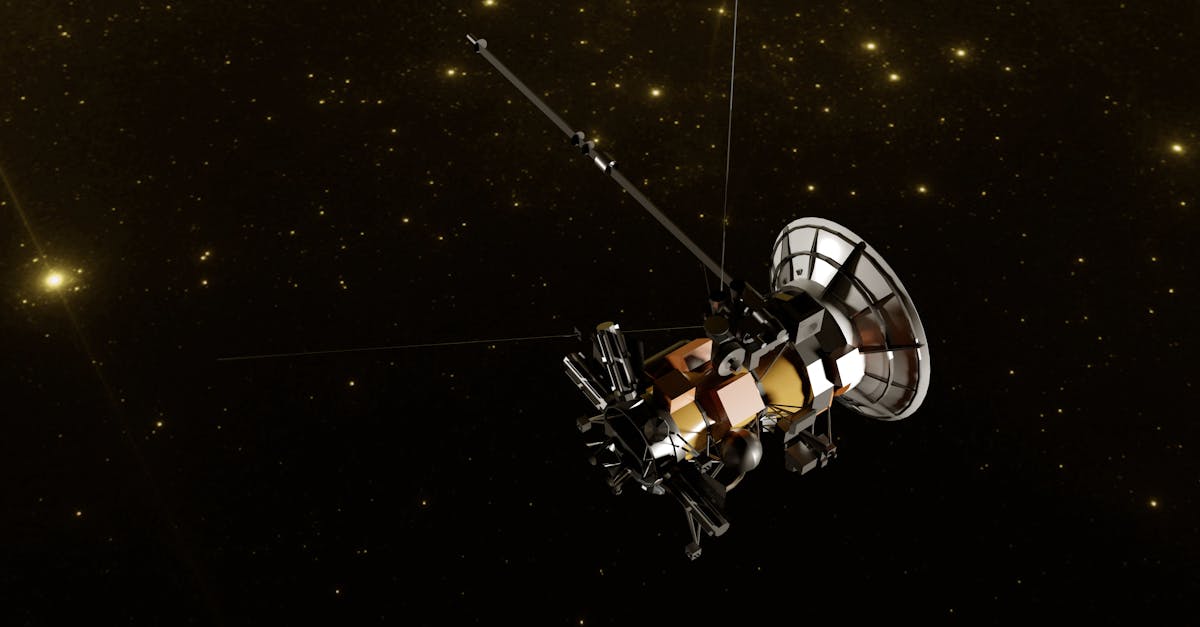
Photo by Paul Seling on Pexels
Psyche snaps unexpected Mars portraits
NASA’s Psyche spacecraft, hurtling toward asteroid 16 Psyche, sent back a handful of Mars images that no other mission has captured. The pictures arrive as a surprise bonus in the probe’s routine data stream, and they give researchers a viewpoint that orbiters and rovers simply cannot provide.
The images were recorded during Psyche’s cruise phase, when the probe crossed the Martian orbital plane on its way to the main target. The mission, launched on an October 2023 Falcon Heavy, has been sending telemetry back to Earth every few weeks. Engineers flagged the Mars frames as “bonus science” because the navigation camera, built for asteroid mapping, was able to swivel toward the planet when geometry allowed.
Why the angle matters
Most high‑resolution Mars photos come from assets that orbit the planet or sit on its surface. Those platforms view the terrain under a familiar sun‑angle and at relatively close range. Psyche, by contrast, captured the planet from a distance of several hundred million kilometers, looking back at the night‑side hemisphere with a shallow illumination angle.
That geometry flips the usual lighting cues. Shadows stretch longer, and the terminator—where day meets night—appears as a thin, bright line. Such a perspective can help validate atmospheric scattering models that rely on limb observations. It also offers a sanity check for orbital reconstructions that assume a perfectly spherical Mars.
The spacecraft’s imaging suite in a new role
Psyche carries a compact multispectral imager designed to map the metallic surface of its asteroid destination. The camera’s sensor can resolve features as small as a few centimeters at the spacecraft’s nominal 1‑km altitude over Psyche. When the probe was millions of kilometers away from Mars, the same sensor was repurposed to snap a wide‑angle view of the planet’s disk.
Because the instrument was never intended for deep‑space planetary photography, the raw frames required extra processing. Mission scientists applied a de‑bias routine used for asteroid images, then calibrated the exposure against known solar flux values. The result is a set of images that, while not as sharp as those from the Mars Reconnaissance Orbiter, still reveal large‑scale weather patterns and albedo features.
Scientific upside and practical limits
The images are not a replacement for dedicated Mars missions, but they fill a niche. By viewing the planet from a different angle, researchers can cross‑check the accuracy of global circulation models that predict dust storm development. The limb view also aids in measuring the height of the upper atmosphere, a parameter that is difficult to capture from low orbit.
However, the data set is tiny. Psyche will only cross Mars’s line of sight once during its cruise, so the snapshot is a one‑off. Moreover, the camera’s spectral range is limited, meaning scientists cannot extract detailed compositional information. The primary value lies in geometry, not in chemistry.
Context: deep‑space probes as opportunistic observers
Psyche is not the first mission to turn a camera toward a planet en route to another target. The Voyager probes famously photographed Earth and the outer planets while cruising. More recently, the New Horizons spacecraft sent back images of Jupiter and its moons during its 2015 flyby, even though its main goal was Pluto.
Those opportunistic captures have historically yielded unexpected science. Voyager’s “Pale Blue Dot” photo reshaped public perception of Earth’s fragility. New Horizons’ Jupiter images refined models of the planet’s magnetosphere. Psyche’s Mars frames sit in that lineage, reminding engineers that a well‑pointed camera can turn a routine cruise into a mini‑science mission.
What to watch
The Psyche team plans to release the full image set and processing pipeline in a technical brief later this year. Researchers will compare the frames against contemporaneous data from Mars orbiters to quantify any systematic offsets. Meanwhile, the probe continues its journey, slated to arrive at asteroid Psyche in early 2026 for a year‑long mapping campaign. The next milestone to track is the spacecraft’s final approach trajectory, which will determine whether any additional planetary targets—perhaps Earth or Venus—can be opportunistically imaged before the asteroid rendezvous.
Related Articles
Europe Goes Solo on Venus Mission as NASA Shifts Funding Focus
NASA pulls a radar instrument, prompting Europe to pursue its Venus probe alone while the agency asks states for money.
Starship's final test flight clears the way for bigger rockets
SpaceX’s Oct 13 Starship test ends Version 2, NASA rescues stranded ISS crew, and researchers warn megaconstellations could thin Earth’s magnetosphere.
NASA patents, EM Drive thrust, and SpaceX’s new landing record
NASA opens 56 patents, scientists confirm EM Drive thrust, and SpaceX lands a booster record. How these moves reshape the commercial space race.