

xAI's Data Center Sparks Environmental and Regulatory Controversy

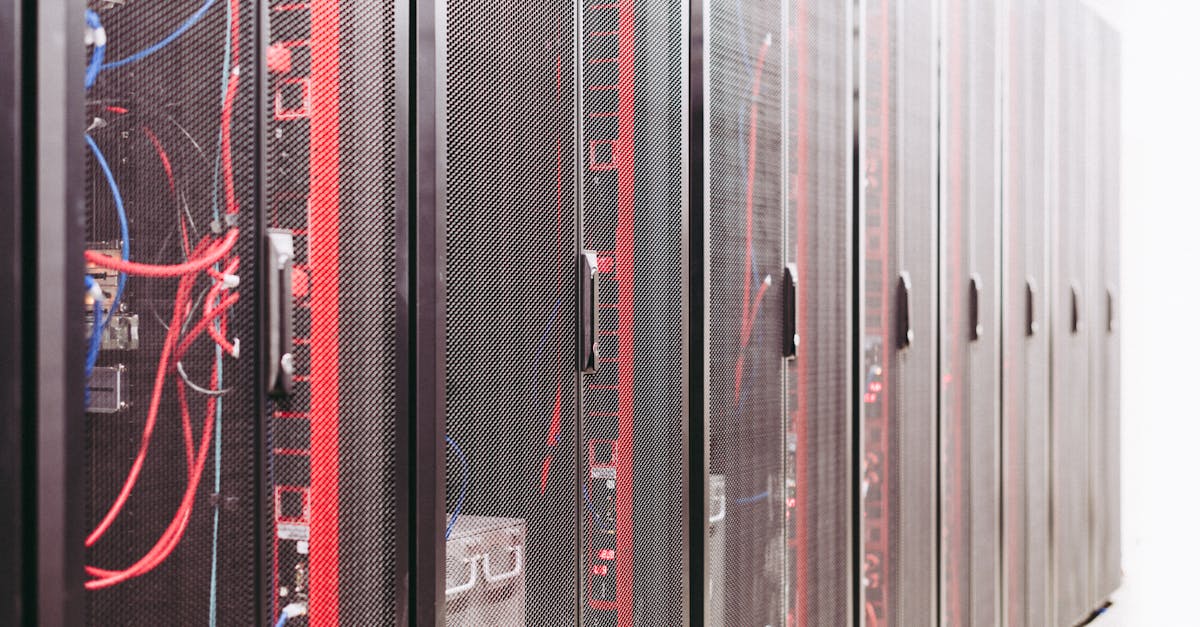
Photo by Brett Sayles on Pexels
xAI’s Memphis data center, Colossus, has become a flashpoint in the AI industry’s race for compute power. The facility, now operating 100,000 Nvidia H100 GPUs, relies on unpermitted mobile gas turbines to meet its energy demands—a setup drawing legal and environmental scrutiny. The choice underscores a broader tension in AI infrastructure: the need for rapid scale versus the cost of regulatory and ecological compromise.
The Colossus site, which achieved full GPU deployment in under six months, uses mobile turbines to supplement the Memphis grid. These turbines, which emit pollutants like nitrous oxide and formaldehyde, were deployed without required permits. According to documents obtained by The Commercial Appeal, xAI’s sister company submitted a belated permit application in January 2025, seeking to retroactively authorize four turbines already in use and add 11 more. This would provide 150 MW of power from turbines alone—enough to power nearly 100,000 homes—on top of 150 MW from the local grid.
The Cost of Speed
Mobile gas turbines are a stopgap solution for energy-starved data centers. They’re cheaper and faster to deploy than stationary plants but burn twice as much fuel per unit of electricity generated. Daniel Cohan, a Rice University professor, calls the strategy “a quick and dirty approach that’s very wasteful, financially and environmentally.” Yet for companies like xAI, which faces a $30 billion global investment race in AI infrastructure, the turbines represent a necessary compromise. Microsoft, BlackRock, and Abu Dhabi’s MGX are all betting on massive data-center projects, while OpenAI’s CEO has lobbied the U.S. government for gigawatt-scale power deals.
The Memphis setup isn’t unique. Solaris Energy Infrastructure and APR Energy, which rent turbines to tech firms, have seen demand surge. APR’s CEO, Chuck Ferry, told Forbes that turbine operators are “lucky to have assets right now.” This rush reflects a systemic problem: U.S. energy grids can’t keep up with AI’s appetite for power. In South Africa, India, and Brazil, data centers are already straining local resources, pushing operators to private power deals or backup generators.
Legal and Environmental Loopholes
xAI’s unpermitted turbines have drawn the Southern Environmental Law Center into the fray. Patrick Anderson, a lawyer with the group, alerted Shelby County officials in August 2024 about the missing air permit. The delayed application raises questions about enforcement gaps. Mobile turbines are typically used for emergency power, not as permanent infrastructure. Yet as energy firms backlogged with stationary turbine orders can’t meet demand, tech companies are exploiting regulatory gray areas to deploy them at scale.
This pattern is global. In China, state-backed orbital data-center projects are advancing, leveraging space-based solar power to sidestep terrestrial energy constraints. Elon Musk, who recently called orbital AI training a “no-brainer,” is positioning SpaceX to capitalize on this frontier. But experts warn that moving infrastructure to orbit—or to jurisdictions with lax regulations—could deepen digital inequality. For countries already reliant on foreign data platforms, losing further control over compute infrastructure risks turning them into “consumer-only” tiers in the global AI economy.
What to Watch
Three developments will shape how this plays out. First, Shelby County’s response to xAI’s permit application will test how strictly local regulators enforce environmental rules for big tech. Second, GE Vernova’s plan to double stationary turbine production in 2026 could ease the energy bottleneck—if the company follows through. Third, the U.S. and China’s competing visions for orbital data centers will determine whether space becomes a regulated commons or a deregulated frontier. For engineers and investors, these choices will dictate the next decade’s energy and AI landscape.
Updates
- 2026-08-18 — Can the Upcoming ‘Expanse’ Game Avoid the Biggest Mistake of ‘Mass Effect’? (source)
Related Articles
The Militarization of Compute
Drone-struck AWS data centers and a closed strait end the era of treating hyperscale compute as benign real estate. The compute-state has replaced the petro-state.
AirTrunk pours $30 B into 5 GW AI data centers in India
Australian operator AirTrunk commits $30 B to build 5 GW of AI‑focused data centre capacity in India, raising questions about supply, energy and competition.
Wind‑Solar Overtakes Gas as Data Centers Battle Water Use
April 2026 saw renewables outpace gas globally while hyperscalers confront growing water‑scarcity criticism, exposing a sustainability gap.