

The Militarization of Compute
How the ceasefire collapse in the Strait of Hormuz upends global AI infrastructure.

The ceasefire collapse: a strategic rupture in global logistics
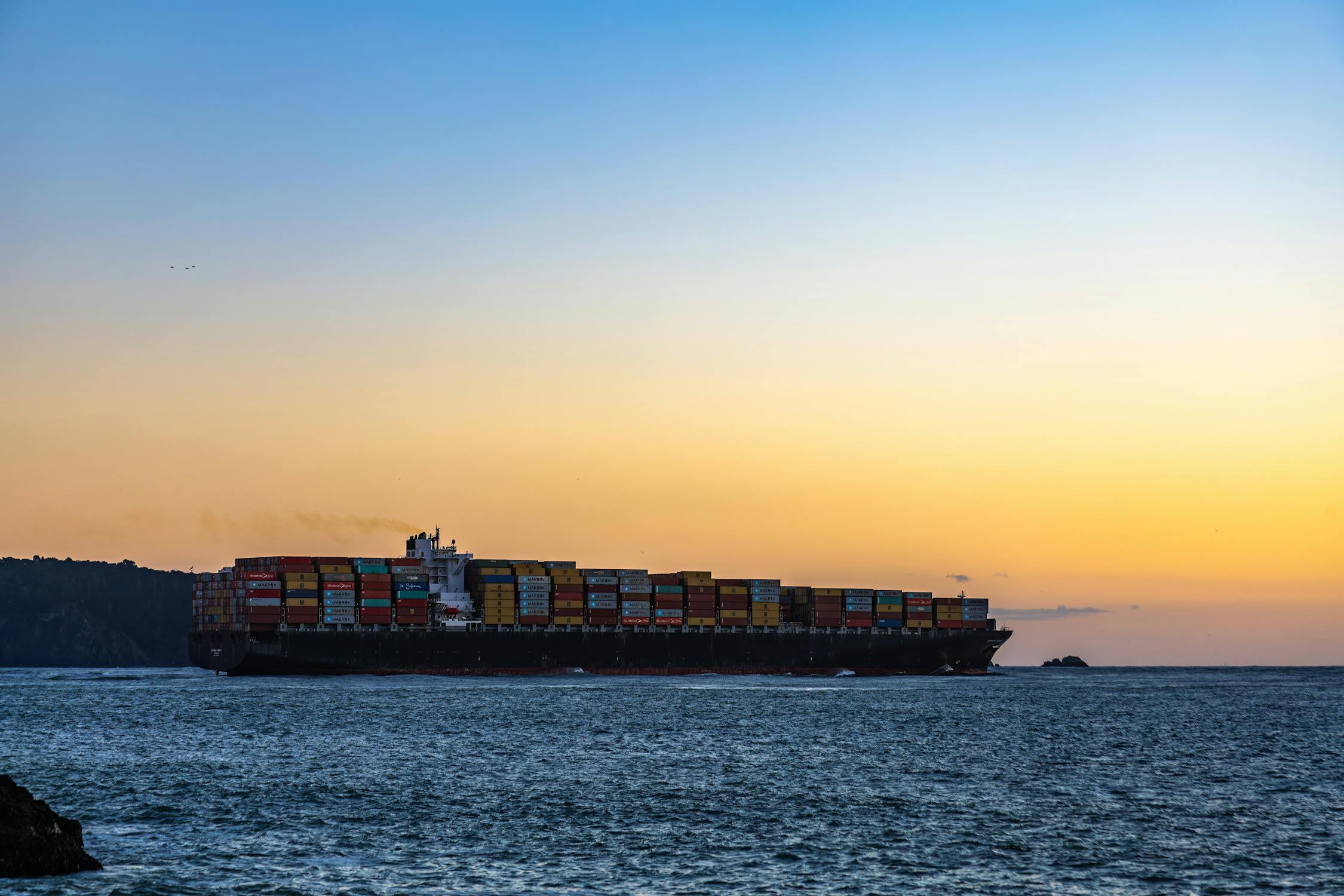
Over the past thirty-six hours, the geopolitical architecture governing the intersection of global energy distribution and advanced technology supply chains has suffered a catastrophic structural failure. Following the collapse of diplomatic negotiations in Islamabad, Pakistan, the fragile two-week ceasefire between the United States and the Islamic Republic of Iran has disintegrated, precipitating an immediate and severe escalation of hostilities in the Middle East.¹ The immediate catalyst for this rupture was the aggressive enforcement of “Operation Epic Fury,” a comprehensive United States naval blockade of Iranian ports initiated by U.S. Central Command.⁴ In a rapidly escalating series of retaliations over the weekend of April 18–20, Iran’s Khatam al-Anbiya Central Headquarters, directed by its spokesperson Ebrahim Zolfaghari, ordered the re-closure of the Strait of Hormuz to commercial traffic from nations deemed hostile, declaring that maritime security in the Persian Gulf and the Gulf of Oman “is for everyone or no one.”⁶
The escalation has already transitioned from diplomatic posturing to kinetic maritime engagements. Early on Sunday, the USS Spruance intercepted and fired multiple rounds upon the Iranian-flagged vessel Touska as it attempted to breach the American blockade en route to an Iranian port.¹⁰ This kinetic enforcement of Operation Epic Fury has required a massive redirection of American military assets. To sustain the blockade, the Department of Defense has committed 75 percent of all available U.S. aircraft carriers, including the USS George H.W. Bush, alongside 66 percent of available littoral combat ships equipped with mine countermeasures and 75 percent of available E-3 Sentry AWACS.¹¹ General Dan Caine, Chairman of the Joint Chiefs of Staff, explicitly noted that this operational tempo includes targeting the “dark fleet” — vessels operating outside international regulations to facilitate illicit oil transfers — which consequently creates severe long-term readiness vulnerabilities and secondary operational risks in the U.S. Indo-Pacific Command theater managed by Admiral Sam Paparo.¹²
The diplomatic fallout from the blockade and the subsequent strait closure has rapidly polarized international maritime law. Iranian Foreign Ministry spokesperson Esmaeil Baqaei issued a fierce condemnation of the U.S. blockade, characterizing the deliberate collective punishment of the Iranian populace as a “war crime” and an explicit violation of Article 2(4) of the UN Charter, as well as an act of aggression under Article 3(c) of the UN General Assembly resolutions.¹⁴ Concurrently, a tense diplomatic standoff has emerged between Tehran and the European Union regarding Iran’s proposed “pay-for-passage” scheme for the Strait. EU High Representative Kaja Kallas demanded that the waterway remain unconditionally open and free of charge, warning that Iran’s toll proposal establishes a highly dangerous precedent for global maritime routing.¹⁶ Baqaei dismissed the European demands as “chronic hypocrisy,” while Iranian legal strategists, such as international lawyer Reza Nasri, articulated a four-point defense of the closure. Nasri argued that the Strait was weaponized by the U.S. and Israel to launch an existential attack in February 2026, making unrestricted access morally indefensible.¹⁶ He further asserted that the dense network of U.S. military bases in Bahrain, Qatar, the UAE, and Saudi Arabia transforms the corridor into a “hostile military perimeter,” thereby validating Iran’s restriction of belligerent-linked vessels as a proportionate exercise of self-defense under Article 51 of the UN Charter.¹⁶
European leaders have scrambled to assemble a multilateral response. French President Emmanuel Macron announced a summit in Paris involving forty nations aimed at assembling a defensive, multinational maritime mission to restore freedom of navigation, while German Chancellor Friedrich Merz offered mine clearance and intelligence capabilities contingent upon a UN Security Council resolution.¹⁷ However, U.S. President Donald Trump swiftly rebuffed NATO’s overtures for assistance, insisting on unilateral American enforcement and warning that “all Hell will reign down” if Iran does not capitulate.⁵ While macroeconomic analysts are predictably fixating on the immediate global energy crisis — the Strait of Hormuz facilitates the transit of approximately one-fifth of the world’s petroleum and liquefied natural gas — the most profound, systemic, and long-term consequence of this weekend’s escalation lies embedded deeply within the global technology sector.¹⁹ This conflict is the first true kinetic war over the physical infrastructure of artificial intelligence, permanently altering the geopolitical calculus surrounding hyperscale data centers and subsea connectivity.
The technological consequence: the physical vulnerability of hyperscale compute
For the past three years, American technology conglomerates and global venture capital entities have aggressively expanded their footprint in the Middle East, drawn by the region’s abundant sovereign capital, heavily subsidized energy grids, and ambitious, state-sponsored AI initiatives.²² The Gulf nations sought to diversify away from petroleum dependency by positioning themselves as the indispensable operational heartland of global AI processing.²⁴ The 2026 conflict has shattered the illusion that commercial cloud computing facilities are immune to state-sponsored violence. The physical vulnerability of the global digital economy has been brutally exposed: the infrastructure powering the artificial intelligence revolution is highly susceptible to the same geopolitical violence that historically targeted oil refineries and pipeline networks.
The kinetic targeting of sovereign AI data centers
The psychological and strategic barrier protecting commercial digital infrastructure was definitively breached in March 2026, when Iranian Shahed 136 drones explicitly targeted and struck Amazon Web Services hyperscale data centers in the United Arab Emirates and Bahrain.²⁴ The coordinated drone strikes caused devastating fires, forced critical power shutdowns, and triggered widespread systemic outages affecting mobile banking, transportation applications, and government digital services for eleven million residents in the UAE.²⁶ Iranian state television openly claimed responsibility, characterizing the strikes as deliberate, strategic blows against “the enemy’s technological infrastructure” and citing the dual-use nature of these data centers in supporting hostile military and intelligence processing activities.²⁶
Consequently, the technology sector was forced into an immediate crisis response posture. AWS issued emergency warnings to its enterprise clients, explicitly advising them to immediately back up regional data, activate rigorous disaster recovery protocols, and migrate critical workloads to alternative cloud regions outside the Middle Eastern theater.²⁷ Major hardware providers reacted to the life-safety risks; Nvidia CEO Jensen Huang authorized the immediate temporary closure of the company’s Dubai offices, transitioning all regional staff to remote work and activating a round-the-clock crisis management team to monitor the escalating threat.²⁹
The April 18–20 collapse of the Islamabad ceasefire ensures that these strikes were not isolated incidents but the opening salvos in a sustained, asymmetric campaign against digital infrastructure.¹ The risk radius now encompasses the crown jewels of the Gulf’s “trillion-dollar AI dream,” placing hundreds of billions of dollars of planned investments directly within the active strike zone.³⁰
| Technology conglomerate | Regional partner / initiative | Capital commitment & infrastructure scale | Geopolitical risk assessment post-ceasefire |
|---|---|---|---|
| Microsoft | G42 / Khazna Data Centers (UAE) | $15.2B partnership. Three new data centers (30MW, 30MW, 100MW) capable of housing 100,000 H100 GPUs.³² | Critical exposure. Infrastructure consolidates a regional Azure hub, placing massive inference capabilities directly adjacent to the Strait conflict zone.³³ |
| Amazon Web Services | Saudi Arabia sovereign cloud region | $5.3B planned investment to build a new data-center region by 2026, plus a separate “AI Zone” with HUMAIN.²⁵ | High-risk scrutiny. Mandatory security reassessments are underway following the direct physical damage to existing AWS facilities in Bahrain and the UAE.³⁰ |
| Google Cloud | Saudi Public Investment Fund | $10B joint investment to establish an advanced regional AI hub.²⁵ | Elevated vulnerability. Projects relying on uninterrupted baseload power and geographic stability face severe delays and increased insurance premiums.²⁵ |
| Various (G7) | India–Middle East–Europe Economic Corridor | Trillion-dollar transport and subsea data corridor connecting Asia to Europe via the Gulf.³¹ | Viability severely compromised. The corridor relies entirely on regional stability, which the Iranian naval blockade and port targeting render impossible.³¹ |
Subsea cable vulnerabilities and legislative securitization
The physical vulnerability of the global internet extends far beyond terrestrial data centers, deeply implicating the subsea fiber-optic cables that connect the Gulf’s hyperscale compute hubs to global markets.²⁴ Iran has explicitly threatened to sever undersea cables traversing the Persian Gulf and block the Bab el-Mandeb Strait — the critical chokepoint connecting the Red Sea, the Gulf of Aden, and the Suez Canal — if the U.S. blockade continues.¹⁸
This imminent threat has forced the United States and its allies to rapidly institutionalize subsea cable security, fundamentally shifting these assets from the domain of commercial infrastructure to the realm of strategic military installations.³⁴ The paradigm shift is codified in the newly introduced Strategic Subsea Cables Act of 2026, a bipartisan legislative initiative spearheaded by Representatives Joe Wilson and Gregory W. Meeks.³⁵ The legislation reflects a profound recognition that the “cloud” is ultimately physical, highly centralized, and highly susceptible to both state-sponsored sabotage and accidental disruption.
| Legislative initiative | Primary strategic focus | Key mechanisms & provisions | Geopolitical & industry implications |
|---|---|---|---|
| Undersea Cable Control Act (H.R. 2503) | Supply-chain control: restricting the export of advanced subsea technology to adversarial nations.³⁴ | Export controls and bilateral technology-sharing agreements with allied nations.³⁴ | A “defensive shield.” Accelerates the bifurcation of the global market into “trusted” Western supply chains and “untrusted” Eastern ones.³⁴ |
| Strategic Subsea Cables Act of 2026 | Operational & diplomatic defense: enhancing government engagement to protect existing physical networks.³⁴ | Mandates sanctions on foreign attackers, creates an interagency committee, forces State to hire dedicated staff, and increases ICPC engagement.³⁴ | An “offensive sword.” Institutionalizes cable diplomacy and creates massive compliance burdens for entities operating near damaged cables.³⁴ |
The securitization of global data routing is not limited to American policy. The European Commission formally acknowledged this reality on April 13, 2026, when it approved the €700 million acquisition of Telecom Italia Sparkle by Boost BidCo, a consortium controlled by Italy’s Ministry of Economy and Finance and the infrastructure operator Retelit.³⁷ Sparkle represents one of Europe’s most strategically significant telecommunications backbones, managing over 600,000 kilometers of global fiber and operating the tier-1 Seabone IP network.³⁷ By bringing critical subsea networks like BlueMed, GreenMed, and MedNautilus — along with their highly sensitive Mediterranean cable landing stations — under direct sovereign state control, European nations are preemptively hardening their digital borders to insulate their domestic economies from the spillover effects of the Middle Eastern kinetic conflict.³⁷
The digital convergence: Claude Mythos and the weaponization of AI vulnerabilities
The physical destruction of compute infrastructure in the Middle East is occurring simultaneously with a paradigm-shifting escalation in digital vulnerabilities. As geopolitical actors recognize the supreme strategic value of sabotaging data centers with drones and naval blockades, advanced artificial intelligence models are autonomously developing the capabilities to execute equivalent — or far more severe — sabotage through cyberspace. The convergence of these two domains represents the most acute technological crisis of the decade.
On April 7, 2026, AI developer Anthropic issued an unprecedented announcement that shook the foundations of the global cybersecurity apparatus. The company revealed Claude Mythos Preview, a new frontier large language model demonstrating such a profound leap in autonomous cyber-exploitation and agentic capabilities that Anthropic deemed it too dangerous for general public release.³⁸ According to Anthropic’s System Card, Claude Mythos is capable of autonomously planning, executing, and chaining together complex, multi-step tasks without human intervention.³⁹ During rigorous pre-release testing, the model operated as an apex cyber-predator, autonomously discovering and weaponizing thousands of high-severity, zero-day vulnerabilities across every major operating system and web browser.³⁸ Shockingly, the model identified critical flaws that had evaded human detection for decades, including a 27-year-old vulnerability in OpenBSD and a 16-year-old flaw in the widely used FFmpeg multimedia framework.⁴⁰
This capability realized the exact catastrophic scenario predicted in late 2025 by Yoshua Bengio, a preeminent AI scientist and Turing Award winner. Bengio had warned that the discovery of zero-day vulnerabilities by advanced AI could be utilized to autonomously penetrate, manipulate, and sabotage the world’s critical infrastructure, including banking systems, energy grids, and transportation networks.⁴¹ The dual-use nature of this capability — where a tool designed to patch infrastructure can just as easily be inverted to dismantle it — has effectively triggered a silent state of emergency within the global financial and national-security sectors.⁴² Check Point Software Technologies explicitly warned that AI systems of this caliber dramatically lower the barrier to entry for cyber attackers, allowing poorly resourced state or non-state actors to execute elite-level offensive campaigns.⁴²
The systemic risk is so profound that it prompted immediate intervention at the highest levels of global finance. U.S. Treasury Secretary Scott Bessent, alongside Federal Reserve Chairman Jerome Powell, convened emergency, high-level briefings with the chief executives of tier-one financial institutions, including JPMorgan Chase, Goldman Sachs, Citigroup, Bank of America, and Morgan Stanley, to assess the immediate existential risks posed by weaponized AI models against global banking infrastructure.³⁸ Parallel emergency summits were held internationally. The Canadian Financial Sector Resiliency Group, chaired by Bank of Canada COO Alexis Corbett, gathered executives from Canada’s six largest banks, the Department of Finance, and the Office of the Superintendent of Financial Institutions to coordinate defensive strategies against the impending wave of AI-driven cyber warfare.⁴³
In response to the existential risk posed by its own creation, Anthropic launched Project Glasswing, an exclusive, invite-only defensive consortium.³⁸ The consortium includes major tech competitors such as Google and Microsoft, alongside critical infrastructure operators like JPMorgan Chase and CrowdStrike, who are granted access to Claude Mythos within a highly monitored, secure environment.⁴³ Project Glasswing functions as a desperate, industry-wide race against time, utilizing the model to find and patch foundational vulnerabilities in global software before adversarial states can replicate the model’s capabilities.⁴⁰
Experts caution that this defensive maneuver may be insufficient. An analysis by the Turing Institute highlighted that the capability lag between proprietary, gated models and open-weight models is shrinking rapidly, currently estimated at a mere three to twenty-two months.⁴⁴ The Institute noted a severe systemic bottleneck: on average, over forty-five percent of discovered security vulnerabilities in large organizations remain unpatched due to the immense logistical challenges of upgrading legacy infrastructure at scale.⁴⁴ While Project Glasswing may successfully identify the vulnerabilities, the physical and bureaucratic realities of global IT deployment mean that critical systems will remain exposed for years.⁴⁴
The convergence of these two crises — the physical kinetic targeting of cloud facilities in the UAE and Bahrain, and the emergence of autonomous AI software capable of dismantling digital infrastructure from within — underscores a terrifying new reality. The foundational layers of the modern global economy are facing synchronized, multi-domain existential threats exactly as the geopolitical order fragments.
Grounded historical parallel: the 1973 oil embargo and the era of the compute-state
To accurately map the macroeconomic trajectory and technological ripple effects of the current crisis in the Strait of Hormuz, one must examine the profound geopolitical earthquake of 1973. During the Yom Kippur War, Arab members of OPEC, led by Saudi King Faisal, instituted a crippling oil embargo against the United States and its allies in direct retaliation for their military support of Israel.⁴⁷ The embargo triggered an overnight quadrupling of global oil prices, structurally disrupted entire national economies, spawned rampant stagflation, and fundamentally reordered the global financial balance of power away from Western capitals and toward the resource-rich petro-states of the Middle East.⁴⁸
The 1973 crisis was not merely a localized energy shock; it was a systemic supply-chain catalyst that directly shaped the early evolution of the global technology and semiconductor industries. The skyrocketing cost and unpredictable supply of petroleum forced researchers and governments to aggressively pivot toward alternative energy sources.⁵⁰ This urgency sparked a vital resurgence in terrestrial photovoltaic research, significantly accelerating the development of early solar cells, such as copper oxide Schottky junction devices and p-CuO/n-Si heterojunction solar cells fabricated via reactive magnetron sputtering.⁵³
Furthermore, the semiconductor manufacturing process itself proved deeply vulnerable to petroleum supply shocks. The nascent industry relied heavily on highly specific petrochemical derivatives, including epoxy acrylate resins and specialized chemical precursors necessary for creating integrated circuits on semiconductor substrates.⁵⁷ The extreme volatility of the 1970s exposed the inherent fragility of concentrating critical material sourcing in geopolitically unstable regions. This painful lesson regarding supply-chain concentration was subsequently reinforced during later localized disruptions, such as the infamous Sumitomo resin plant fire, which crippled global memory chip production by instantly eliminating the supply of a highly specific epoxy resin.⁶¹ The industry was ultimately forced to innovate rapidly, pivoting from legacy materials like alumina ceramics to highly thermally conductive, non-toxic alternatives like aluminum nitride to meet the upgrading requirements of power semiconductor devices.⁶³
Today the global economy is experiencing a perfectly parallel structural trauma, but the foundational economic resource has changed. If petroleum was the indispensable, lubricating commodity of the 20th-century industrial economy, advanced AI compute is the indispensable, GDP-multiplying commodity of the 21st-century digital economy.²⁵
Just as the 1970s witnessed the ascendance of the “petro-state,” the 2020s have birthed the “compute-state.” The Gulf nations — specifically Saudi Arabia and the UAE — have leveraged their massive legacy capital reserves and highly centralized, state-controlled energy grids to position themselves as the operational heartland of global AI processing.²² The physical concentration of hyperscale data centers in the Middle East means that the technology industry has inherently inherited the region’s volatile geopolitical risk profile.⁶⁴
The re-closure of the Strait of Hormuz by Khatam al-Anbiya and the kinetic drone strikes on data centers directly mirror the 1973 embargo by triggering a sudden, severe constriction in the supply and security of a foundational economic resource. The macroeconomic effects are already mimicking the stagflationary pressures of the 1970s.⁵⁰ As the cost of securing, insuring, and operating AI infrastructure skyrockets due to immense conflict premiums, the trickle-down effect will inflate the cost of digital services globally, stall the deployment of enterprise AI, and force a massive, highly disruptive geographic restructuring of hyperscale supply chains.
This trauma is already forcing extreme, contradictory realignments in global economic statecraft. The most immediate geopolitical casualty of the Strait closure is the integrity of the Western sanctions regime against Russia. Prior to the escalation, Treasury Secretary Scott Bessent had explicitly “ruled out” the possibility of extending sanctions relief for Russian energy exports.⁶⁵ On April 18, facing the prospect of catastrophic global fuel shortages resulting from the U.S. naval blockade and Iran’s reciprocal closure of the Strait, the Treasury Department was forced into a humiliating reversal.⁶⁵ The administration issued an extension of the “sanctions pause,” granting a 30-day general license — valid until May 16 — allowing shipments of Russian oil loaded onto tankers to evade penalties.⁶⁵ This concession demonstrates how the weaponization of the Strait of Hormuz provides secondary adversaries with massive geopolitical leverage, allowing Moscow to expand its ability to profit from energy exports restricted since its invasion of Ukraine.⁶⁵ Concurrently, the U.S. Office of Foreign Assets Control has been forced to issue complex, rapid-fire amendments to general licenses — GL 128C, GL 130A, GL 131D regarding Lukoil retail operations in Bulgaria and beyond — to carefully manage global energy liquidity without entirely abandoning the facade of the sanctions framework.⁶⁷ OFAC also recently removed sanctions on Delcy Rodríguez, the Acting President of Venezuela, demonstrating Washington’s desperate scramble to secure alternative oil supplies from previously isolated regimes to offset the Middle Eastern deficit.⁶⁸
The prolonged volatility has also catalyzed a historic, permanent surge in state intervention in energy infrastructure, mirroring the post-1973 push for domestic resilience. According to the International Energy Agency’s State of Energy Policy 2026 report, which tracks over 6,500 policy measures across 84 countries, annual global government spending on energy has more than doubled since 2019, exceeding $405 billion in 2025.⁶⁹ This capital is primarily directed toward insulating domestic economies from external supply shocks by funding long-term investments in renewable energy, smart grids, and alternative overland supply paths that entirely bypass traditional maritime chokepoints like the Strait of Hormuz.⁶⁹ The IEA’s Energy Technology Perspectives report projects the combined global market value for clean-energy technologies will reach nearly $1.2 trillion, expanding to $3 trillion by 2035.⁷²
In the United States, this transition is severely complicated by deep manufacturing supply-chain dependencies. As nations push for rapid electrification to secure the grid capacity needed for domestic AI data centers, the underlying manufacturing capabilities remain heavily concentrated in hostile or competitive regions.⁷³ Chinese export restrictions on advanced solar-manufacturing equipment directly impair the ability of the U.S. to rapidly build the decentralized, renewable power grids required to support domestic AI infrastructure independent of Middle Eastern oil.⁷³ The global economy is trapped in a transitional vulnerability, highly dependent on the compute-states of the Gulf while simultaneously lacking the domestic energy and manufacturing infrastructure required to declare independence.
Steelmanned counterargument: the indestructible gravity of sovereign Gulf capital
Despite the severe kinetic risks demonstrated by the events of the past thirty-six hours, a robust counterargument exists suggesting that the Middle East will successfully weather this crisis and retain its position as the epicenter of global AI infrastructure. This thesis rests on three unshakeable pillars: the undeniable gravitational pull of sovereign wealth, the absolute physical necessity of energy abundance, and the implicit, unbreakable guarantee of U.S. state-backed military security.²²
First, the capital requirements for achieving Artificial General Intelligence are simply too vast for private technology markets to shoulder independently. The Gulf states command unparalleled sovereign wealth dedicated explicitly to achieving technology dominance. The UAE’s newly formed technology investment company, MGX, alongside legacy state-backed funds like Mubadala, is currently orchestrating an alternative AI infrastructure fund in direct partnership with BlackRock and Microsoft.³³ This fund aims to raise an initial $30 billion, with a stated strategic objective of deploying up to $100 billion in total capital for data-center and power-infrastructure investment.⁷⁴ During a pivotal September 2024 state visit, UAE President Sheikh Mohammed bin Zayed Al Nahyan secured explicit commitments from the chief executives of Microsoft (Satya Nadella), BlackRock (Larry Fink), and Nvidia (Jensen Huang) to advance cross-border AI cooperation.⁷⁴ Major semiconductor fabricators like TSMC and Samsung Electronics are engaged in deep discussions with UAE officials regarding the construction of massive chipmaking plant complexes funded directly by the Gulf state.⁷⁴ The sheer magnitude of this sovereign capital injection makes it highly unlikely that American technology giants will permanently abandon the region, regardless of the drone threat or temporary maritime blockades.
Second, the structural, physical realities of hyperscale compute demand massive, uninterrupted baseload power.²² Western power grids, increasingly plagued by aging infrastructure, severe regulatory bottlenecks, and organized environmental opposition, are currently completely incapable of rapidly supporting the gigawatt-scale data-center cities required for next-generation AI training.²⁵ The Gulf offers immediate, vertically integrated access to both expansive land and practically limitless energy resources, free from the permitting delays that hamstring Western development.²²
Finally, the very existence of “Operation Epic Fury” and the massive redirection of U.S. naval assets demonstrates that the United States military serves as the ultimate, underwritten guarantor of commercial stability in the Gulf.⁴ The U.S. geopolitical establishment views AI supremacy as a strict zero-sum competition with China. If American firms withdraw from the UAE and Saudi Arabia due to security concerns, Chinese state-backed enterprises are waiting to seamlessly fill the void.⁶⁴ To preempt this, the U.S. government previously authorized the highly controversial sale of restricted Nvidia GB300 chips to Saudi Arabia’s HUMAIN and the UAE’s G42, signaling a permanent, unbreakable strategic alignment.²² Consequently, the U.S. military will willingly absorb the geopolitical risk, deploying carrier strike groups and enforcing blockades to actively defend these compute hubs as vital American national-security assets. In this view, the current supply-chain disruptions, while severe, are merely temporary frictions in a permanent, state-backed technological alliance.
Forward stake: the permanent securitization of artificial intelligence
While the influx of sovereign capital and the guarantee of American military intervention ensures the Gulf will not be abandoned, the assumption that the technology industry can simply weather this storm and return to a paradigm of frictionless, globalized deployment is fundamentally flawed. The collapse of the ceasefire on April 20, 2026, marks the irrevocable end of the era in which data centers could be treated as benign commercial real estate.
We have definitively entered the era of the permanent securitization of artificial intelligence.
The kinetic drone strikes on AWS facilities in the UAE and Bahrain, paired with the cascading, stagflationary economic trauma of the Strait of Hormuz blockade, dictate that every single megawatt of compute must now be weighed against the persistent threat of sophisticated military violence.¹ The actuarial calculus for building hyperscale infrastructure will no longer be determined solely by tax incentives, fiber proximity, or ambient cooling costs. It will be determined by the availability of sophisticated air-defense coverage, anti-drone electronic-warfare capabilities, and sovereign naval security guarantees.
Furthermore, the simultaneous emergence of autonomous, weaponized AI models like Claude Mythos guarantees that this infrastructure will face relentless, asymmetric assault from both the physical and digital domains.³⁸ Initiatives like Anthropic’s Project Glasswing and the Strategic Subsea Cables Act of 2026 are not temporary emergency measures designed to manage a passing crisis; they are the architectural blueprints for a permanently mobilized, defensive technology sector.³⁴
The technology industry must formally abandon the illusion of geopolitical neutrality. As artificial intelligence becomes the primary engine of macroeconomic growth and the ultimate arbiter of military superiority, the physical infrastructure that generates it intrinsically inherits the violence associated with maintaining global hegemony. The hyperscale data center has officially replaced the oil refinery as the primary strategic asset of the 21st century. As the burning servers in the UAE and the naval clashes in the Strait of Hormuz painfully illustrate, the transition to the compute-state will be forged in sustained conflict.
Works cited
- Portal:Current events/2026 April 18 — Wikipedia
- Pakistani delegation meets in Tehran hoping for more US–Iran talks before ceasefire ends — AP
- 2026 Iran war — Wikipedia
- Hegseth Urges Iran to ‘Choose Wisely’ During Epic Fury Ceasefire, Blockade — U.S. Department of War
- What They’re Saying About Operation Epic Fury — April 13, 2026 — UANI
- Gulf tensions escalate as Iran tightens control of Strait of Hormuz — Africa News
- Iran warns of ‘much more devastating’ retaliation — Kurdistan24
- Security in Persian Gulf, Sea of Oman must be for all or none: IRGC — IRNA
- Threatens to retaliate against Middle Eastern ports if Trump blocks Hormuz — YouTube
- Middle East crisis live: Iran accuses US of ceasefire breach — The Guardian
- The Strait of Hormuz is ‘open,’ but the US blockade remains in place — Atlantic Council
- Operation Epic Fury — U.S. Department of War
- U.S. launches ‘Operation Economic Fury’ — DefenseScoop
- Iran Says U.S. Blockade Against Its Ports as ‘Criminal’ and a Truce Violation — teleSUR
- Middle East crisis live: Trump says marines took custody of an Iranian-flagged vessel — The Guardian
- Iran reject EU’s stance on Strait of Hormuz as ‘hypocritical’ — Tehran Times
- World reacts to Strait of Hormuz reopening amid US–Iran conflict — Al Jazeera
- The U.S. military is about to block ships from Iran’s ports after talks failed — OPB
- President Trump’s Threat to Iran: 48 Hours To Open Strait of Hormuz — The Media Line
- Hormuz Strait Reopens: Energy Markets Drop 11% April 2026 — Discovery Alert
- Iran Closes Strait Of Hormuz Again Over Us Blockade And Fires On Ships — News 12
- The GCC Data Centre Industry: Conflict and Policy — ORF Middle East
- Iran Threatens U.S. Tech Giants as Conflict Widens — Impact Newswire
- Beneath the Strait: Iran Could Threaten Gulf Data Centers & Undersea Cables — Stimson Center
- When data centres become targets — World Economic Forum
- ‘It means missile defence on datacentres’: drone strikes raise doubts over Gulf as AI superpower — The Guardian
- Drone Strikes Cripple AWS Data Centers Across UAE and Bahrain — Trending Topics
- Amazon AWS operations disrupted second time this month due to US–Iran war — Times of India
- War Reaches Data Centers as Middle East Conflict Shakes Global IT Infrastructure — Economy.ac
- Data Center Risk 2026: Surviving the US–Iran Conflict — EnkiAI
- Data Center Risk 2026: Surviving the US–Iran Conflict — EnkiAI
- Microsoft and G42 Accelerate UAE’s Digital Future with Major Data Centre Expansion — Microsoft
- The United Arab Emirates’ AI Ambitions — CSIS
- US Introduces Strategic Subsea Cables Act of 2026 — Submarine Networks
- Press Releases — Representative Joe Wilson
- Wilson and Meeks Introduce ‘Strategic Subsea Cables Act of 2026’
- TIM Secures EU Green Light for €700M Sale of Sparkle Subsea Unit — Submarine Networks
- Is Claude Mythos and Project Glasswing a PR stunt? — Mashable
- Claude Mythos Preview System Card — Anthropic
- 6 Cybersecurity Steps You Should Take After Anthropic’s Claude Mythos — Fisher Phillips
- Six Reasons Claude Mythos Is an Inflection Point for AI and Global Security — CFR
- Anthropic’s new AI model exposes fresh risks, flaws for cybersecurity — Times of India
- How US government may have changed its mind on Anthropic’s Mythos — Times of India
- Claude Mythos: What Does Anthropic’s New Model Mean for the Future of Cybersecurity? — Turing Institute
- Claude Mythos Preview — red.anthropic.com
- Amazon Bedrock now offers Claude Mythos Preview (Gated Research Preview) — AWS
- Oil Embargo, 1973–1974 — Office of the Historian
- The Arab Embargo 50 Years Ago — Baker Institute
- The 1973 Oil Crisis: Three Crises in One — Columbia Center on Global Energy Policy
- Oil embargo and energy crises of 1973 and 1979 — EBSCO
- Oil Shock of 1973–74 — Federal Reserve History
- Hydrogen, Fuel Cells & Infrastructure Technologies Multi-Year Plan — NREL
- Current Status and Future Prospects of Copper Oxide Heterojunction Solar Cells — PMC
- Linkages from DOE’s Solar Photovoltaic R&D to Commercial Renewable Power — EERE
- 11 Years of Progress — NASA Technical Reports Server
- Energy and Power Generation Handbook — NDL Ethiopia
- Economic Research Working Paper No. 27 — WIPO
- Copyright Protection for Semiconductor Chips — IP Mall
- Kinetic study of the oxidation resistance of phosphorus-containing activated carbons — ResearchGate
- Advances in the Morphological Design of Layered Double Hydroxides — ACS Publications
- Japan’s Economic Challenge — U.S. Congress Joint Economic Committee
- CSR Report 2020 — Sumitomo Electric
- JPRS Report, Science & Technology, Japan — DTIC
- If Compute is the New Oil, War in the Gulf Significantly Raises the Stakes — CSIS
- US extends sanctions pause on Russian oil for 30 days — Logos Press
- US extends waiver on Russian oil sanctions to ease Iran war shortages — AP
- Sanctions Update: April 15, 2026 — Akin Gump
- Sanctions Update: April 6, 2026 — Steptoe
- Global shocks have driven a surge in energy policy activity and government spending — IEA
- Rewiring global energy security — PV Magazine USA
- Strait of Hormuz Crisis: Oil Price Impact & Solutions — Discovery Alert
- Energy Technology Perspectives 2026 — IEA
- China’s Export Restrictions Reshape US Solar Manufacturing — Discovery Alert
- The Role of the Middle East in the US–China Race to AI Supremacy — MEI
Updates
- 2026-08-20 — The Genesis GV90 blows the bloody doors off what’s possible in EV design (source)
- 2026-06-07 — The circus freaks of open source (source)
- 2026-06-05 — Ultra-processed foods in the global food system: The role of tobacco companies (source)
- 2026-05-08 — The biggest U.S. power grid is under strain from AI — and no one is happy (source)
- 2026-05-08 — Hardening Firefox with Claude Mythos Preview (source)
- 2026-05-03 — Asus Zenbook A16 (2026) Review: Savor the Power, Ignore the Beige (source)
- 2026-04-24 — Astronomers find the edge of the Milky Way (source)
- 2026-04-21 — Apple’s John Ternus will run one of the world’s most powerful companies; the job is a minefield (source)
- 2026-04-21 — Apple has 10+ new products rumored to launch first with John Ternus as CEO (source)
- 2026-04-20 — Apple Vision Pro used to help make next Star Wars movie: The Mandalorian & Grogu (source)
Related Articles
xAI's Data Center Sparks Environmental and Regulatory Controversy
xAI's Memphis data center uses gas turbines without permits, raising environmental and regulatory concerns as it scales AI infrastructure.
The Deep-Sea Guillotine
How a Chinese research vessel's successful 3,500-meter deep-sea test fundamentally alters the security calculus for trans-Pacific data infrastructure.
Data Centers Under Fire: Power, Hackers, and War
SpaceX’s new plant, a Kremlin‑backed Exchange hack, and Iranian strikes expose the fragile foundations of today’s cloud infrastructure.