

Apple's CEO Succession and the Quest for Vertical Integration

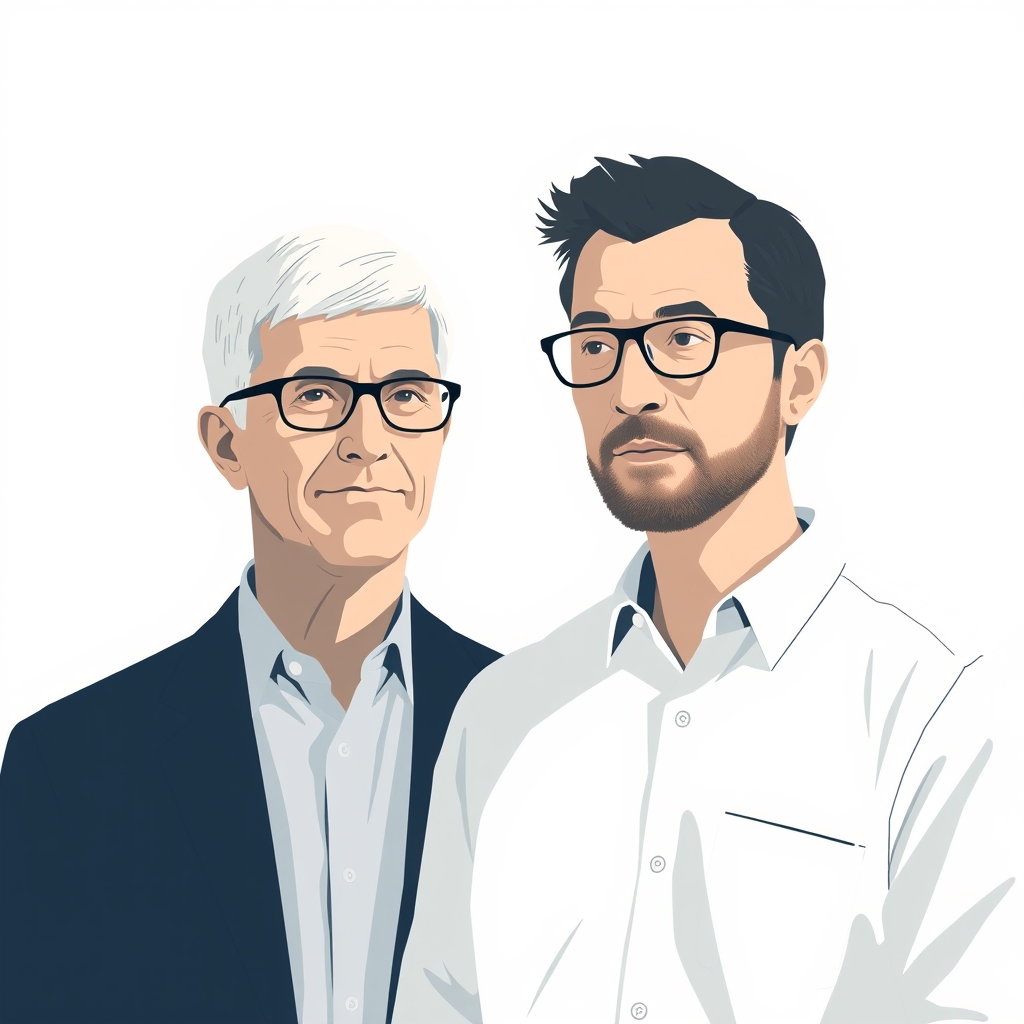
Apple’s Leadership Shift
Apple CEO Tim Cook is stepping down, and John Ternus is taking over. This move comes as no surprise to those familiar with Apple’s inner workings, but it does raise questions about the company’s future direction. Mark Gurman at Bloomberg was first to report the news.
Ternus, who has been with Apple for over a decade, has been instrumental in the company’s hardware engineering efforts. His appointment as CEO suggests that Apple will continue to focus on its strengths in hardware design and engineering. But what does this mean for Apple’s chip design ambitions?
A History of Vertical Integration
Apple has long been interested in vertical integration, and its desire to produce its own CPUs dates back to the 1980s. The company’s Project Aquarius, initiated in the mid-1980s, aimed to create a multi-core CPU architecture. Although the project never came to fruition, it demonstrates Apple’s willingness to invest in ambitious R&D efforts.
In 1989, a confidential document titled the ‘Scorpius Architectural Specification’ surfaced, outlining the general concepts of multi-core CPU architectures. This document, uploaded to the Internet Archive by an anonymous user with apparent ties to Apple, shows that Apple’s interest in producing its own CPUs was well ahead of its time.
The Challenges of Chip Design
However, Apple’s attempts to enter the chip design market have not always been successful. As Tom Hornby of Low End Mac noted, ‘Apple was not a microchip company, and it didn’t have the resources to become one.’ The company’s lack of experience in microprocessor design and manufacturing made it difficult to compete with established players like Intel and Motorola.
Apple’s more recent success with its A-series chips, designed in-house and manufactured by TSMC, suggests that the company has learned from its past experiences. The company’s decision to transition away from Intel CPUs for its Mac lineup is a significant step towards vertical integration.
What’s Next for Apple
As Ternus takes the reins as CEO, he will need to navigate Apple’s complex relationships with suppliers and partners. The company’s focus on vertical integration and chip design will likely continue, but it will also need to balance its desire for control with the need for collaboration and innovation.
What to watch: Apple’s chip design efforts will be closely watched in the coming years, particularly as the company continues to transition away from Intel CPUs. Will Apple’s in-house chip design efforts pay off, or will the company face new challenges in its quest for vertical integration?
Updates
- 2026-09-13 — Are Apple’s wired EarPods still worth buying? (source)
- 2026-08-01 — Review: Yes, we’re still arguing about Nolan’s The Odyssey (source)
- 2026-05-25 — Google’s official cases for the entire Pixel 10 series are on sale right now (source)
- 2026-05-19 — Electrical utility megamerger is all about the data centers (source)
- 2026-05-12 — Digg is back again, this time to aggregate AI news (source)
- 2026-04-28 — ASUS’ dual-screen ROG Zephyrus Duo is now on pre-order starting at $4,500 (source)
- 2026-04-28 — ASUS’ dual-screen ROG Zephyrus Duo is now on pre-order starting at $4,500 (source)
Related Articles

Googlebook challenges Apple’s retail play as Mac Studio prices
Google’s $899 AI‑native laptop and Apple’s store‑first philosophy clash amid rising component costs and AI‑driven hardware bets.

Apple's rapid RC rollout pressures macOS developers
Apple released second release candidates for macOS Tahoe and Sequoia, while beta streams for Golden Gate and iOS 27.2 accelerate, sparking developer strain and highlighting ecosystem frictions.
Apple adds $5 monthly fee for iPhone Handoff on T‑Mobile
Apple bundles iPhone Handoff with iOS 27 but charges T‑Mobile users $5 a month, sparking debate over continuity costs and carrier lock‑in.