

Microsoft's Project Zenith Requires 64 GB RAM


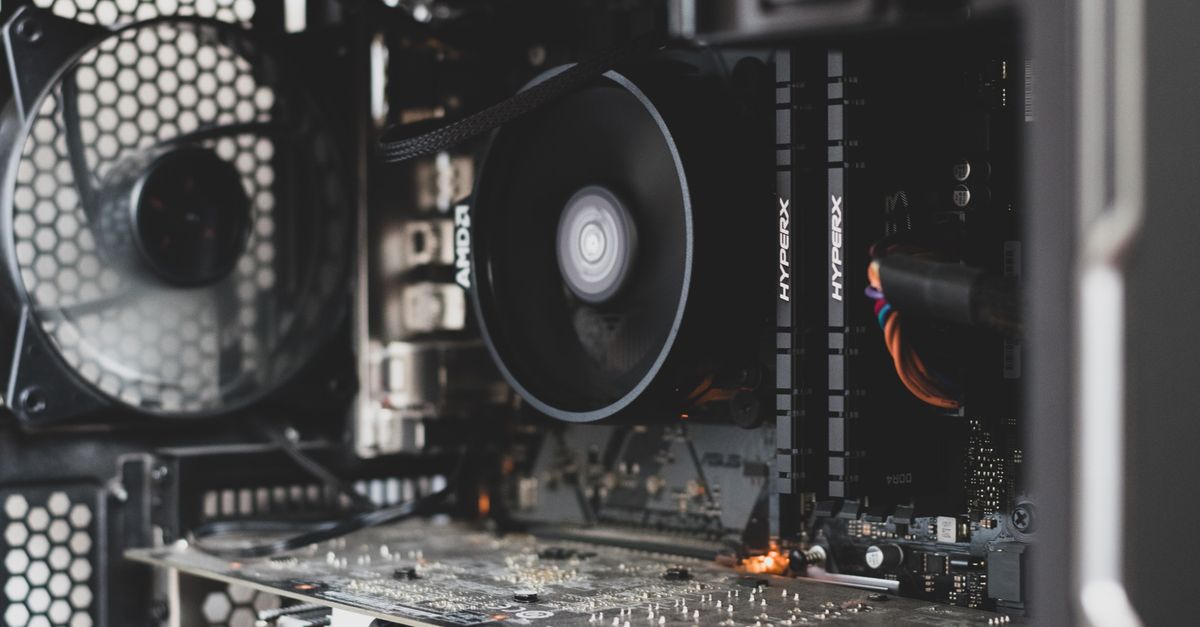
Photo by Startup Stock Photos on Pexels
Project Zenith lands as a bare‑bones Windows variant that strips away consumer‑grade UI fluff to give developers a faster, more predictable environment. The trade‑off is a steep hardware floor: Microsoft says the build needs at least 64 GB of RAM to run.12345678
Engadget reports that the announcement came alongside a reminder that only high‑end workstations will meet the memory demand.15 No pricing or rollout date was disclosed, and the preview did not include a screenshot of the desktop itself. The lack of visual cues leaves the community guessing how much of the traditional Start menu and taskbar survive the purge.
What Project Zenith Is
At its core, Zenith is a re‑engineered Windows shell that removes non‑essential services and background apps.1234678 Microsoft frames the effort as a way to reduce noise for developers who spend most of their day in terminals, editors, and container runtimes.1267 By cutting out telemetry collectors, auto‑updaters, and the Microsoft Store, the OS promises lower interrupt rates and more predictable performance metrics.
The design philosophy mirrors what many power users already do: disable services, uninstall bloatware, and run a lean system image. What differs here is that the lean‑ness is baked into the OS image itself, rather than being the result of manual tweaking. That means the OS can ship with a smaller attack surface and a more consistent baseline for benchmarking.
Why the Hardware Bar Is So High
The 64 GB RAM requirement feels like a deliberate gatekeeper. Most developer laptops sit in the 16‑32 GB range, and even high‑end desktops rarely exceed 32 GB unless they are built for data‑science workloads. By demanding 64 GB, Microsoft effectively limits Zenith to a niche of developers who already own workstation‑class machines.12345678
One plausible reason is that the stripped‑down kernel still runs the full Windows driver stack, which expects the same memory management overhead as regular Windows. Removing UI elements does not magically shrink the kernel’s footprint. Instead, the OS may allocate larger buffers to compensate for the missing caching layers that the full Windows UI provides. The result is a system that can hold more simultaneous processes without paging, but only if the hardware can supply it.
Another angle is market positioning. Microsoft has been nudging enterprises toward Azure‑based dev environments for years. By tying Zenith to high‑end hardware, the company may be encouraging developers to move heavy lifting to the cloud while using a thin local client for code editing.
Developer Experience: What Changes
If you manage to spin up a machine that meets the spec, the day‑to‑day experience should feel noticeably leaner. The Start menu, as we know it, is replaced by a minimal launcher that surfaces only pinned developer tools. Background services like Windows Search and Cortana are disabled by default, which reduces CPU cycles spent on indexing and voice activation.
File Explorer remains, but its ribbon UI is stripped down to basic navigation and copy‑paste actions.2467 Notifications are limited to system alerts and security prompts, eliminating the constant stream of consumer‑focused pop‑ups. For developers who already use third‑party terminal emulators and package managers, this could feel like a welcome declutter.
However, the trade‑off is the loss of integrated consumer features that many power users rely on. The Microsoft Store, for instance, is a convenient source for developer tools like Visual Studio Code extensions. With that removed, developers must fall back to manual installs or package managers like winget, which may not be as discoverable for newcomers.
Historical Context of Windows Developer Editions
Microsoft has tried to carve out a developer‑centric Windows niche before. Windows 10 S, launched in 2017, forced apps to come from the Store and limited the OS to a lightweight shell. The experiment flopped because developers and power users found the restrictions too severe, and Microsoft eventually opened S up to regular desktop apps.
Windows 11 introduced a “Developer Mode” toggle that enables SSH, Linux subsystem, and other tooling, but it leaves the consumer UI intact. Zenith goes a step further by removing the UI altogether, echoing the philosophy of Linux distributions like Arch or Gentoo that start from a minimal base and let users add only what they need.
The move also parallels Apple’s recent push with macOS “Developer Beta” releases, where the company strips out non‑essential UI changes to give developers a stable platform for testing. Microsoft’s approach differs in that it demands high RAM, whereas Apple’s beta runs on any recent Mac. The contrast highlights Microsoft’s willingness to target a narrower, higher‑spec segment.
What to Watch
The next data point to track is Microsoft’s rollout timeline. If the company releases a public ISO or a Windows Insider channel for Zenith, the community will quickly test whether the 64 GB requirement is a hard floor or a recommendation. Watch for any updates to the hardware spec, especially if Microsoft announces a “light” variant that lowers the memory bar. The decision will signal whether Zenith is meant for a handful of elite dev shops or if it could become a mainstream alternative for cloud‑first development teams.
Updates
- 2026-09-21 — MediaTek’s flagship laptop chip is the Dimensity CX C10 Max, debuts in a Lenovo Googlebook (source)
- 2026-09-08 — Tesla Cybercab doesn’t have any manual controls — but it does have a virtual joystick (source)
Footnotes
Related Articles

Microsoft, Lyft, Samsung and Honor Shift Audience and Device Play
Microsoft pushes fan-community features, Lyft trains drivers to service Waymo fleets, Samsung advises Apple on foldables, and Honor’s robot phone sparks niche demand.
Microsoft Restores Windows Security Patches for AMD CPUs
Microsoft resumes Windows updates on older AMD chips after fixing a block that risked bricking devices, citing Spectre and Meltdown mitigations.

Microsoft’s AI Payoff, Boeing’s Starliner
Microsoft reports a $3.2 B return from Anthropic, Boeing eyes a Starliner launch, and Hivekit launches an AI‑driven mining platform.