

Human Brain Organoids Form Eyes and Power Early Wetware Computers

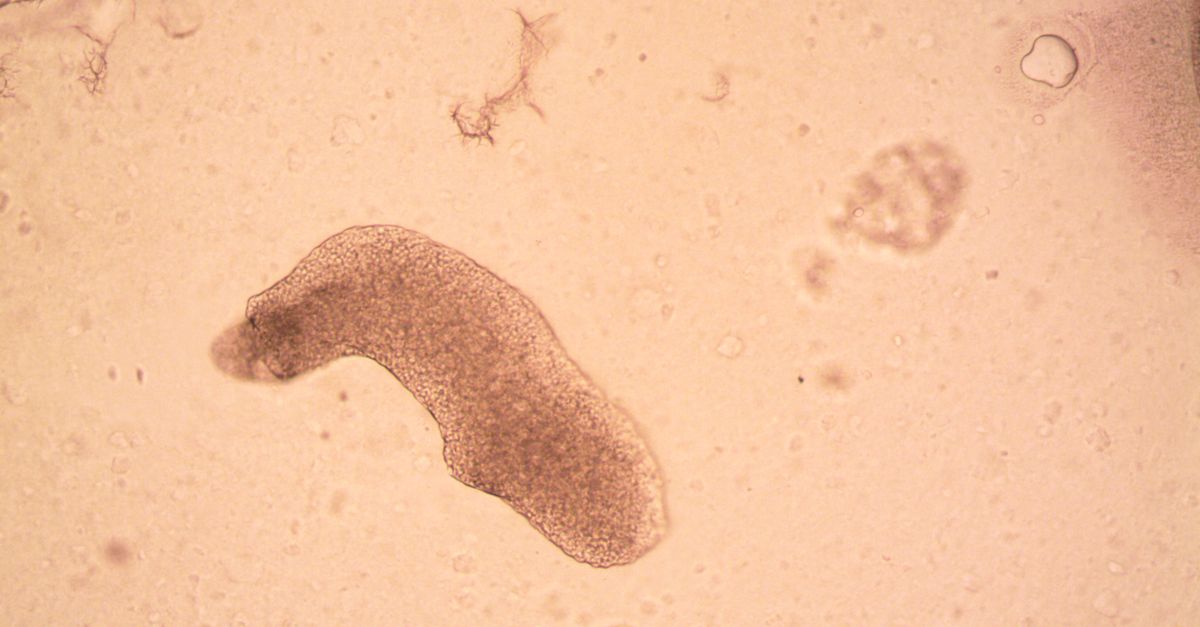
Mini-brains grow eyes in a dish
Researchers at Heinrich Heine University Düsseldorf coaxed human brain organoids to form optic cups. The team added retinoic acid, a vitamin A derivative, 20 days after the organoids began developing. Two eye‑like structures appeared in about 65% of the 314 organoids treated. Each structure measured roughly 0.2 mm across and included a primitive lens, retina, cornea and neurons extending into the surrounding brain tissue.123
When exposed to light, the organoids generated electrical signals that travelled along the neural pathways. The response suggests that visual information is being transmitted, even though the tissues are far from mature.123 The researchers note that most organoids formed a symmetrical pair of optic cups, a pattern they attribute to the stem cells “remembering what they want to generate,” according to Jay Gopalakrishnan.143
The work offers a new model for inherited eye diseases. Gopalakrishnan says the organoids could eventually provide artificial retinas for blind patients.4235 The current limitation is longevity: the organoids begin to disintegrate after about 80 days because they lack a blood supply.678
Living processors: organoids as biocomputers
In Vevey, Switzerland, the startup FinalSpark builds “wetware” processors from human brain organoids. The organoids start from stem cells derived from anonymous human skin donors sourced from a Japanese clinic. After several months of culture, the cells self‑assemble into millimetre‑wide clusters comparable in size to a fruit‑fly larval brain.
Electrodes attached to the organoids record neural activity and deliver electric pulses that act as inputs. When a researcher presses a key, the system sends a signal through the electrode; the organoid sometimes responds with a burst of activity visible on an EEG‑style graph. The response is not guaranteed; the organoid can stop reacting after a few rapid inputs.
Fred Jordan, co‑founder of FinalSpark, argues that biological neurons are “one million times more energy efficient than artificial neurons.” He adds, “Instead of trying to mimic, let’s use the real thing.” The claim rests on the fact that a single neuron consumes orders of magnitude less power than a silicon transistor performing a comparable operation.
FinalSpark reports that its organoids can survive up to six months in culture. Ten universities are currently testing the same organoids for basic research, and a live feed of neuronal activity is hosted on the company’s website.
Integration in animal hosts raises ethical stakes
A separate line of research implants human brain organoids into living rodents. In April, scientists at the Salk Institute placed organoids into the brains of mice. The grafts grew, formed blood‑vessel connections, and forged synaptic links with the host neurons. Some organoids survived for as long as 233 days.
The experiment builds on a 2017 study that implanted organoids into rats, where the tissue persisted for months. In both cases, the host animals showed no signs of enhanced cognition. Nonetheless, the integration of human neural tissue into animal brains has prompted ethicists to consider safeguards against the emergence of human‑like consciousness.
The mouse work was highlighted by Inverse as one of its “WTF” stories of 2018. The researchers emphasized that the chimeric brains did not confer any obvious intelligence boost to the animals. Still, the possibility of more sophisticated integration in the future keeps the debate active.
Technical hurdles and near‑term prospects
All of the organoid approaches share a common bottleneck: vascularisation. Without a blood supply, organoids break apart after weeks to months, as seen in the eye‑cup study.678 Supplying nutrients and removing waste remains an open engineering problem.678
Encoding data for a living processor is another challenge. Current experiments treat a spike in neural activity as a binary “one” and silence as a “zero.” Translating complex data structures into patterns the organoid can interpret, and then reading out meaningful results, is still experimental.
Despite the limitations, organoids are already valuable for disease modelling. At Johns Hopkins, Lena Smirnova uses brain organoids to study autism and Alzheimer’s disease. In robotics, Benjamin Ward‑Cherrier attached an organoid to a simple robot that could differentiate Braille letters, demonstrating a rudimentary sensory‑motor loop.
The eye‑cup breakthrough adds a potential biomedical application: patient‑specific retinal tissue for transplantation. If the organoids can be kept alive longer and integrated with host vasculature, they could serve as a source of living grafts for degenerative eye conditions.4235
What to watch
The next milestones will be public. Watch for a peer‑reviewed report on extending organoid viability beyond the 80‑day limit, likely involving microfluidic perfusion or engineered vasculature.678 Track FinalSpark’s next demonstration of learning in a wetware system – a repeatable change in neural response after repeated stimulation would signal a shift from passive sensing to adaptive computation. Finally, monitor regulatory filings related to chimeric organoid implants, as any move toward clinical trials will trigger new ethical guidelines.
Updates
- 2026-09-04 — Deals: Galaxy S26 FE + FREE $200 Amazon gift card, Fold 8 Ultra up to $600 off, LG 65-inch OLED TV $800 off, more (source)
- 2026-08-25 — Border Wall Construction Threatens 6,000 Years of History on Private Lands (source)
- 2026-08-13 — The web’s newest weapon against AI scrapers is a font (source)
Footnotes
Related Articles

New Labs, Maps, Crowdfunding and AI Boost Biological Research
Scientists use ultraquiet chambers, complete fly brain maps, a crowdfunding platform, and upgraded AI reasoning to accelerate biology research.
AI's Dopamine Connection
New research links AI's temporal difference learning to brain's dopamine system

Googlebook challenges Apple’s retail play as Mac Studio prices
Google’s $899 AI‑native laptop and Apple’s store‑first philosophy clash amid rising component costs and AI‑driven hardware bets.