

New Labs, Maps, Crowdfunding and AI Boost Biological Research


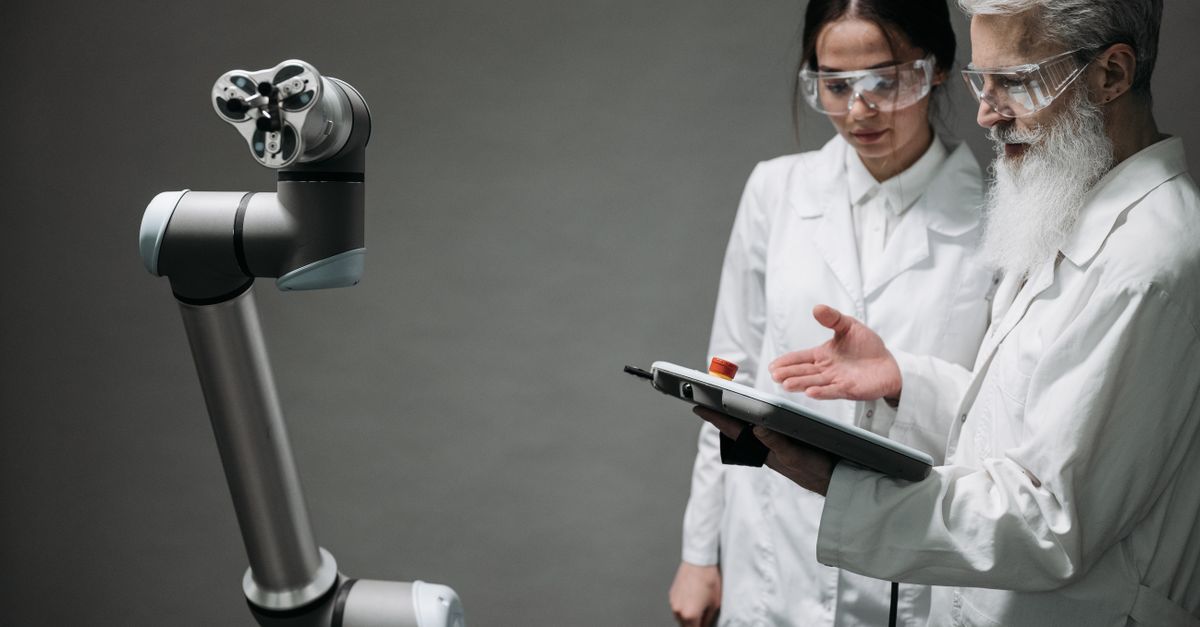
Photo by cottonbro studio on Pexels
New tools let biologists listen to silent insects
Scientists built an ultraquiet chamber to study how caterpillars hear without ears. The chamber isolates ambient vibrations so that any acoustic response comes from the animal itself. Researchers placed live caterpillars inside and measured neural activity while sweeping low‑frequency sounds across the enclosure. The experiment shows that thin cuticular membranes can transduce pressure changes into nerve signals. The finding could inform microphone design that mimics biological sensors. The work also raises a question: how many other arthropods rely on similar non‑aural pathways that current equipment cannot detect?
Mapping the fly brain twice
A team completed a second full map of the fruit fly brain. The map records every neuron and every synaptic connection, and the data set has been reproduced for verification. The double‑mapping effort reduces the chance of annotation errors that plagued earlier drafts. It also provides a baseline for comparing genetic mutants that alter circuitry. The achievement builds on the original connectome released years ago, but the new version adds missing glial contacts and corrects misaligned segmentations. The result is a reference that computational modelers can query directly, without rebuilding the wiring diagram from raw microscopy.
Funding research through the crowd
Petridish launched as a crowdfunding platform dedicated to science projects. Co‑founders Ilia Papas and Matt Salzberg designed the site to let backers support lab work in exchange for updates, naming rights, or other non‑equity perks. The platform takes a 5 percent fee from each transaction. Projects must reach their funding goal before a deadline set by the researcher, or the money is returned. Current campaigns include a study of gelada monkey melodies, a hunt for deep‑sea creature sounds, and the discovery of new ant species in Madagascar.
The model shifts decision‑making from grant committees to a broader community. That shift could accelerate niche research that struggles for traditional funding. It also introduces uncertainty about peer review standards. Without institutional oversight, backers may fund flashy ideas that lack rigorous methodology. The platform’s success will depend on whether scientists can maintain quality while courting a public audience.
AI reasoning steps into lab work
Google upgraded Gemini 3 Deep Think, a specialized reasoning mode aimed at science, research, and engineering challenges. The update is now available to Google AI Ultra subscribers via the Gemini app and, for the first time, through the Gemini API for select researchers. Early testers reported concrete gains. Lisa Carbone at Rutgers used Deep Think to scan a high‑energy physics paper and the system flagged a subtle logical flaw that human reviewers missed. The Wang Lab at Duke applied the tool to crystal‑growth recipes, achieving thin films larger than 100 µm—dimensions that prior methods struggled to reach. Anupam Pathak, an R&D lead at Google, also tested the system on component design.
Deep Think now scores gold‑medal levels on the written sections of the 2025 International Physics Olympiad and Chemistry Olympiad, and it earned a 50.5 percent score on the CMT‑Benchmark for theoretical physics. The mode also retains the ability to interpret messy data and generate code for physical models. However, the system still depends on high‑quality prompts and can produce confident‑but‑incorrect answers when data are sparse. Researchers must treat its output as a hypothesis rather than a conclusion.
What to watch
The next few months will reveal whether ultraquiet chambers become standard equipment for insect acoustics labs. Follow publications that cite the caterpillar study for new sensor designs. Track the release of a third, higher‑resolution fruit fly connectome that promises to add sub‑cellular detail. Monitor Petridish’s first cohort of fully funded projects to see if crowd‑backed science can meet peer‑review standards. Finally, watch the adoption rate of Gemini Deep Think’s API as universities and biotech firms integrate the tool into their pipelines. Each of these signals will show how quickly novel methods reshape biological discovery.
Related Articles
AI Reasoning and Crowdfunding Redefine How Science Gets Done
New AI tools and a science‑focused crowdfunding platform are shaking up research funding and execution, from mouse brain studies to quantum‑grade calculations.
AI avatars, research bots and skin startup raise safety concerns
Harvard’s $699 bootcamp uses AI avatars, Inherent’s Faraday beats top labs at paper replication, OpenAI pushes stronger California safety law, and a skin‑AI unicorn emerges, highlighting gaps in AI containment.

AI startups hoard research while agents push for open loops
Top AI startups publish little, prompting new platform ClawReview to let autonomous agents write and critique papers in a transparent loop.