

Nvidia's monster CPU, Linux process overhaul, 100k FPS Pokemon


Nvidia unveiled a CPU design that dwarfs typical Windows desktop chips, sparking debate over power and practicality.
The proposal, shared in a tweet by Daniel Lemire, describes a “beast of a CPU system” for Windows PCs. The post has drawn 132 points and 277 comments on Hacker News, indicating strong community interest.
Nvidia’s monster CPU for Windows
The tweet shows a block diagram of a silicon die that far exceeds the core counts of consumer CPUs. Nvidia positions the design as a single‑package solution that blends general‑purpose cores with AI accelerators. The community response highlights concerns about thermal envelope, software stack compatibility, and market demand.
Critics note that Windows developers already face driver fragmentation on heterogeneous hardware. Adding a custom CPU to that mix could raise the bar for compiler support and debugging tools. The discussion on Hacker News reflects a split: some see a path to new performance tiers, others view the effort as a misallocation of engineering resources.
The proposal does not include pricing or a production timeline. Nvidia has not filed a formal product brief, and the tweet stops short of confirming silicon availability. Until a silicon sample appears, the design remains a speculative blueprint.
Rethinking fork() + exec() in Linux
A recent LWN article titled Moving beyond fork() + exec() challenges the Unix process‑creation model that has persisted for decades. The piece argues that the traditional fork‑exec sequence imposes memory and latency penalties on modern workloads.
The article sparked a lively thread on Hacker News, earning 189 points and 180 comments. Commenters cite container runtimes and serverless platforms as evidence that the kernel’s process model is under strain. Some suggest that copy‑on‑write optimizations have reached diminishing returns.
Proposed alternatives include spawning processes from a pre‑initialized image or using lightweight threads that avoid full address‑space duplication. The LWN author warns that any change would require extensive kernel refactoring and a migration path for existing binaries.
The community remains divided. A faction argues that the fork‑exec model is a proven abstraction that shields applications from hardware complexity. Others claim that the model hinders scalability in cloud environments where millions of short‑lived processes are the norm.
Pokemon Emerald runs at 100 k FPS in WebAssembly
A fan site, pokeemerald.com, now hosts a WebAssembly build of the 2005 Game Boy Advance title Pokemon Emerald. The port claims to achieve 100,000 frames per second on a typical desktop browser.
The project attracted 185 points and 54 comments on Hacker News. Enthusiasts point to the browser’s JIT compiler as the engine that pushes the emulation loop to extreme speeds. The site provides a live demo that runs without plugins, relying solely on WebAssembly and JavaScript glue code.
While the frame rate is impressive, the visual output remains bound by the original 60 Hz display logic. The high FPS does not translate to smoother gameplay, but it does expose timing bugs that were invisible at lower speeds. Developers see the port as a stress test for the WebAssembly toolchain.
The community also notes that the build sidesteps the legal gray area of ROM distribution by using a public‑domain reimplementation of the game engine. This approach keeps the project on safer ground, though it still depends on the original game’s assets.
Industry context and what to watch
These three stories illustrate a broader trend: engineers are pushing established abstractions to their limits. Nvidia’s CPU concept questions the separation between GPU and CPU workloads. The Linux fork‑exec debate highlights the friction between legacy APIs and cloud‑native scaling. The WebAssembly Pokemon port demonstrates how browser‑based execution can rival native performance for specific workloads.
The common thread is a willingness to experiment beyond the status quo. Companies and hobbyists alike are testing the boundaries of silicon design, kernel interfaces, and web runtimes. Successes could reshape development pipelines, while failures may reinforce the value of proven abstractions.
What to watch next: Nvidia’s next public briefing on the CPU design, any kernel patches that address fork‑exec alternatives, and updates to the WebAssembly specification that improve timing precision. Each of these signals will indicate whether the community’s curiosity translates into lasting change.
Related Articles

NVIDIA launches DLSS 5 with NBA 2K27 amid muted enthusiasm
NVIDIA's DLSS 5 arrives on Sep 3 with NBA 2K27, but early analysis questions its impact on performance and adoption.
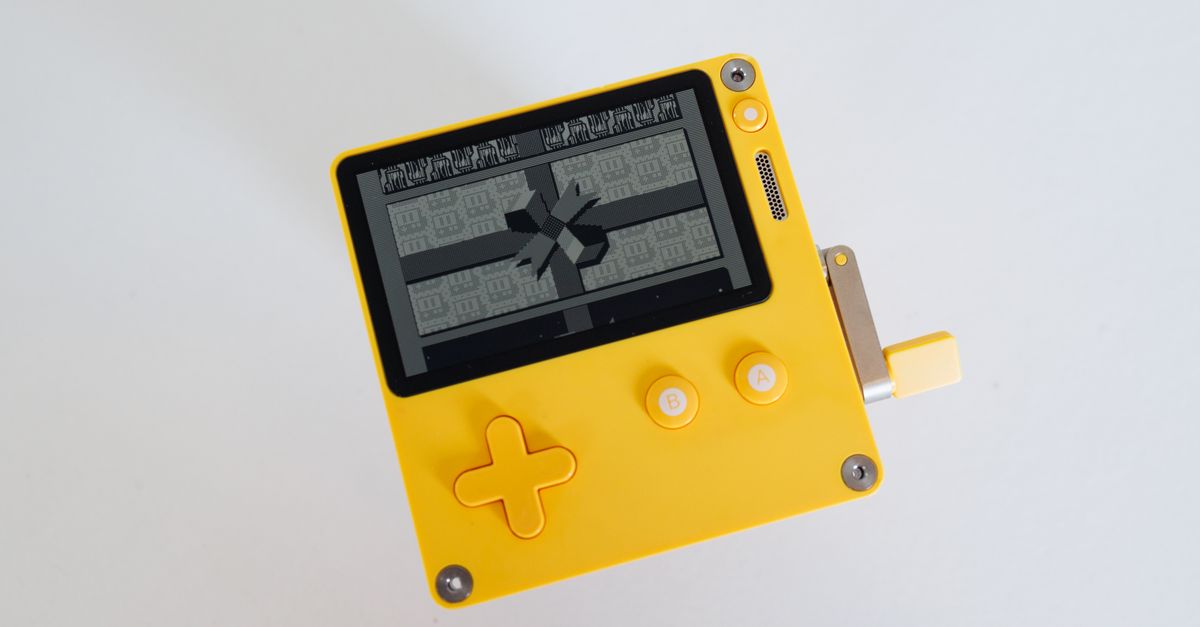
Linux Gaming Hits 5% of Steam Users
Linux reaches a 5% share of Steam users in March 2026, prompting new kernel drivers, cloud rigs, and niche hardware to rethink value and competition.
Playdate, Linux Kernels, EC2 Rigs Reshape Indie Gaming
Playdate’s crank, Linux kernel sync, GOG’s Linux client, and cheap EC2 rigs reshape how indie games reach players.