

Waymo leads Texas AV registrations; startups face lawsuits

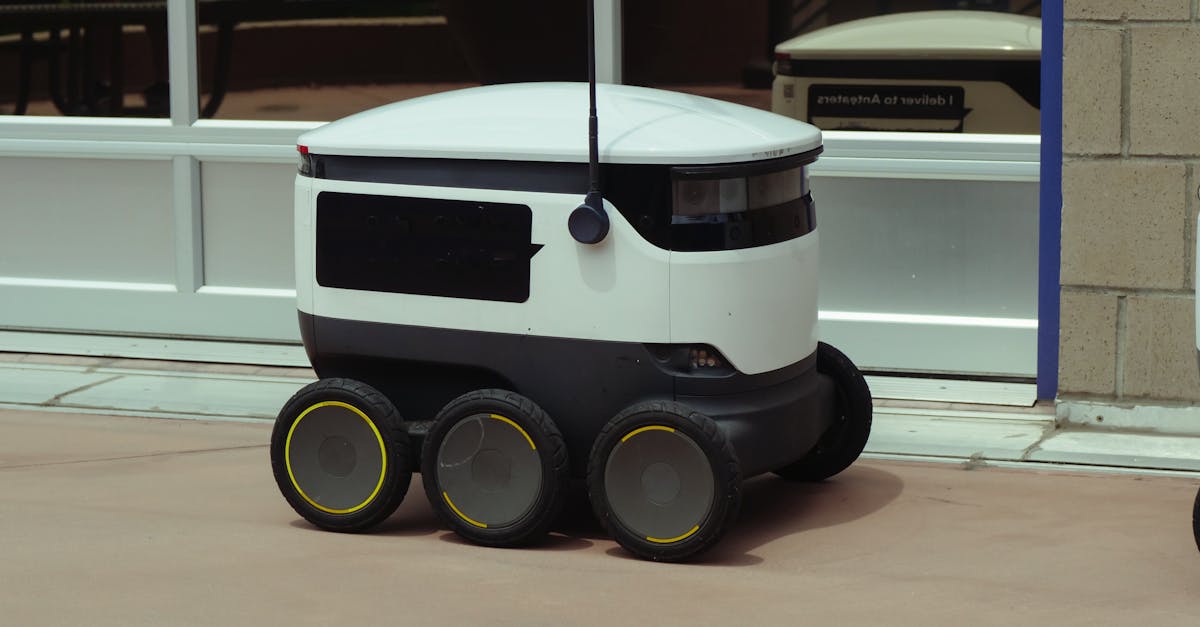
Photo by Kindel Media on Pexels
Waymo’s Texas Lead Shows Market Consolidation
Waymo holds the largest share of autonomous vehicle registrations in Texas, and Tesla trails behind. The count comes from a new state law that requires every robotaxi and self‑driving truck to register, and an AV tracker tool that aggregates the filings. The data give the clearest picture yet of how many commercial self‑driving units operate in the Lone Star State. Waymo’s dominance reflects its early deployment of driverless rides in Austin and Dallas. Tesla’s lower number aligns with its limited rollout of full self‑driving features in the region.
The Texas law also forces companies to disclose vehicle classes and operating dates. Registrations are public, allowing analysts to compare fleet sizes across providers. Waymo’s lead suggests it can attract more rider volume and data for algorithm improvement. Tesla’s lag may limit its ability to gather real‑world edge cases in the state. The regulator, the Texas Department of Motor Vehicles, will continue to publish quarterly updates. Observers will watch whether other players, such as Cruise or Pony.ai, can close the gap.
Legal Risks as Startups Deploy Service Robots in Consumer Spaces
A San Francisco startup faces a lawsuit that claims it tested autonomous robots inside Airbnb rentals and caused property damage. The filing alleges the company placed the machines in private homes without guest consent. Plaintiffs say the robots malfunctioned and left trash and broken items behind. The lawsuit was filed in a California superior court and cites breach of contract and negligence.
The startup has not publicly responded to the complaint. The case highlights the regulatory gray area around service robots that operate in residential settings. Existing consumer protection statutes apply, but there is no specific framework for autonomous hardware in short‑term rentals. Legal analysts note that the outcome could set a precedent for how companies obtain permission before field trials. If the court rules against the startup, other firms may need to secure explicit guest agreements and insurance coverage before deploying similar devices.
Tooling Advances: Visualization, Mapping, and Sensor Tech
Foxglove released a web‑based platform that visualizes robot data across fleets. The system ingests live streams and recorded logs, then indexes them for search via UI, API, or CLI. Engineers can issue commands to robots remotely and replay sessions for root‑cause analysis. The platform also offers a managed data foundation that replaces ad‑hoc scripts and dashboards.
Foxglove’s documentation emphasizes reduced downtime and faster iteration cycles. By providing a shared view of robot behavior, the tool aims to catch issues earlier and protect service level agreements as fleets scale. The company integrates the MCAP format for standardized data exchange, which eases integration with existing stacks.
High dynamic range (HDR) CMOS cameras are gaining attention for outdoor robotics. HDR sensors combine multiple exposures to produce images that retain detail in both bright sunlight and deep shadows. The approach expands usable lighting conditions for visual perception algorithms. However, the composite exposure method halves shutter speed, which can introduce motion blur in fast‑moving scenarios. Industry leaders Tesla and Ford have publicly stated they will rely on camera‑centric perception stacks rather than LiDAR for their autonomous programs.
Truevision Designer offers a browser‑based map authoring tool for autonomous vehicle simulations. The editor supports OpenSCENARIO scenarios, dynamic traffic signal editing, and export to the CARLA simulator. Users can add bridges, tunnels, and detailed parking lots with procedural objects. The platform also provides lane‑marking and traffic‑light timing controls, enabling realistic road topology for testing.
Together, these tools address the data‑pipeline bottlenecks that have slowed robot deployments. Visualization platforms reduce engineering overhead, while HDR sensors improve perception reliability. Mapping suites allow developers to create richer test environments without hand‑coding geometry.
Industry Context: Autonomous Vehicle Registration Trends
The autonomous vehicle registration landscape in Texas provides insight into the competitive dynamics of the industry. Waymo’s lead in registrations suggests that it has established a strong presence in the state, which could make it challenging for competitors to catch up. Other companies, such as Cruise and Pony.ai, will need to accelerate their fleet growth or secure partnerships to compete on volume.
The Texas Department of Motor Vehicles’ decision to publish quarterly updates on autonomous vehicle registrations will provide valuable data for industry observers. This transparency will help analysts track the progress of various companies and identify trends in the market.
History of Autonomous Vehicle Regulations
The new law in Texas requiring autonomous vehicle registrations is part of a broader effort to regulate the industry. In recent years, there have been several instances of regulatory actions related to autonomous vehicles. For example, in 2020, the California Department of Motor Vehicles (DMV) issued new regulations for the testing of autonomous vehicles on public roads.
These regulations required companies to obtain a permit and meet certain safety standards before testing autonomous vehicles on public roads. The regulations also required companies to report any accidents or incidents involving autonomous vehicles.
Technical Mechanics: How HDR Cameras Work
HDR cameras combine multiple exposures to produce images that retain detail in both bright sunlight and deep shadows. This is achieved through a process called exposure bracketing, where the camera takes multiple photos at different exposure levels.
The images are then combined using a technique called HDR merging, which produces a single image with a wider dynamic range. This allows HDR cameras to capture a broader range of lighting conditions, making them useful for outdoor robotics applications.
Downstream Implications: Impact on Startups and Consumers
The lawsuit against the San Francisco startup highlights the regulatory risks associated with deploying service robots in consumer spaces. The outcome of the case could have significant implications for startups and consumers alike.
If the court rules against the startup, it could set a precedent for how companies obtain permission before field trials. This could lead to increased regulatory scrutiny of autonomous service robots in short-term rentals.
On the other hand, if the court rules in favor of the startup, it could provide a green light for companies to deploy similar devices without explicit guest agreements. This could lead to increased adoption of autonomous service robots in consumer spaces.
Industry Implications and What to Watch
Waymo’s registration advantage gives it a data moat that could reinforce its market position in Texas. Competitors will need to accelerate fleet growth or secure partnerships to compete on volume. The Airbnb robot lawsuit signals that regulators may soon demand clearer consent mechanisms for field trials in private spaces. Companies should monitor any legislative proposals that address autonomous service robots in short-term rentals.
On the technology side, adoption of Foxglove, HDR cameras, and Truevision will likely increase as firms seek to streamline data handling and simulation. Watch for announcements of new integrations between these platforms and major autonomous stacks. The next quarterly Texas registration report will reveal whether other manufacturers can narrow the gap with Waymo. The resolution of the California lawsuit will indicate how quickly startups can resume consumer-space testing.
Updates
Related Articles
Chef Cameras, Vacuum Bans and Heat‑Aware Apps Signal a New Robot
A German startup filmed a home‑cooked meal to train humanoids, Washington barred foreign robot vacuums, and Runna added heat‑adjusted pacing—three signs of shifting robot economics.

Robotic Vision and Autonomy Push Past Lab Experiments
Genesis AI and Foxglove showcase breakthroughs in robotics and autonomous systems, while HDR cameras address real-world challenges.
Ouster Unveils Color Lidar to Replace Cameras
Ouster's new color lidar sensor captures depth and image data, potentially replacing cameras in various applications.