

Ouster Unveils Color Lidar to Replace Cameras

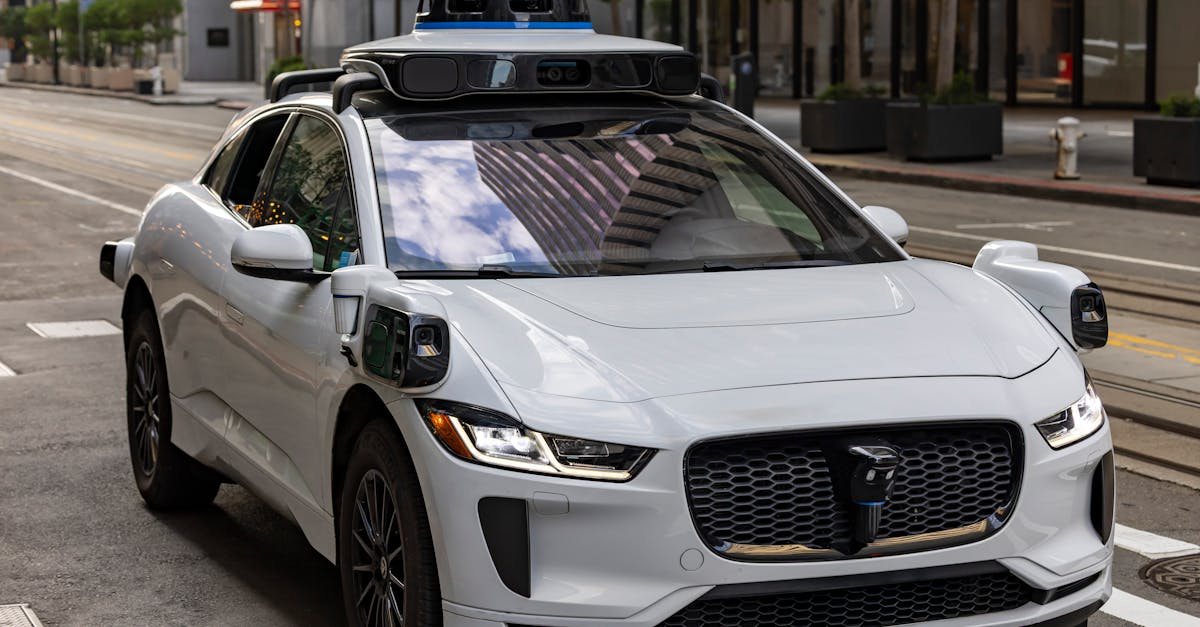
Photo by Stephen Leonardi on Pexels
Ouster’s Color Lidar Sensor
Ouster CEO Angus Pacala described a sensor that can simultaneously capture depth and image data as a “holy grail.” The company’s new color lidar sensor aims to replace cameras in various applications.
The sensor combines the capabilities of lidar and cameras, providing both depth information and high-resolution image data. This technology has the potential to transform industries such as autonomous vehicles, robotics, and surveying.
Technical Specifications
While specific technical details are scarce, Ouster’s color lidar sensor is expected to offer high-resolution image data and accurate depth information. The sensor’s ability to capture both color and depth data could enable more accurate object detection and tracking.
Industry Context
The development of Ouster’s color lidar sensor is part of a larger trend towards the integration of lidar technology in various applications. Lidar sensors have been widely adopted in autonomous vehicles, but their use is expanding into other areas such as robotics and surveying. For instance, companies like Velodyne and Innoviz are also working on high-resolution lidar sensors for autonomous vehicles.
The market size for lidar sensors is expected to grow significantly in the coming years, driven by increasing demand for autonomous vehicles and other applications. According to a report by MarketsandMarkets, the global lidar market is expected to reach $5.6 billion by 2025, up from $1.4 billion in 2020. This growth is driven by the increasing adoption of lidar sensors in autonomous vehicles, as well as their expanding use in other industries such as robotics and surveying.
The increasing demand for lidar sensors has led to a surge in investment in lidar technology, with several companies emerging as key players in the market. These companies are working on developing high-resolution lidar sensors that can capture accurate depth and image data, which is expected to drive growth in the market.
History of Lidar Technology
Lidar technology has been around for several decades, but it has only recently become more widely adopted in various industries. The first lidar sensors were developed in the 1960s, but they were not widely used until the 1990s, when they began to be used in surveying and mapping applications.
In recent years, lidar technology has become more widely adopted in the autonomous vehicle industry, with companies like Waymo and Tesla using lidar sensors to enable their vehicles to detect and respond to their surroundings. The increasing adoption of lidar sensors in autonomous vehicles has driven growth in the market, and is expected to continue to do so in the coming years.
Technical Mechanics
The technical mechanics of Ouster’s color lidar sensor involve the use of a laser to emit light onto the environment, which is then reflected back to the sensor. The sensor uses this reflected light to create a 3D point cloud of the environment, which can be used to detect and track objects.
The sensor’s ability to capture both color and depth data is made possible by the use of a specialized camera that can capture both visible light and depth information. This allows the sensor to provide a more complete picture of the environment, which can be used to enable more accurate object detection and tracking.
Applications and Implications
The potential applications of Ouster’s color lidar sensor are vast. In autonomous vehicles, the sensor could enable more accurate object detection and tracking, improving safety and efficiency. In robotics, the sensor could enable more precise navigation and manipulation of objects.
For example, in the field of autonomous vehicles, Ouster’s color lidar sensor could be used to enable vehicles to detect and respond to pedestrians, other vehicles, and road hazards. This could help to improve safety and reduce the risk of accidents.
The sensor could also be used in surveying and mapping applications, where it could enable more accurate and efficient data collection. This could be particularly useful in applications such as land surveying, where accurate data is critical.
Downstream Implications
The success of Ouster’s color lidar sensor will depend on its adoption by industries and companies. Key milestones to watch include the sensor’s integration into various applications and its performance in real-world scenarios. The company’s ability to scale production and reduce costs will also be crucial to its success.
If Ouster’s color lidar sensor is widely adopted, it could have significant implications for the autonomous vehicle industry and other fields that rely on lidar technology. For instance, it could enable the development of more autonomous vehicles that can detect and respond to their surroundings more accurately.
The widespread adoption of Ouster’s color lidar sensor could also drive growth in the lidar market, as more companies begin to use the sensor in their applications. This could lead to increased investment in lidar technology, as well as the development of new applications for lidar sensors.
What’s Next
The next step for Ouster will be to integrate its color lidar sensor into various applications and test its performance in real-world scenarios. The company will also need to work on scaling production and reducing costs to make the sensor more widely available.
Overall, Ouster’s new color lidar sensor has the potential to transform industries such as autonomous vehicles, robotics, and surveying. Its ability to capture both depth and image data makes it a powerful tool for a wide range of applications.
As Ouster moves forward with the development and deployment of its color lidar sensor, it will be important to watch the company’s progress and the impact of its technology on various industries. With its potential to transform industries and drive growth in the lidar market, Ouster’s color lidar sensor is an exciting development that is worth keeping an eye on.
In addition to its technical capabilities, Ouster’s color lidar sensor also has the potential to drive significant economic benefits. By enabling more accurate object detection and tracking, the sensor could help to reduce the risk of accidents and improve safety in a wide range of applications.
This could lead to significant cost savings for companies that adopt the sensor, as well as improved outcomes for individuals and communities. As such, Ouster’s color lidar sensor is not only an exciting technical development, but also a potentially transformative one.
Updates
- 2026-09-17 — Expensive flash drives: When and why it’s worth paying more (source)
- 2026-08-26 — Researchers get two genetic codes to work at the same time (source)
- 2026-06-04 — Kevin O’Leary agrees to downsize massive Utah data center (source)
- 2026-05-11 — Venmo’s biggest makeover in years comes at a very interesting time (source)
Related Articles
Waymo leads Texas AV registrations; startups face lawsuits
Waymo dominates Texas autonomous vehicle registrations while a San Francisco startup battles a lawsuit over Airbnb robot testing, and new visualization and sensor tools reshape robotics.

Robotic Vision and Autonomy Push Past Lab Experiments
Genesis AI and Foxglove showcase breakthroughs in robotics and autonomous systems, while HDR cameras address real-world challenges.
GPT-6 drives robot arms as AI weapons warnings grow
OpenAI's GPT-6 Astra can control robot arms, sparking debate over hype, safety and the looming threat of autonomous weapons.