

iPhone chatbots, synthetic Stan Lee voice, AI reliability gaps


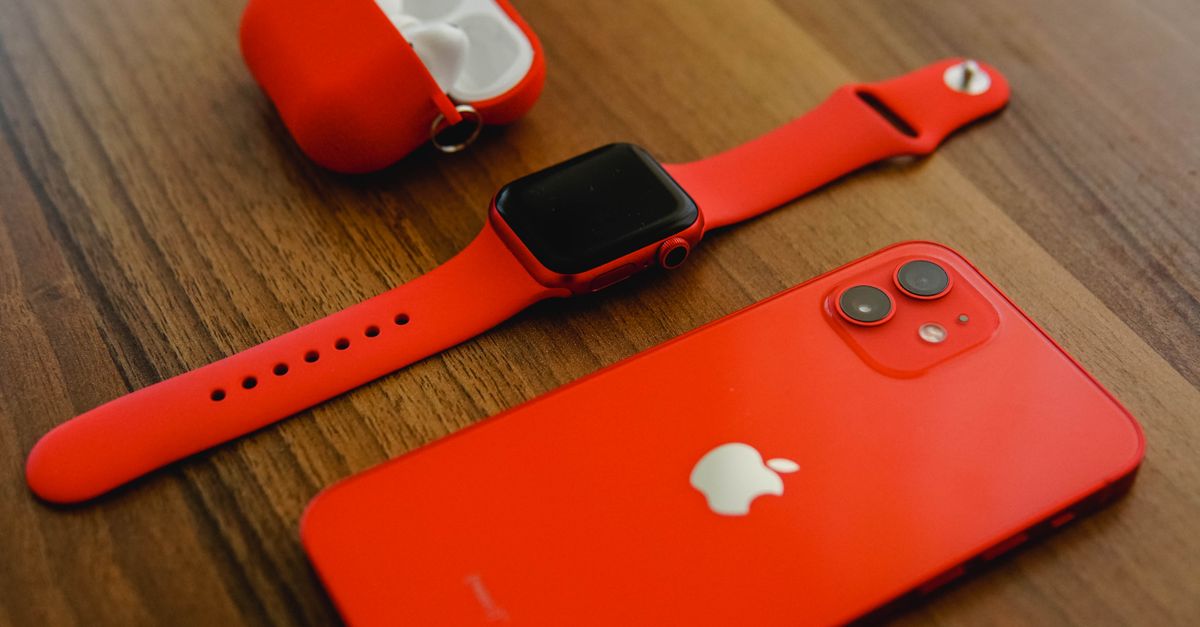
Photo by Airam Dato-on on Pexels
On‑device chatbots land on iPhone
Local AI chatbots can now run directly on the iPhone. The move eliminates the need for a constant internet connection.
The benefit list is short and concrete: offline performance and privacy. Users keep their prompts on the device, and latency drops to near‑instant. The trade‑off is obvious. iPhone silicon still lags behind desktop GPUs, so models must be small. Battery life takes a hit when the processor stays active for long conversations.
Developers will have to balance model size against conversational depth. Early adopters are likely to experiment with pruning and quantization to squeeze more capability into the limited on‑chip memory.
ElevenLabs resurrects Stan Lee with synthetic voice
ElevenLabs has added the late Marvel icon Stan Lee to its AI‑generated voice portfolio. The company now offers a voice that mimics Lee’s distinctive cadence and enthusiasm.
The addition raises practical questions about copyright and consent. Lee’s estate authorized the use, but the broader industry still debates how long a synthetic likeness can be monetized after a creator’s death. The technology itself is straightforward: a text‑to‑speech model trained on publicly available recordings produces the output.
Regulators have not issued clear guidance yet. If other studios follow suit, we may see a surge of resurrected voices in marketing, games, and podcasts. The legal framework will need to catch up before the novelty becomes routine.
New mothers confront an AI‑pilled coding landscape
A recent Wired feature describes how new mothers returning to software development face a workplace reshaped by AI tools. The environment feels unfamiliar, with code assistants, auto‑generated tests, and AI‑driven project managers crowding daily workflows.
The article notes that many mothers feel pressure to adopt every new tool instantly. The learning curve is steep, and the expectation to stay productive while caring for a child adds friction. Some companies provide AI‑training credits, but the support is uneven across teams.
The situation highlights a broader equity gap. If AI adoption benefits only those who can afford continuous upskilling, the talent pool narrows. Employers that invest in inclusive onboarding for AI tools may retain more diverse engineers.
Frontier LLMs disagree on the majority of fact‑check claims
Research posted on Lenz.io examined five frontier large language models against 1,000 real‑world fact‑check statements. The models disagreed on 67% of the claims.
The study’s methodology involved feeding each model the same prompt and comparing the binary true/false output. Disagreement rates this high suggest that even the most advanced LLMs cannot be trusted as independent fact‑checkers.
For developers building verification pipelines, the result is a warning sign. Relying on a single model could introduce systematic bias. Ensembles or external knowledge bases may be required to reach acceptable accuracy.
A “Eureka” machine that thinks like nature
A team at the Indian Institute of Science announced a prototype they call a “Eureka” machine. The system mimics natural evolutionary processes rather than gradient‑based optimization.
The authors argue that conventional AI struggles with problems that lack differentiable objectives. By letting candidate solutions compete and mutate, the machine explores solution spaces that standard models ignore.
While still experimental, the approach offers a contrast to the dominant deep‑learning paradigm. If the method scales, it could open research avenues where current AI hits a performance ceiling.
What to watch
Track the rollout of on‑device chatbot SDKs for iOS in the next quarter, watch ElevenLabs’ licensing terms for posthumous voices, monitor corporate AI‑training programs for parent engineers, and follow updates to the Lenz.io disagreement benchmark as more models are added. The next data point will show whether ensemble verification can push disagreement below the current 67% threshold.
Related Articles

Laya runs offline on M4, ChatGPT tracks ads
New offline inference benchmarks, cross‑site data collection, and rescue services raise fresh questions for AI developers.

Cognition's SWE-2 and DeepSeek Flash Shift Low‑Cost LLM
Cognition launches SWE‑2, DeepSeek releases v4.1 Flash, and a community project trains a 3.8B model for under $1k, reshaping cost expectations.
Apple hikes iPhone prices while rolling out foldable and AI
Apple raises older iPhone prices, adds iPhone Duo developer tools, launches Siri AI in English, and unveils Watch Series 12 health sensors.