

FAA Clears New Glenn for 4th Launch

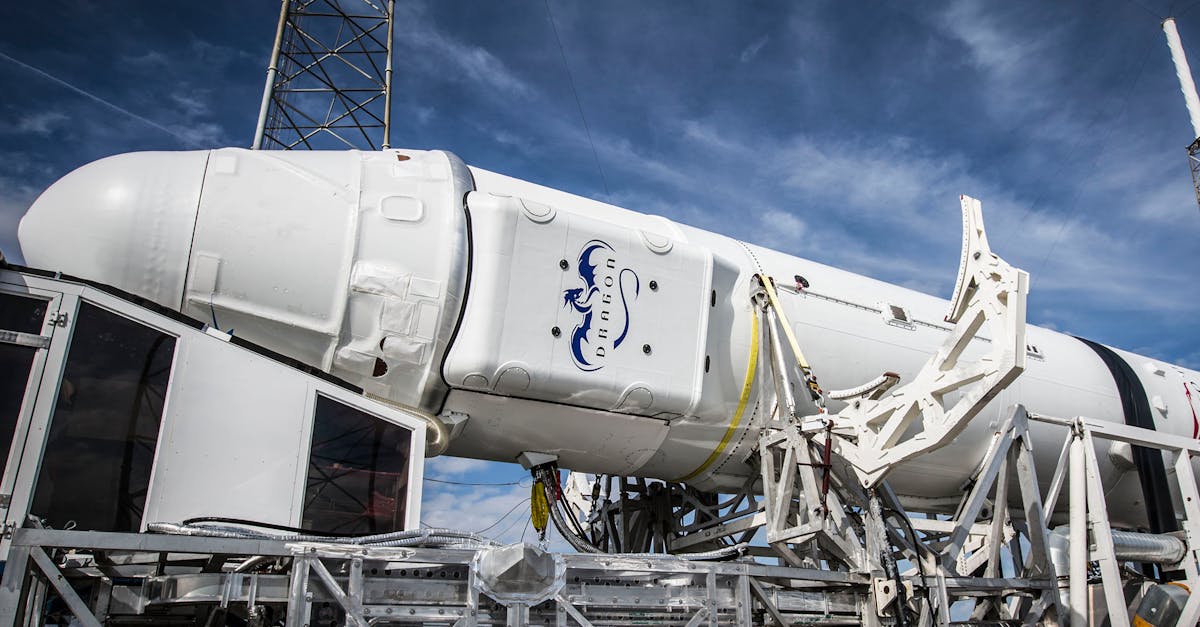
FAA clears New Glenn for fourth launch
Blue Origin announced that the Federal Aviation Administration has signed off on the next New Glenn mission. The agency’s clearance follows a months‑long investigation into the rocket’s previous flight anomalies. The regulator’s sign‑off means the company can start assembling the vehicle for a launch that will mark the fourth time New Glenn lifts off from Florida.
The clearance removes the last operational hurdle for a launch that has been delayed repeatedly. Blue Origin’s launch team will now load the BE-4 engine, the 2‑million‑pound thrust powerplant that drives New Glenn’s first stage, and attach the payload fairing that houses commercial satellites. The company has not disclosed a specific launch window, but the FAA’s green light indicates that safety reviews are complete and that the vehicle meets all current launch criteria.
Industry observers see the approval as a test of the FAA’s risk‑assessment process after a series of high‑profile mishaps in the commercial launch market. The agency’s decision also signals confidence that New Glenn can operate reliably alongside SpaceX’s Falcon 9 and United Launch Alliance’s Vulcan. If the fourth flight proceeds without incident, Blue Origin will finally have a flight cadence that matches its stated goal of offering a reusable heavy‑lift service.
Spent upper stages sharpen debris threat
An analyst at a leading space‑policy institute warned that spent upper stages now pose the most dangerous class of orbital debris. The comment followed a recent study that mapped the distribution of defunct rocket bodies in low‑Earth orbit. Upper stages, once they have delivered payloads, remain in orbit for decades because they lack propulsion to deorbit themselves.
The analyst’s statement underscores a trend that the space community has tracked for years: the proliferation of large, untracked objects that can collide with operational satellites. The danger is not abstract; a single collision can generate a cloud of fragments that endangers dozens of assets. The analyst did not provide a specific number of upper stages, but the implication is that each new launch adds another long‑lived hazard.
Regulators have begun to pressure launch providers to include end‑of‑life disposal plans. The FAA’s recent clearance for New Glenn did not mention any new debris‑mitigation requirements, but the agency has hinted at future rulemaking that could force companies to equip upper stages with deorbit kits or to design them for controlled re‑entry. Until such policies take effect, the debris problem will keep worsening.
Satellite internet set to dominate inflight connectivity by 2027
A major airline consortium announced that satellite‑based broadband will become the default Wi‑Fi solution on a large share of commercial flights beginning in 2027. The rollout will replace many legacy air‑to‑ground systems that rely on ground‑based towers and offer limited coverage over oceans.
The new service will use low‑Earth‑orbit constellations that provide high‑throughput links directly to aircraft antennas. Passengers can expect speeds comparable to ground‑based broadband, and airlines will benefit from a more uniform experience across routes. The announcement did not list the exact providers, but industry analysts have identified a handful of satellite operators that already sell aviation‑grade bandwidth.
The shift to satellite internet also raises questions about spectrum allocation and interference with existing navigation systems. Regulators in the United States and Europe are reviewing the frequency plans to ensure that the high‑capacity links do not compromise safety‑critical communications. The timeline to 2027 gives manufacturers time to certify new antenna hardware and to integrate the technology into cabin entertainment systems.
Converging pressures: launch cadence, debris, and connectivity
The three developments – New Glenn’s cleared launch, the rising debris risk from spent stages, and the upcoming satellite‑based inflight Wi‑Fi – intersect in a market that is trying to scale while keeping the orbital environment sustainable. Blue Origin’s push for a reliable heavy‑lift vehicle will increase the number of upper stages placed in orbit, potentially aggravating the debris issue the analyst highlighted.
At the same time, the demand for satellite broadband on aircraft fuels the need for more launch capacity. Each new satellite constellation that serves airlines adds dozens of payloads that must be placed in precise orbits. If launch providers do not adopt active deorbit mechanisms, the orbital corridor around 500‑km altitude could become congested, making collision avoidance more complex for both commercial and scientific missions.
Stakeholders are already negotiating solutions. Some launch firms are testing “plug‑and‑play” deorbit modules that attach to upper stages after payload separation. Satellite operators are exploring shared‑launch arrangements that reduce the total number of rockets needed for a given constellation. The FAA’s recent clearance of New Glenn suggests that regulators are willing to approve high‑frequency launch schedules, but they have also signaled that future compliance will hinge on demonstrable debris‑mitigation.
What to watch next
Watch for the FAA’s next set of rules on upper‑stage disposal, which could redefine how New Glenn and its competitors certify future flights. Track the first commercial satellite‑based inflight Wi‑Fi service that launches in 2027, as its performance will set expectations for the broader aviation market. Finally, monitor the debris‑tracking community for any new collision alerts involving spent upper stages, because a single event could trigger policy changes that affect every launch provider.
Updates
- 2026-09-20 — Humans, not rogue AI, are still the biggest cybersecurity risk to energy systems (source)
- 2026-09-08 — A new class action lawsuit questions whether Anthropic broke the law by misleading power users (source)
- 2026-06-04 — Windows is back on the Microsoft menu (source)
- 2026-06-01 — Anthropic Confidentially Files for What Could Be the Largest IPO Ever (source)
- 2026-05-29 — Microsoft teases new Surface hardware and ‘a new era of PC’ (source)
Related Articles

German Rocket Spectrum Reaches Orbit from Norway
Isar Aerospace’s Spectrum rocket completed its maiden flight from Andøya Space, giving Germany its first private orbital launch from European soil.

Europe’s BepiColombo nears Mercury as US space rhetoric spikes
Europe’s eight‑year BepiColombo cruise reaches Mercury while US officials stir diplomatic tension; European launch startups chase fresh funding.
Europe funds launch startups as cheap rockets reshape the market
European cash and new launch vehicles push costs down while the US tests quantum navigation on the X‑37B, and hobbyists chase PocketQube flights.