

German Rocket Spectrum Reaches Orbit from Norway


A Private German Rocket Hits Orbit
Isar Aerospace’s Spectrum rocket crossed the Kármán line on March 26, 2026, becoming the first privately‑built German launcher to reach orbit from European ground. The flight proved the vehicle’s core systems and delivered a small payload for the company’s Mission “Onward and Upward.”
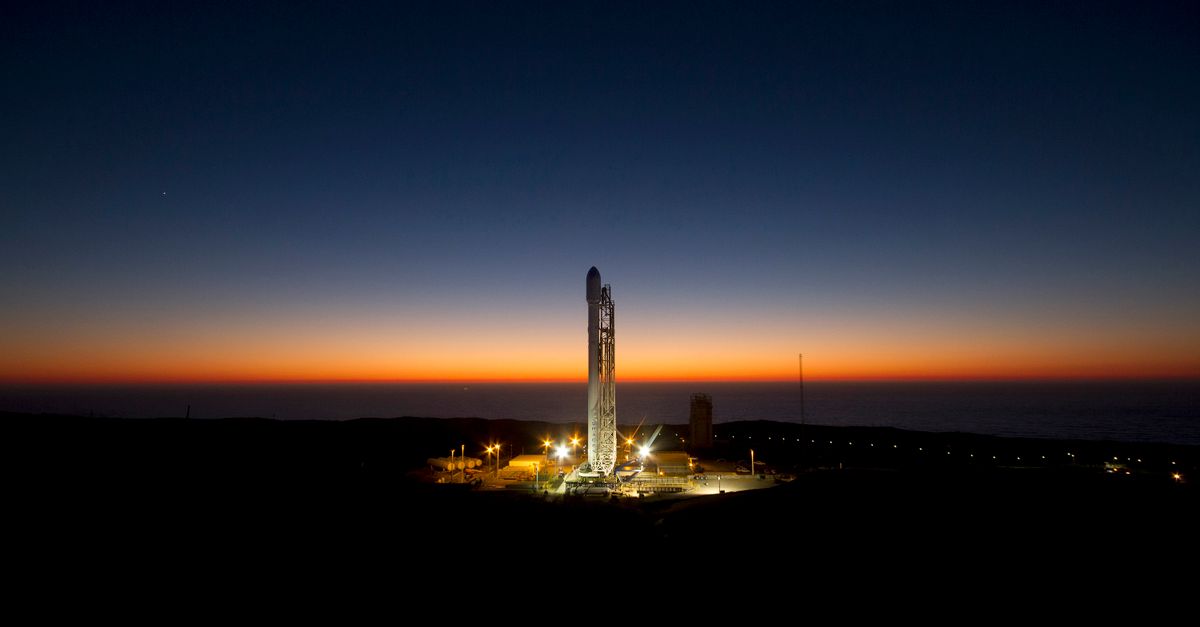
The launch took place at Norway’s Andøya Spaceport during a 15‑minute window. Countdown procedures ran smoothly, and telemetry showed nominal engine performance and stage separation. The rocket’s ascent profile matched the pre‑flight trajectory, and the payload separated into a low‑Earth orbit that matches the mission’s stated parameters.
The Flight Profile and Immediate Findings
Spectrum’s ascent was a textbook two‑stage climb. The first stage ignited at liftoff, burned for the planned duration, and then handed off to the upper stage without a hitch. The upper stage fired to circularize the orbit before deploying the payload. All telemetry streams remained within the design envelope, and no anomalies were flagged by the flight‑control team.
Post‑flight analysis highlighted three key takeaways. First, the propulsion system delivered the expected thrust and specific impulse, confirming the engine’s design margins. Second, the vehicle’s guidance, navigation, and control (GNC) software performed as modeled, keeping the rocket on target despite the narrow launch window. Third, the ground‑support equipment at Andøya proved capable of handling a fully‑private launch, a point that European policymakers have been watching closely.
Why Europe Needed a Home‑Grown Private Launcher
For decades, European satellite operators have relied on the Ariane family for heavy lifts and on Russian or American rockets for small‑satellite rides. That dependence has left a gap for dedicated, low‑cost access to orbit for constellations, Earth‑observation cubesats, and research payloads. Spectrum’s success narrows that gap.
Germany’s aerospace sector has traditionally been dominated by large contractors like Airbus and the German Aerospace Center (DLR). Isar Aerospace’s emergence signals a shift toward a more entrepreneurial model, one that can iterate faster and price more competitively. The launch also validates the Andøya Spaceport’s role as a versatile European site, capable of hosting private operators alongside national agencies.
The Competitive Landscape and Market Implications
Spectrum joins a crowded field of small‑launch providers that include Rocket Lab, Firefly, and India’s Skyroot. Those companies have already demonstrated repeatable flights, but most operate from non‑European sites. Isar’s European foothold could attract customers who prefer to launch from within the EU, whether for regulatory simplicity, data‑sovereignty concerns, or reduced logistics.
However, the market is not a free‑for‑all. European launch policy still favors state‑backed projects, and funding pipelines for private firms remain limited. Spectrum’s qualification flight will be scrutinized by potential investors and by the European Space Agency, which is weighing how to integrate private players into its launch cadence. If Isar can secure a pipeline of commercial payloads, it will force incumbents to lower prices and accelerate development cycles.
Technical and Regulatory Hurdles Ahead
The next step for Spectrum is a series of operational flights that will test payload integration, launch‑site turnaround, and long‑term reliability. Certification will require meeting both European Union launch‑license standards and the International Telecommunication Union’s frequency‑allocation rules.
Isar also faces the engineering challenge of scaling up. The maiden flight used a modest payload mass, but future customers will demand higher lift capability and more flexible orbital slots. Achieving that without a significant redesign will test the company’s supply chain and manufacturing capacity.
What to Watch
The industry’s eyes now turn to Isar’s next scheduled launch, slated for late 2026, when the company plans to carry a constellation of Earth‑observation cubesats. Success will cement Spectrum’s status as a reliable workhorse and could trigger a wave of European satellite contracts shifting away from legacy launchers. At the same time, the European Space Agency’s upcoming policy review on private launch licensing will shape how quickly companies like Isar can scale. Tracking the outcomes of those two events will indicate whether Europe’s private launch sector can truly compete on the global stage.
Related Articles

Europe’s BepiColombo nears Mercury as US space rhetoric spikes
Europe’s eight‑year BepiColombo cruise reaches Mercury while US officials stir diplomatic tension; European launch startups chase fresh funding.
Europe Goes Solo on Venus Mission as NASA Shifts Funding Focus
NASA pulls a radar instrument, prompting Europe to pursue its Venus probe alone while the agency asks states for money.

NASA suits up, Army lasers drones, Russia’s satellite setbacks
NASA trims Artemis IV schedule, forcing a new lunar suit; the Army proves a 20 kW laser can kill drones; Russia’s Rassvet constellation shows early failures.