

Nintendo's Mobile Gambit: New Games, $1B Revenue, DeNA Deal

A quirky selfie, a new minigame, and a $2.9 M opening day
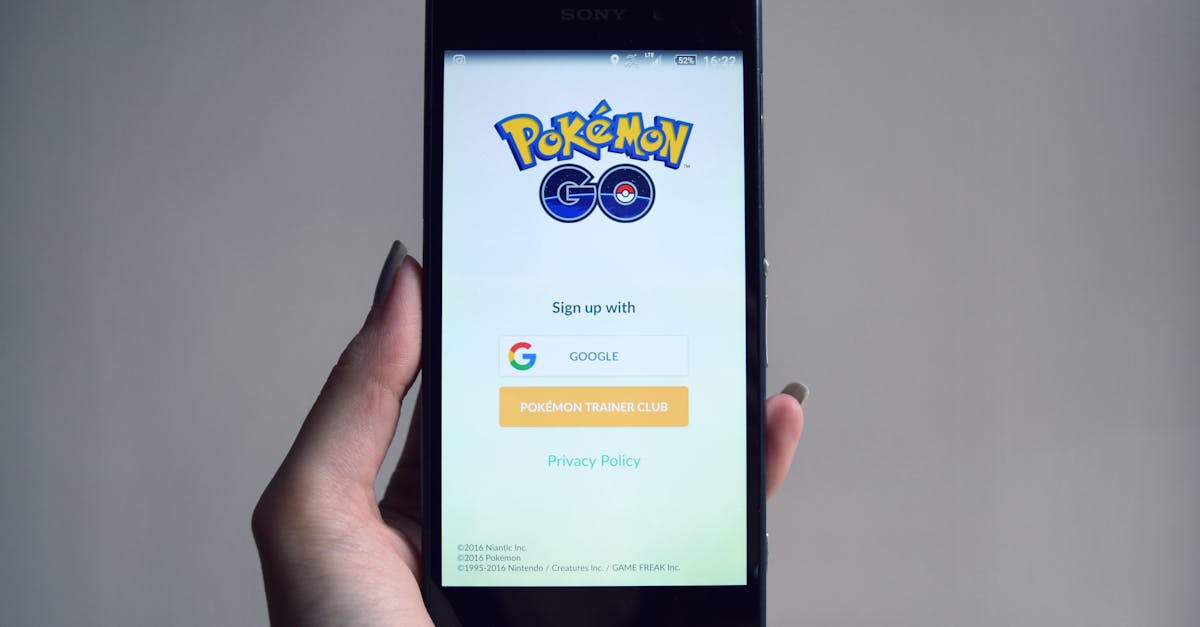
A cat selfie you snap on your phone can now become a frantic tap‑and‑swipe challenge in Nintendo’s freshly released Pictonico!. The free‑to‑download title scrambles your photos into bite‑sized puzzles, echoing the rapid‑fire spirit of WarioWare while staying firmly on mobile. In the same week, Nintendo’s second mobile flagship, Fire Emblem Heroes, pulled in more than $2.9 million and topped two million downloads in its first 24 hours, according to Sensor Tower data. The launch numbers sit between the juggernauts Pokémon GO ($10.2 M) and Super Mario Run ($8.4 M) on day one, but they outpace Clash Royale’s $1.4 M debut. Japan supplied the bulk of both revenue and installs; the United States came in a distant second, placing the title at No. 17 on the U.S. App Store revenue chart.
DeNA partnership reshapes Nintendo’s mobile playbook
Nintendo announced a formal alliance with Japanese mobile heavyweight DeNA, taking a 10 percent equity stake while DeNA purchases a 1.24 percent slice of Nintendo. The two will co‑develop original games that are “optimized for smart‑device functionality,” explicitly ruling out straight ports of console or handheld titles. This mirrors Nintendo’s earlier stance that it will not “port existing game titles for dedicated game platforms to smart devices” because it would dilute the IP value. Instead, the partnership promises fresh experiences that leverage familiar characters without compromising the quality Nintendo’s fans expect.
The DeNA deal also includes a cross‑platform service slated for a fall launch, linking smartphones, tablets, PCs, and Nintendo hardware. By spreading the same IP across multiple ecosystems, Nintendo hopes to turn its mobile titles into both revenue generators and brand ambassadors for its core consoles. The approach is a departure from the 2013‑era expectation that Nintendo would follow Square‑Enix’s premium‑price model on iOS; instead, the company is doubling down on free‑to‑play economics while retaining tight creative control.
A billion‑dollar mobile portfolio in hindsight
Sensor Tower’s cumulative figures show Nintendo’s mobile catalog has crossed the $1 billion revenue threshold. Fire Emblem Heroes alone accounts for $656 million, Animal Crossing: Pocket Camp adds $131 million, Dragalia Lost contributes $123 million, Mario Kart Tour $86 million, Super Mario Run $76 million, and Dr. Mario World $4.8 million. Earlier, Super Mario Run’s debut earned $26 million, proving that even modest launches can snowball when the brand resonates. The bulk of this cash flow comes from free‑to‑play models that blend in‑app purchases, subscriptions, and ad‑based monetization.
These numbers contrast sharply with Nintendo’s historic reliance on hardware sales and premium software. In the latter half of 2014, five Nintendo 3DS titles each shipped over two million copies, underscoring that the company can still drive strong sales on dedicated devices. Yet the mobile revenue stream now rivals the console side, suggesting a strategic pivot: use smartphones as low‑cost distribution channels for IP while preserving the high‑margin console ecosystem.
Lessons from past licensing experiments
Nintendo’s foray into licensing isn’t new. The ill‑fated Philips CDi adaptations of Zelda and Mario are still cited as cautionary tales of mismatched hardware and brand. Conversely, Capcom’s Zelda entries and Sega’s F‑Zero 4 on GameCube earned critical praise, showing that third‑party collaborations can succeed when quality is protected. More recently, free‑to‑play experiments like Pokémon Shuffle on the 3DS and a Puzzle & Dragons‑style Mario title with GungHo hinted at the company’s willingness to test monetization models outside its own studios.
The DeNA partnership builds on those lessons. By retaining a minority stake and insisting on “original games optimized for smart‑device functionality,” Nintendo aims to avoid the pitfalls of low‑effort ports while still harvesting the massive smartphone user base. The strategy also aligns with Satoru Iwata’s earlier comment that Nintendo’s strongest asset is its IP, not the hardware alone. Mobile titles become perpetual advertisements for the brand, nudging players toward flagship consoles without eroding the perceived value of core games.
Technical constraints and design philosophy
All of Nintendo’s mobile releases so far are built on free‑to‑play frameworks, a model that demands careful balance between player engagement and monetization. The underlying technology often leans on third‑party engines and services, as seen with DeNA’s expertise in live‑ops and analytics. While Nintendo’s own hardware, such as the upcoming NX console powered by Nvidia’s Tegra X1, emphasizes power efficiency for portable play, its mobile games must run on a far broader range of devices. This forces design decisions that prioritize short session lengths, touch‑centric controls, and frequent content updates.
The result is a suite of games that feel unmistakably Nintendo—bright art, recognizable characters, tight controls—yet are stripped of the depth expected on a Switch or Switch Lite. That trade‑off is intentional: the goal is to capture casual attention on a device people carry everywhere, then funnel that attention back to Nintendo’s higher‑value ecosystem.
What to watch next: DeNA’s cross‑platform service launch this fall will be the first test of Nintendo’s unified IP strategy across phones, tablets, PCs, and its own consoles. Simultaneously, the performance of upcoming mobile titles—particularly any that leverage the NX’s Tegra‑based architecture—will reveal whether Nintendo can sustain its $1 billion mobile revenue stream without cannibalizing its core hardware sales. Keep an eye on Sensor Tower’s day‑one metrics for any new releases and on Nintendo’s quarterly reports for shifts in mobile‑to‑console revenue ratios.
Updates
- 2026-06-04 — 9to5Mac Daily: June 4, 2026 – iPhone Ultra rumors, Siri servers (source)
Related Articles
Nintendo’s Discount Relies on Hoarded Tariff Refunds as Handheld
Nintendo funds a steep Switch price cut with tariff refunds while lagging on accessibility and facing smartphone competition; Sony’s portable PlayStation looms.
Nintendo's $500 Switch 2 Bundle vs. Rivals' Low-Cost Add-ons
Nintendo bundles a game with a $500 Switch 2 as the console’s price jumps; iPadOS, Google Home, Samsung, and Valve roll out tweaks that shift the value balance.
Nintendo lifts Switch 2 prices, sparking consumer backlash
Nintendo announced higher launch prices for the Switch 2 on May 8, 2026, raising questions about affordability and competition.