

Tesla’s FSD Goes Global Amid Growing Scrutiny

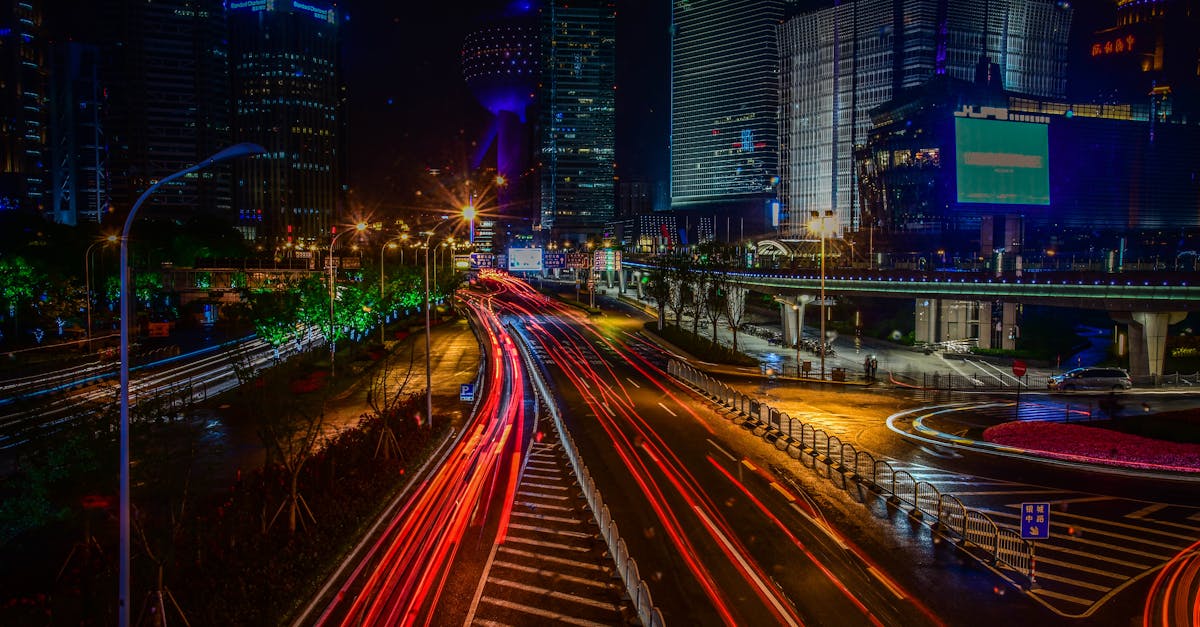
Photo by Nektarios Moutakis on Pexels
Tesla unlocks Full Self‑Driving in China
Tesla announced this week that its Full Self‑Driving (FSD) software is now available to drivers in China, ending a multi‑year stall caused by local approvals. The company framed the rollout as a milestone for its global autopilot strategy, yet the feature still requires the driver to keep hands on the wheel and remain ready to intervene.
Chinese regulators have historically delayed advanced driver‑assist introductions, citing safety concerns. Tesla’s statement that the market is “now one of the countries where Full Self‑Driving is available” reflects a shift in that stance, but the underlying technology remains a driver‑assist system rather than a hands‑free solution.
Musk’s “feature‑complete” promise and the early‑access gap
Elon Musk told investors last year that a “feature‑complete” version of FSD – capable of handling city streets, traffic lights, and stop signs without human input – would appear in the early‑access program by year‑end. The deadline passed without any participant reporting the promised capability.
In a recent earnings call, Musk described “feature‑complete” as a car that can travel from home to work “most likely without interventions,” while still being supervised. He added that the system would bridge the gap between high‑speed highway autonomy and low‑speed Smart Summon, which debuted in the V10 software update and handles parking‑lot maneuvers.
Despite the missed deadline, Musk tweeted that the feature‑complete version is coming “soon,” offering no concrete timeline. The early‑access program now encompasses a large cohort of owners who receive experimental updates in exchange for telemetry, but the promised city‑driving capability remains absent.
Regulatory backlash: Naming and safety oversight
The California Department of Motor Vehicles has become the first U.S. agency to challenge the “Full Self‑Driving” label, arguing that the name misleads consumers about the system’s autonomy. While the National Highway Traffic Safety Administration (NHTSA) has historically set safety standards for vehicle hardware, it has left driver‑assist naming largely unchecked.
NHTSA’s recent focus on reporting driver‑assist crashes signals a shift toward tighter oversight, but the agency still lacks a formal definition for FSD‑type systems. By contrast, the California DMV’s action targets marketing language, echoing earlier European disputes where Germany’s transport minister demanded Tesla stop using the term “Autopilot.”
If regulators force a renaming or stricter disclosure, Tesla may have to redesign its sales collateral and in‑car prompts, potentially eroding the brand cachet that the “Full Self‑Driving” moniker has built over the past eight years.
Real‑world beta testing: Users report a dog on a skateboard
Ryan McGreal’s five‑day trial of the FSD beta paints a stark picture. On a suburban collector road, the system missed a stop sign obscured by a bush, braking hard only after the vehicle had crossed the line. On a two‑lane left turn, the car wavered between lanes before finally committing, a maneuver that felt like a hesitant teenager.
On a major arterial, FSD repeatedly attempted to merge into a curb lane crowded with parked cars, and on a freeway it abruptly disabled itself after detecting a splatter on the right‑door camera. In each case, McGreal had to retake control, a reminder that the software still leans heavily on driver vigilance.
The experience underscores the gap between the marketing hype and on‑road reality. While the system can execute lane changes and obey traffic signals under ideal conditions, it falters when faced with partial occlusions, ambiguous lane markings, or adverse weather – scenarios that a human driver typically navigates without prompting.
Market friction: Pricing, add‑on removal, and consumer confusion
Tesla’s recent Model 3 mid‑range launch, priced around $45,000, coincided with the removal of the FSD add‑on from the company’s website. A Twitter exchange revealed that the option remains purchasable but will no longer be advertised, a move Musk justified as a response to “too much confusion.”
Since its 2016 debut, the FSD add‑on has cost $3,000 on top of the $5,000 Enhanced Autopilot upgrade, with an additional $1,000 fee for future activation. At least 35,000 owners paid for the package despite the feature’s limited functionality, a figure cited in a 2023 report. German regulators previously labeled the “Autopilot” name false advertising, and a recent poll showed 71 % of drivers believe they can buy a fully autonomous car today – a misconception that the FSD pricing strategy appears to reinforce.
The combination of high upfront costs, a feature that still requires supervision, and a naming controversy creates a perfect storm for consumer backlash. As more jurisdictions scrutinize the terminology, Tesla may face pressure to either deliver a truly hands‑free system or rebrand the package to align with its actual capabilities.
What to watch
The next few months will reveal whether the California DMV’s naming challenge gains traction at the state or federal level, and whether NHTSA issues concrete standards for driver‑assist systems. Simultaneously, Tesla’s software team must decide if the promised “feature‑complete” city‑driving capability will arrive through the early‑access program or be postponed indefinitely. The outcome will determine if the FSD label survives regulatory censure or becomes a relic of an over‑promised era.
Updates
- 2026-09-11 — Four ways to achieve shallow depth of field without buying the iPhone 18 Pro (source)
- 2026-09-08 — The two Christian saints who are the Buddha (source)
- 2026-08-02 — The Pixel 11 will be a perfect storm of bad timing (source)
- 2026-05-24 — Why Nuro thinks being a robotaxi ‘second mover’ gives it an advantage (source)
Related Articles
Tesla's China recall avalanche exposes systemic safety gaps
Tesla faces three massive recalls in China, covering over 4 million cars, as regulators clamp down on safety flaws from door handles to suspension and cruise control.
FAA commits $875 M to AI traffic manager, eyes nationwide rollout
The FAA plans to deploy an AI system to ease DC airspace congestion, sparking debate over safety, oversight, and military precedent.

CFTC probes Polymarket trades as fintech regulators tighten grip
The CFTC opened three investigations into Polymarket speculation, amid broader regulatory scrutiny of prediction markets, cloud services, and payment platforms.