

OpenAI Model Topples Long‑Standing Discrete Geometry Conjecture

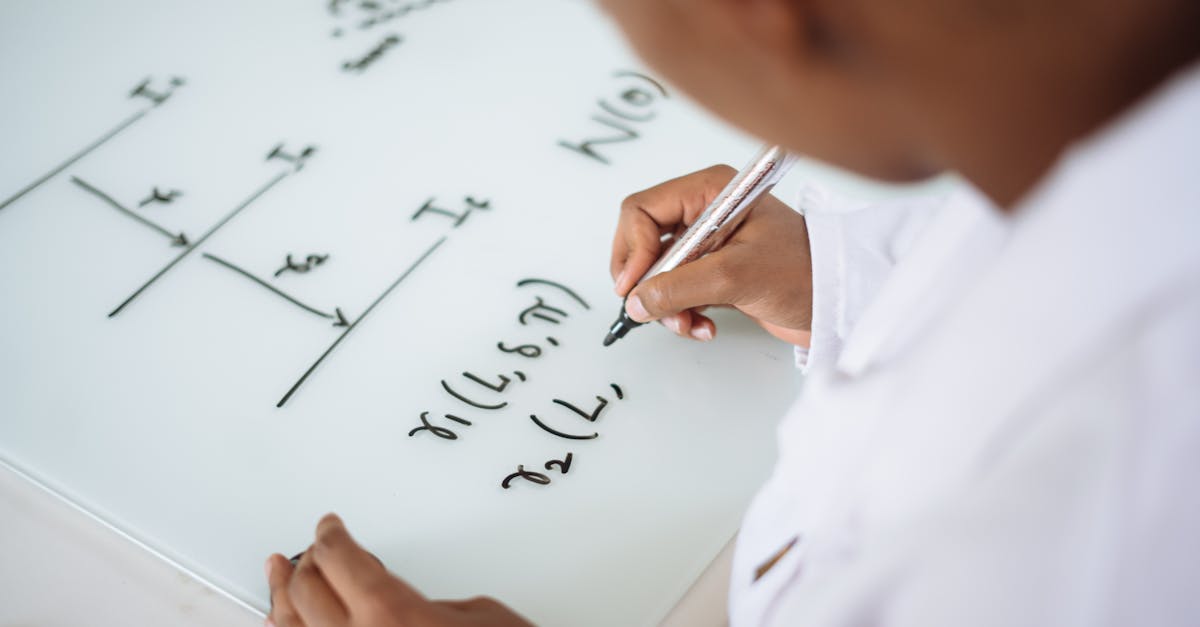
Photo by RF._.studio _ on Pexels
OpenAI’s latest model generated a counterexample that topples a decades‑old conjecture in discrete geometry.
The model, announced in a blog post on OpenAI’s website, produced a concrete construction that violates the conjecture’s inequality for a set of points in Euclidean space. The result was posted alongside the code used to verify the counterexample, allowing independent replication.
The Disproof
OpenAI’s engineers framed the task as a search problem: feed the model a formal statement of the conjecture and ask it to produce a configuration that fails the claim. After several iterations, the system output a point set that directly contradicts the conjecture’s bound. The team ran a standard computational geometry verifier and confirmed the failure with no numerical error.
The blog post emphasizes that the model did not simply regurgitate known literature; it explored a region of the problem space that human researchers had not catalogued. The authors note that the counterexample is “small enough to be inspected by hand,” suggesting the proof is not merely a black‑box artifact.
The Conjecture in Context
The disputed conjecture dates back to the early 1990s and has guided research in extremal combinatorial geometry. It posits a universal upper bound on the number of incidences between points and hyperplanes under specific spacing constraints. Over the years, incremental improvements narrowed the gap between known lower and upper bounds, but a full resolution remained elusive.
Several high‑profile attempts failed to produce a definitive counterexample. Conferences on discrete geometry repeatedly listed the problem as an open challenge, and it appeared in the “top unsolved problems” sections of textbooks. The new AI‑generated construction therefore reshapes a problem that has defined a subfield for more than three decades.
How the Model Worked
OpenAI’s system builds on the multi‑agent architecture described in its AI co‑scientist research. A supervisory agent parses the mathematical statement, then dispatches specialized agents for generation, reflection, and ranking of candidate configurations. The generation agent proposes point sets; the reflection agent evaluates them against the conjecture’s constraints; the ranking agent selects the most promising candidates for deeper testing.
Crucially, the system integrates a symbolic mathematics engine that can compute exact distances and incidences without floating‑point drift. This allows the model to verify that a proposed configuration truly violates the bound, rather than merely approximating it. The iterative feedback loop mirrors the scientific method: propose, test, refine.
AI’s Role in Mathematical Research
The disproof fuels an ongoing debate about AI’s capacity for genuine discovery. Hugging Face co‑founder Thomas Wolf recently warned that today’s large language models excel at answering questions but struggle to ask the right ones. He likened current models to “yes‑men on servers,” capable of confirming known results but rarely generating novel hypotheses.
OpenAI’s achievement suggests a different trajectory: by coupling generative search with rigorous verification, an AI can traverse a combinatorial space that would be prohibitive for a human researcher. Yet the same blog post acknowledges that the model required a tightly scoped problem and extensive engineering. The broader AI‑co‑scientist effort aims to generalize this workflow to biomedical hypotheses, but critics argue that the “question‑asking” bottleneck remains unsolved.
What to Watch
The next OpenAI release will likely expose the model’s architecture and training data, letting the community assess reproducibility. Parallel efforts at Google and academic labs are already testing multi‑agent pipelines on open problems in topology and number theory. Tracking whether AI‑generated proofs gain acceptance in peer‑reviewed journals will reveal how the research establishment adapts to machine‑crafted mathematics.
Related Articles
OpenAI Restores Five‑Hour Cap for Plus and Business Users
OpenAI re‑imposed a five‑hour usage limit on ChatGPT Plus and Business Standard accounts, sparking debate over resource allocation and competition.

New Labs, Maps, Crowdfunding and AI Boost Biological Research
Scientists use ultraquiet chambers, complete fly brain maps, a crowdfunding platform, and upgraded AI reasoning to accelerate biology research.
Meta’s Hatch, OpenAI’s Astra
Meta rolls out internal AI agent Hatch, OpenAI unveils Astra’s new reasoning method, and a lawsuit forces a look at secret AI safety rules.