

FCC's Regulatory Tightrope: Mergers, Broadcast Rules

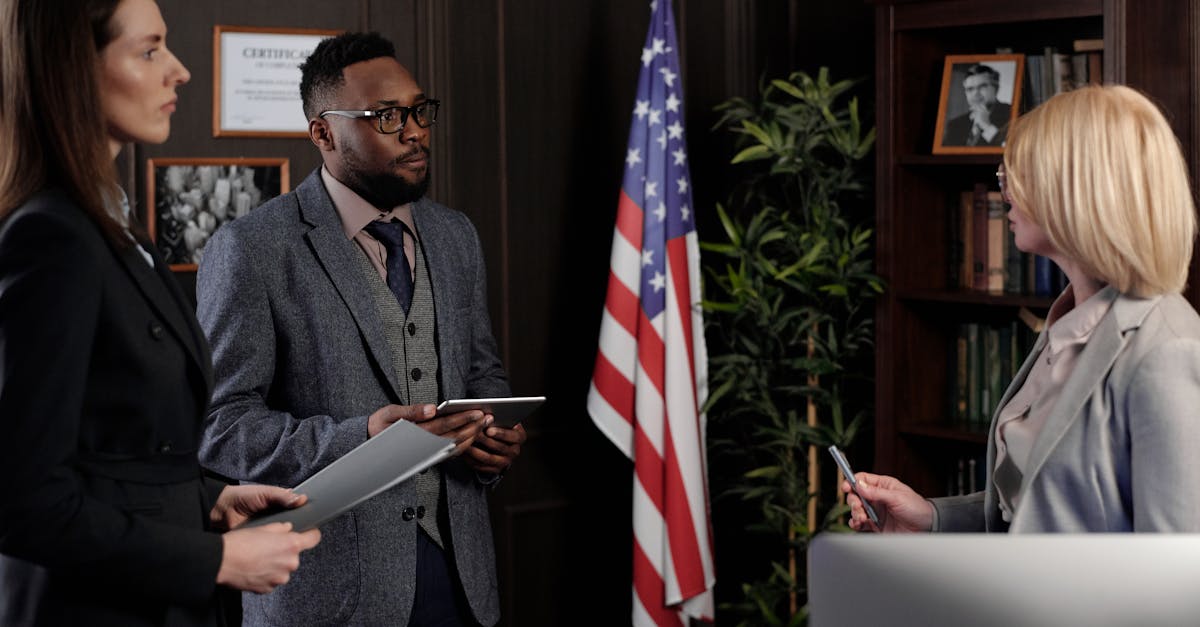
Photo by August de Richelieu on Pexels
FCC’s Nexstar-Tegna Merger Drama Unfolds
The FCC’s approval of Nexstar’s $6.2 billion Tegna acquisition has spiraled into a legal and political quagmire. Despite the FCC and DOJ initially greenlighting the deal, DirecTV’s antitrust lawsuit secured a preliminary injunction blocking the merger. Nexstar now appeals to the Ninth Circuit, but the broader question lingers: Did the FCC overstep by altering ownership caps mid-deal? At the NAB Show, FCC officials dodged concrete answers. Division Chief David Brown declined to confirm whether the commission’s legal authority to adjust rules for mergers sets a precedent, leaving industry watchers in the dark.
The merger’s collapse highlights the FCC’s shifting stance on media consolidation. Chairman Brendan Carr, a Trump ally, has long pushed to dismantle ownership limits, while Commissioner Anna Gomez and others argue the FCC lacks authority to rewrite rules for individual deals. This tension plays out in a regulatory landscape where cozy Washington relationships often blur lines between oversight and compliance. The Nexstar-Tegna case isn’t just about dollars—it’s a test of whether the FCC can reshape media ownership without congressional approval.
Equal-Time Rule Sparks Showdown With Late-Night TV
Stephen Colbert’s blocked interview with Texas Democrat James Talarico exposed a regulatory loophole. CBS lawyers, citing the FCC’s equal-time rule, barred the appearance to avoid potential fines. The rule, designed for election fairness, traditionally exempted late-night shows—but FCC Chairman Brendan Carr’s recent comments reignited debates over its scope. Colbert mocked the situation with a placeholder drawing of Carr in the nude, bypassing broadcast rules by hosting the interview on YouTube.
The incident underscores how vague regulations can stifle political discourse. While the FCC hasn’t formally revoked late-night exemptions, networks are preemptively self-censoring. “It’s not about bias—it’s about legal risk,” one insider told Deadline. The episode also revealed the FCC’s power to weaponize rules, with Carr framing enforcement as a non-negotiable mandate. Critics like Commissioner Anna Gomez call it a “threat to free speech,” arguing the FCC’s actions target dissenting voices.
The View Faces FCC Scrutiny Over Guest Imbalance
ABC’s The View now sits in the FCC’s crosshairs after a conservative watchdog alleged the show violated equal-time rules. NewsBusters reported that Democratic candidate James Talarico received 9 minutes and 47 seconds of airtime, while his primary rival, Jasmine Crockett, got 17 minutes across three segments. The FCC’s investigation hinges on whether The View qualifies as a news program exempt from equal-time obligations. ABC, like CBS, argues the show’s editorial slant makes it a news program—but the FCC disagrees.
The battle over The View reflects a broader war over media neutrality. FCC sources claim the probe isn’t about politics but “enforcing the law.” Yet the timing, coming after Carr’s public push for stricter enforcement, raises eyebrows. Commissioner Gomez called the move an “intimidation tactic,” accusing the FCC of targeting progressive outlets. With The View hosting 128 liberal guests versus two conservatives in 2024, the case could redefine how regulatory bodies define “news” in an era of partisan media.
What’s Next in the FCC’s Regulatory Tightrope Walk
The FCC’s next moves will test its legitimacy. Nexstar’s appeal to the Ninth Circuit could force the court to weigh in on the FCC’s authority to revise merger rules on the fly. Meanwhile, the The View probe and Colbert’s YouTube workaround spotlight how regulatory ambiguity affects content creation. Watch for:
- The Ninth Circuit’s decision on Nexstar-Tegna, which could set a precedent for future mergers.
- The FCC’s final stance on late-night show exemptions under the equal-time rule, possibly reshaping how networks handle political content.
- Congressional pushback if the FCC continues altering rules without legislative approval, particularly from lawmakers like Ted Cruz.
The FCC’s current trajectory is a high-stakes balancing act. For media companies, the message is clear: Navigate regulations carefully. For the public, the fallout means fewer platforms for contentious political debates—and a regulatory body increasingly seen as a political actor itself.
Updates
- 2026-09-05 — Explore the globe in field recordings (source)
- 2026-09-03 — Hohem’s tiny steadycam has a removable action cam (source)
- 2026-08-27 — Everyone’s talking to their phones again (source)
- 2026-08-26 — The world’s busiest spaceport is about to get a lot quieter, at least for now (source)
- 2026-08-22 — Amazon devices are the latest casualties of the memory shortage price hikes (source)
- 2026-08-20 — Mathematics in the age of AI (source)
- 2026-08-18 — The United States is about to wake up to the threat from China’s space program (source)
- 2026-08-13 — The Best Photos of the Big August Solar Eclipse (source)
- 2026-08-09 — Zuckerberg’s yacht was closer, but someone else saved a stranded boat (source)
- 2026-08-08 — Here Are the First Images of the Crater Left on the Moon by SpaceX’s Rocket (source)
- 2026-08-05 — The Valley of Webhooks (source)
- 2026-08-05 — The AI Demand Bubble (source)
- 2026-08-02 — The James Webb Telescope Is Changing Astronomers’ Understanding of the Ancient Cosmos (source)
- 2026-07-31 — This tattoo is permanent, pain-free, and might soon come in the mail (source)
- 2026-07-29 — What’s the catch with the Apple Upgrade program? (source)
- 2026-07-28 — About the security content of macOS Tahoe 26.6 (source)
- 2026-06-03 — The world’s largest privately owned laser just turned on (source)
- 2026-05-23 — On The
- (source)
- 2026-05-23 — The man behind the legendary MPC, Roger Linn, stays focused with a single browser tab (source)
- 2026-05-16 — Europe built sovereign clouds to escape US control. Forgot about the processors (source)
- 2026-05-13 — Sam Altman was winning on the stand, but it might not be enough (source)
- 2026-05-12 — NBA The Run hits the streets on June 9 (source)
- 2026-05-10 — Forking the Web (source)
- 2026-05-07 — Ploopy’s new mouse makes the ThinkPad’s iconic TrackPoint portable (source)
- 2026-05-02 — What You Need to Know About the Foreign-Made Router Ban in the US (source)
Related Articles

Googlebook challenges Apple’s retail play as Mac Studio prices
Google’s $899 AI‑native laptop and Apple’s store‑first philosophy clash amid rising component costs and AI‑driven hardware bets.
Xiaomi MiMo 2.6, Grok 4.7, and a Wave of Mid‑Month Tech Setbacks
A roundup of Xiaomi's MiMo 2.6 launch, x.ai's Grok 4.7 update, NASA's Mars Sample Return cancellation, and other mid‑September tech headlines.

Apple's rapid RC rollout pressures macOS developers
Apple released second release candidates for macOS Tahoe and Sequoia, while beta streams for Golden Gate and iOS 27.2 accelerate, sparking developer strain and highlighting ecosystem frictions.