

Musk sues OpenAI as trial tests nonprofit AI promise


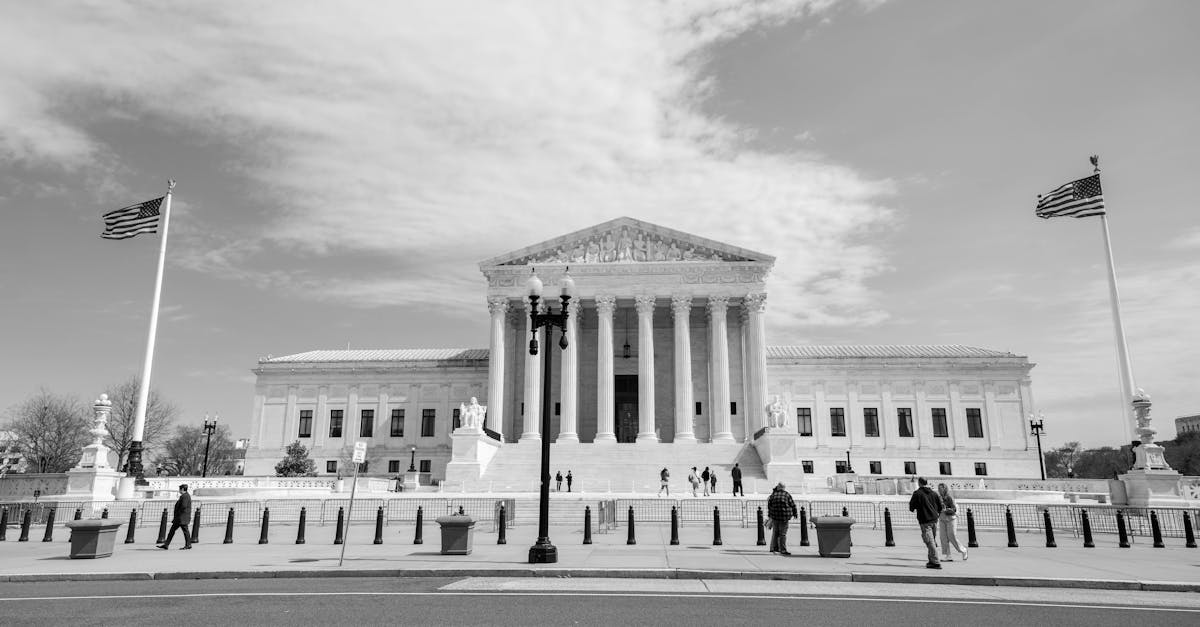
Photo by KATRIN BOLOVTSOVA on Pexels
Musk’s lawsuit ignites a courtroom showdown
Elon Musk filed a civil suit against OpenAI, Sam Altman, and Greg Brockman on Thursday in San Francisco federal court. The complaint accuses the startup of abandoning the nonprofit mission it promised when Musk helped fund it in 2015.
Musk alleges that OpenAI’s shift to a for‑profit model, cemented by a $13 billion partnership with Microsoft, violates a founding agreement that required the company to make its technology freely available. The suit also claims OpenAI has become a “closed‑source de facto subsidiary” of Microsoft, a claim backed by recent statements from Microsoft CEO Satya Nadella.
Trial begins in Oakland federal court
The lawsuit moved to trial in Oakland on Monday, marking the first public hearing of a dispute that could reshape AI governance. The case will be heard by a federal judge in the Northern District of California and is expected to last several weeks.
Both sides have filed extensive briefs. OpenAI’s legal team argues that the partnership with Microsoft is a legitimate commercial arrangement that funds ongoing research. Musk’s lawyers counter that the partnership effectively hands control of the most advanced language model, GPT‑4, to a single corporate entity.
Musk’s AI stance: alarmist or principled?
Musk has long warned that artificial intelligence poses an existential threat. In a recent Forbes interview he announced a new OpenAI research initiative aimed at “advancing digital intelligence in the way that is most likely to benefit humanity as a whole, unconstrained by a need to generate financial return.”
The same interview revealed a paradox: while Musk calls AI the biggest existential risk, he also backs a rival chatbot, Grok, on his social platform X. Critics note that his public alarmism may limit the field’s ability to explore high‑performance models.
OpenAI’s evolution from nonprofit to profit engine
OpenAI launched ChatGPT in late 2022, quickly becoming the world’s most valuable AI startup. The product’s success attracted Microsoft, which poured roughly $13 billion into the company and secured exclusive cloud rights.
According to the lawsuit, the original founding agreement required OpenAI to keep its research “freely available.” Instead, the firm now licenses GPT‑4 under commercial terms that favor Microsoft’s Azure platform. The complaint cites Nadella’s comment that if OpenAI vanished, Microsoft would retain all IP, compute, and data.
OpenAI’s board reshuffle last year placed Microsoft‑aligned executives in key roles. Altman defended the shift, saying the revenue stream funds “a positive contribution to the world.” He also dismissed Musk’s criticism as “totally wrong,” while acknowledging the founder’s right to voice concerns.
Industry context: open‑source battles and corporate capture
Musk’s lawsuit arrives amid a broader debate over who should control powerful language models. Google open‑sourced TensorFlow in 2023, and Facebook released deep‑learning modules for TORCH earlier this year. Those moves were framed as democratizing AI, yet the companies retain control over the underlying hardware and data pipelines.
OpenAI’s claim to openness is now contested. Altman has promised that OpenAI’s outputs will be “available to everyone,” but the lawsuit points out that the licensing terms allow downstream users to keep improvements private. The tension mirrors a growing “open‑source battlefield” where tech giants trade code for cloud lock‑in.
What to watch
The Oakland trial will produce a factual record on how OpenAI’s governance diverged from its original charter. Watch for the judge’s ruling on whether the founding agreement is enforceable and whether Microsoft’s influence can be deemed a breach of contract. A settlement or court‑ordered restructuring could force OpenAI to separate its research arm from commercial licensing, reshaping the AI market for years to come.
Updates
- 2026-06-02 — Board, the new game startup from Mirror founder Brynn Putnam, raises $20M, has already sold thousands (source)
- 2026-05-20 — Startup Battlefield 200 applications close in 1 week: Window to nominate and apply for the most promising startups closes May 27 (source)
- 2026-05-13 — Denon Home 200, 400 and 600 review: Taking on Sonos (source)
- 2026-05-05 — OpenAI releases GPT-5.5 Instant, a new default model for ChatGPT (source)
- 2026-05-05 — GPT-5.5 Instant makes ChatGPT more accurate while nixing ‘gratuitous emojis’ (source)
- 2026-04-30 — Here’s how the new Microsoft and OpenAI deal breaks down (source)
Related Articles

Musk’s xAI Faces Triple Legal onslaught Over Air, Apps
Environmental groups, Apple, OpenAI, and Tesla investors are suing Elon Musk’s xAI, exposing a pattern of aggressive expansion and legal risk.
Elon Musk sues OpenAI in high-stakes trial
Elon Musk's legal battle with OpenAI over AI governance and profits begins in federal court.
OpenAI Restores Five‑Hour Cap for Plus and Business Users
OpenAI re‑imposed a five‑hour usage limit on ChatGPT Plus and Business Standard accounts, sparking debate over resource allocation and competition.