

AI's Infrastructure Boom: Cables, Chips, and Capital

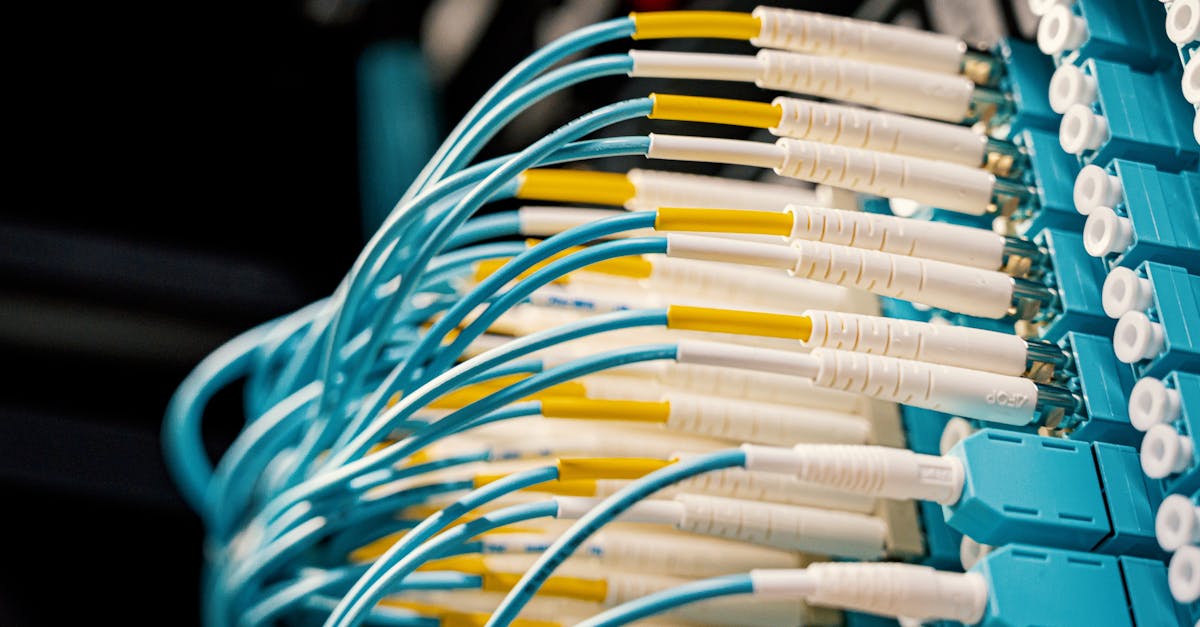
Photo by Brett Sayles on Pexels
Ineffable Intelligence, a new AI lab founded by former DeepMind researcher David Silver, has raised $1.1 billion to build systems that learn without human-labeled data. The company’s $5.1 billion valuation signals investor confidence in a radical approach to machine learning — one that diverges from the data-hungry models dominating today’s AI landscape.
Three months after its founding, Ineffable’s funding round underscores a broader trend: as AI models grow more complex, the industry is pivoting from abstract research to tangible infrastructure. From subsea cable projects to edge computing platforms, the next phase of AI requires physical systems that can sustain exabytes of data movement and training workloads.
A New Kind of Learning
Ineffable’s core thesis challenges the status quo. While most AI systems today rely on massive datasets curated by humans — think the 150 million images that powered ImageNet — Silver’s team is betting on self-supervised systems that learn through interaction. This mirrors how AlphaGo and AlphaFold operated, using reinforcement learning to master tasks without explicit training data. The $1.1B injection will fund research into scaling these techniques to real-world applications like robotics or drug discovery.
The team’s approach isn’t without risks. Reinforcement learning systems often require vast computational resources to converge on solutions, and Ineffable will need to prove it can avoid the same energy consumption pitfalls that plague existing large language models. Silver’s DeepMind pedigree gives the project credibility, but the path from lab to product remains untested for this specific approach.
AI’s Invisible Backbone
While startups chase algorithmic breakthroughs, Big Tech is doubling down on the physical infrastructure required to support AI’s global expansion. Meta’s Project Waterworth — a 31,000-mile subsea cable connecting five continents — exemplifies this shift. At 50,000km, it will become the longest subsea cable in history, designed to carry the ungodly amounts of data needed to train models like Llama 3 or Gemini.
Amazon’s Fastnet cable and Google’s Sol project are following similar patterns. These aren’t just about redundancy — they’re about creating dedicated pathways for AI workloads. As Matt Rehder of AWS explained to CNBC, “Satellite just can’t match the throughput and latency required for training models.” With AI data centers consuming as much electricity as small cities, connectivity is becoming the new bottleneck.
The Investor Playbook
Investors are now funding AI projects based on infrastructure needs rather than software alone. Skye’s AI home screen app, which raised millions before its public launch, demonstrates this logic. By targeting a fundamental user interface — the iPhone home screen — the app positions itself as a daily-use AI tool, not just another chatbot. Investors see AI adoption as a long game, and infrastructure bets are hedged against the volatility of consumer products.
This contrasts with the hype cycles of previous years. Instead of chasing mythical “AI winters,” capital is flowing into projects with measurable infrastructure impacts. Alcatel Submarine Networks reports webscale players now account for 50% of subsea cable demand — a clear indicator that AI isn’t just a software revolution anymore.
What Breaks When Cables Snap
The risks of this infrastructure boom are stark. Recorded Future’s Matthew Mooney notes that a single cable cut can isolate entire countries from global financial systems. In 2022, a cable fault in the Java Sea disrupted internet access across Indonesia and Papua New Guinea. As AI systems become more distributed (and more reliant on cross-border data flows), physical vulnerabilities become existential threats.
Regulators are starting to take notice. The U.S. and EU are considering mandates for redundant cable routes, but enforcement lags behind construction. For now, the race continues: TeleGeography estimates $13 billion will be spent on subsea cables from 2025-2027 — double the previous three years.
What to Watch
Three developments will define AI’s infrastructure era in 2025: First, whether Ineffable’s self-supervised models can achieve commercial viability without the usual data pipelines. Second, if Meta’s Waterworth cable will be operational by its projected 2028 deadline. Third, how regulators respond to concentrated control of subsea networks — particularly as geopolitical tensions over digital sovereignty intensify.
Updates
- 2026-09-18 — Finding the cells that put our brain to sleep (source)
- 2026-08-17 — Apple official refurb store: Save a ton of cash with our top picks of the week (source)
- 2026-08-05 — These are my favorite Apple Watch accessories of 2026 (so far) (source)
- 2026-07-28 — Elon Musk’s X Money app is rolling out in the U.S. (source)
- 2026-05-21 — Apple seeks Supreme Court review of contempt finding and injunction scope in Epic Games case (source)
- 2026-05-14 — OpenAI is reportedly preparing legal action against Apple; it wouldn’t be the first partner to feel burned (source)
- 2026-05-07 — ChatGPT’s ‘Trusted Contact’ will alert loved ones of safety concerns (source)
- 2026-05-01 — My $5K smart bed needs to shut the hell up (source)
- 2026-04-29 — Elon Musk appeared more petty than prepared (source)
Related Articles
FCC Waiver Delay and Hidden Water Costs in AI
FCC delays foreign router bans until 2029; data centers guzzle water undetected. The infrastructure stakes.
AI's Energy Appetite Forces Tech Giants Into Bold Bets
From data centers to wind turbines, the AI boom is reshaping energy and regulatory landscapes.

OpenAI’s Acquisitions Spark a Race Against Time for AI Startups
OpenAI’s latest deals expose two existential threats while a 12‑month window looms for AI startups, reshaping the industry’s competitive landscape.