

Google Gemini Flash, Anker Eufy, Alienware 560Hz Monitor

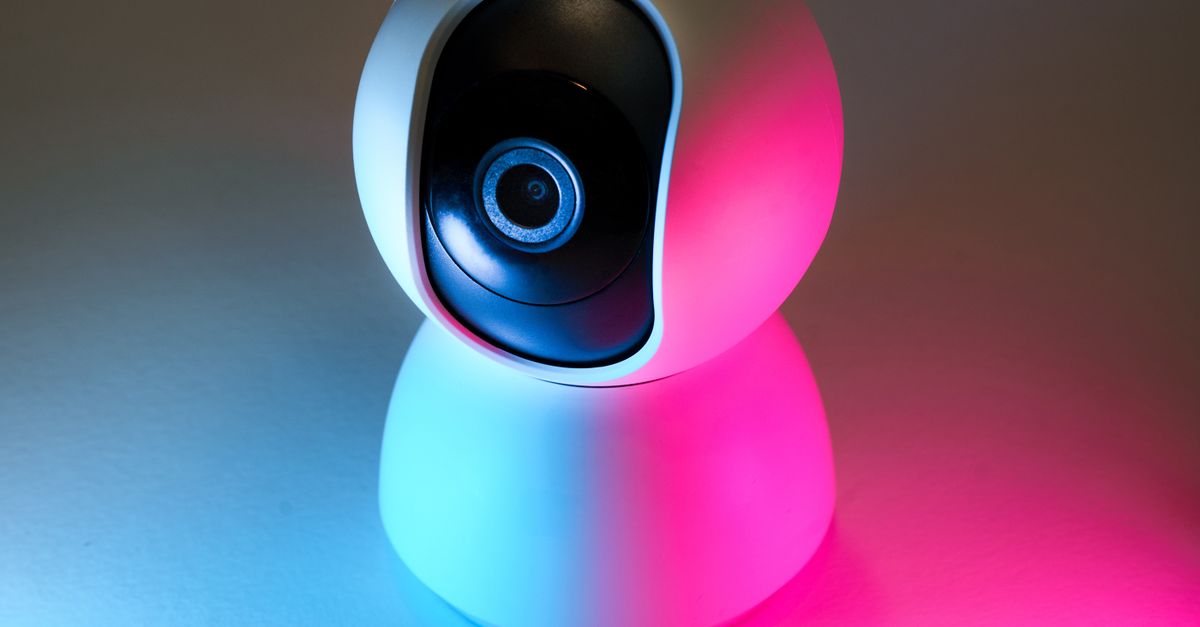
Photo by Jakub Zerdzicki on Pexels
Google dropped Gemini 3.8 Flash, its third Flash model in just six weeks. The release arrives while Google’s Pro‑tier updates appear paused.
Gemini 3.8 Flash follows two earlier Flash variants rolled out in the same half‑month. Google announced the model without a fanfare press release, simply publishing the new API endpoint. The Flash line is marketed as a speed‑focused version of Gemini, trading off some safety checks for lower latency. The trade‑off is obvious: developers get faster token generation, but the model may produce more risky output. The community will need hard benchmarks to decide if the speed gain justifies the safety loss.
The timing matters because competitors are also accelerating their inference pipelines. OpenAI’s latest API update, for example, emphasizes cost‑per‑token reductions, while Anthropic has been pushing its Claude 3 series toward lower latency. Google’s move signals it will not cede the low‑latency niche to rivals. What remains unclear is how Gemini 3.8 Flash will perform on real‑world workloads that demand both speed and factual consistency. The lack of published latency numbers forces engineers to run their own tests.
Anker Eufy’s security focus at IFA 2026
Anker’s Eufy brand used this year’s IFA stage to roll out a new line of security cameras. The cameras carry the Eufy branding and target DIY home‑monitoring markets. Alongside the cameras, the booth displayed a robot vacuum and a robot lawnmower, but security was the headline.
The camera lineup emphasizes local AI processing, a trend that grew after several high‑profile IoT breaches. Eufy’s marketing material claims the sensors can run motion detection without sending raw video to the cloud. That design choice reduces bandwidth usage and limits exposure to network attacks. However, the trade‑off is higher on‑device compute requirements, which may raise the unit price.
Security‑focused hardware is gaining traction as consumers demand privacy‑preserving solutions. Eufy’s move reflects a broader industry shift toward edge AI, where inference happens on the device rather than in a data center. The question for analysts is whether the added cost will be offset by reduced subscription fees for cloud analytics. IFA attendees noted the cameras felt heavier than prior models, hinting at more powerful processors inside.
Alienware pushes refresh rates with a 560 Hz monitor
Alienware announced a 25‑inch gaming monitor that tops out at 560 Hz, the highest refresh rate the company has ever shipped. The spec places the panel well above the 240 Hz threshold that most esports titles consider sufficient.
The monitor uses a fast‑turnover LCD panel and a proprietary overclocking driver to reach the 560 Hz figure. In theory, the extra frames reduce motion blur and input lag for competitive players. In practice, the benefit diminishes once the human visual system can no longer perceive the incremental smoothness. The power draw also climbs, and the panel’s backlight may generate more heat than typical 144 Hz displays.
Alienware’s target audience is high‑end esports enthusiasts who already invest in high‑refresh peripherals. The monitor’s price point reflects that niche focus, but the product also serves as a showcase of what the company can achieve with its supply chain partners. Whether the market will absorb a 560 Hz panel remains to be seen, especially as many titles cap frame rates well below that number.
Convergence of AI, security, and high‑performance displays
Google’s Gemini Flash, Eufy’s edge‑AI cameras, and Alienware’s ultra‑fast monitor all illustrate a common pressure: the need for lower latency at the edge. Gemini Flash cuts inference time for language models, while Eufy’s cameras process video locally. Both rely on faster silicon and tighter software stacks.
High‑refresh displays like the 560 Hz panel benefit from the same hardware trends. Faster GPUs and dedicated display processors can push more frames without throttling. The convergence creates a feedback loop: AI workloads demand better silicon, which in turn enables higher‑performance peripherals.
Regulators are watching the edge‑AI boom closely, especially for privacy‑sensitive devices like home cameras. The European Union’s AI Act may soon require explicit risk assessments for on‑device inference. Companies that invest in transparent safety measures now could avoid compliance headaches later. Meanwhile, gamers and content creators will continue to push the envelope on visual performance, forcing manufacturers to balance speed, power, and cost.
What to watch
The next set of benchmarks for Gemini 3.8 Flash should appear in independent AI labs within the month. At the same time, Eufy will release firmware updates that expose raw performance metrics for its new cameras, giving analysts data to compare edge AI efficiency. Alienware plans a limited‑run shipment of the 560 Hz monitor in Q4 2026, and early reviews will reveal whether the refresh rate translates into measurable competitive advantage. Tracking these data points will show whether speed‑first strategies win over safety and cost concerns in their respective markets.
Related Articles

Googlebook challenges Apple’s retail play as Mac Studio prices
Google’s $899 AI‑native laptop and Apple’s store‑first philosophy clash amid rising component costs and AI‑driven hardware bets.
Google adds AI to Android with Health 5.08 and Find Hub update
Google rolls out Health 5.08 and a Gemini‑powered Remembered tab in Find Hub, tightening AI across Android.

Google pushes AI across Workspace, Pixel, and Messaging
Google adds AI-driven fantasy football coaching, upgrades Gemini in Workspace, ships a Pixel 11 security patch, and folds Keep Notes into Messages.