

Apple's M5 Ultra and M6 raise the bar for desktop AI

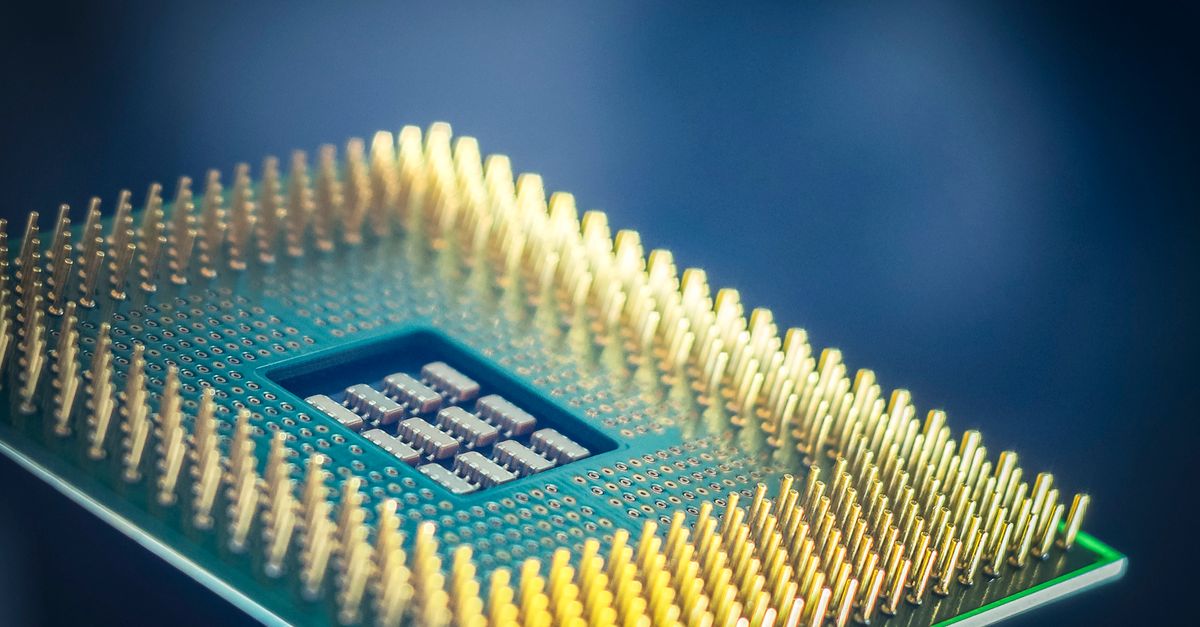
Photo by Jimmy Chan on Pexels
Apple rolls out its most powerful chips yet
Apple introduced two new silicon variants on Tuesday: the M5 Ultra and the M6. Both arrive in an updated Mac Mini and a refreshed Mac Studio. Apple billed the M5 Ultra as the “most powerful chip ever” in its lineup, while the M6 targets everyday workloads with a newer manufacturing node.
The launch coincided with a press event that highlighted the chips’ role in local AI development. Apple also announced a “M5 Pro” configuration for the Mac mini, giving buyers a mid‑range option between the legacy M4 and the new M6.
Technical specs and performance claims
The M5 Ultra expands on the architecture introduced with the M3 Ultra, adding more CPU and GPU cores and a larger unified memory pool. Engadget notes that the M5 Ultra retains the same core layout as the M3 Ultra but pushes clock speeds higher, delivering a modest uplift in raw compute.
The M6, by contrast, is built on a 2nm process, according to Engadget. Apple says the smaller node improves performance per watt and allows higher clock frequencies without a proportional rise in power draw. Early benchmarks show a “respectable” gain over the M5, but the article warns M5 owners need not feel compelled to upgrade.
Both chips retain the unified memory architecture that Apple introduced with the M1 series. The new Mac mini now ships with either an M6 or an M5 Pro, while the Mac Studio offers the M5 Ultra as its top configuration. The 9to5Mac roundup lists the new ports, storage options, and thermal designs, noting that the chassis remains largely unchanged from the previous generation.
Targeting local AI development
Ars Technica points out that the refresh is designed with on‑device AI in mind. Developers have been chaining multiple Macs together to run large language models, but the new silicon aims to keep those workloads on a single machine. The M5 Ultra’s larger GPU core count and higher memory bandwidth make it better suited for inference tasks that previously required a cluster.
Apple’s marketing materials emphasize the ability to run models locally without sending data to the cloud. That aligns with a broader industry trend toward privacy‑preserving AI, where companies prefer edge processing to avoid regulatory scrutiny. The hardware upgrade reduces latency for developers testing prompts and fine‑tuning models, according to the Ars Technica analysis.
Market context and competitive pressure
Apple’s silicon push arrives as rivals such as Nvidia and AMD continue to dominate the high‑end AI accelerator market. Nvidia’s H100 and AMD’s Instinct GPUs still lead in raw tensor throughput, but Apple argues that its integrated approach lowers system complexity and power consumption.
The move also responds to criticism that Apple’s Mac lineup lags behind Windows machines for AI workloads. By bundling a more capable GPU and a larger memory envelope into a single desktop, Apple narrows the performance gap for developers who prefer macOS tooling. Engadget’s side‑by‑side comparison of the M5 Ultra and M3 Ultra highlights that the performance delta is incremental rather than revolutionary, suggesting Apple is betting on steady improvement rather than a disruptive leap.
From a pricing perspective, the new Mac mini configurations sit above the M4‑based models but below the premium Mac Studio equipped with the M5 Ultra. This tiered strategy mirrors Apple’s recent approach to iPhone and iPad pricing, offering a clear upgrade path for power users without alienating entry‑level buyers.
What to watch next
The next quarter will reveal whether developers adopt the M5 Ultra for production AI workloads or stick with external accelerators. Track the adoption metrics Apple releases for Mac Studio sales, and watch for third‑party benchmark suites that compare the M5 Ultra’s inference latency against Nvidia’s consumer‑grade GPUs. A potential macOS update that adds native support for emerging model formats could further tip the balance toward on‑device AI.
Related Articles

Googlebook challenges Apple’s retail play as Mac Studio prices
Google’s $899 AI‑native laptop and Apple’s store‑first philosophy clash amid rising component costs and AI‑driven hardware bets.

Apple unveils iOS 27 Photos upgrades, Ultra 4 leaks, M6 debut
iOS 27 revamps iCloud Shared Albums, rumors detail Apple Watch Ultra 4, iPhone 18 Pro features, and the M6 chip arrives in a new Mac mini.

Apple's iPhone Ultra, CVPR AI Push, and macOS 26.6 Beta
Apple teases iPhone 18 Pro vs Ultra differences, previews computer‑vision research at CVPR, and opens macOS 26.6 public beta for early testing.