

NASA's Roman Space Telescope Set for August 30 Launch

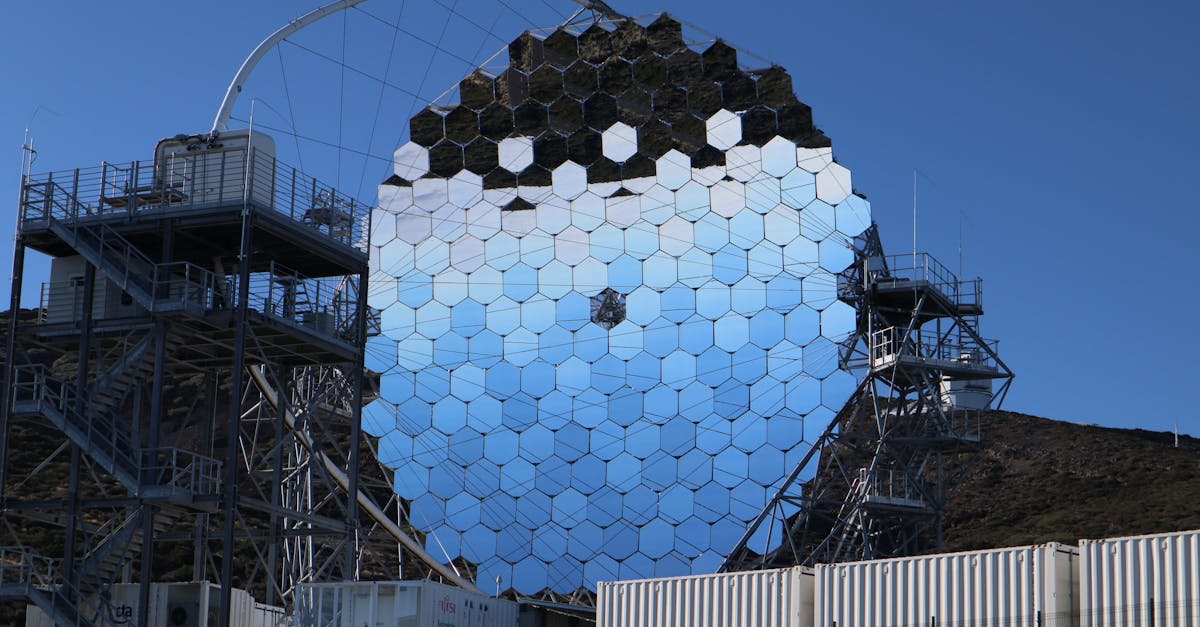
Photo by Michael Goddard on Pexels
A New Era in Space Exploration
The Nancy Grace Roman Space Telescope, NASA’s next-generation observatory, is set to launch on August 30. This mission promises to significantly advance our understanding of the universe with its unparalleled panoramic view.
The Telescope’s Capabilities
The Roman Space Telescope boasts a 7.9-foot-wide primary mirror, similar in size to the Hubble Space Telescope’s. However, its field of view is 100 times larger, allowing it to survey thousands of planetary bodies in the Milky Way and smaller celestial bodies in our solar system. This capability will enable scientists to address topics such as planetary science, stellar populations, galaxy evolution, and cosmology.
The telescope’s design and technology will allow it to gather data that will help scientists better understand the mysteries surrounding dark energy, dark matter, and observe exoplanets. By combining the power of imaging and spectroscopy in synergy with other observatories, Roman will gain fresh insights into the universe through focused surveys and General Astrophysics observations.
A Brief History of Space Telescopes
The Nancy Grace Roman Space Telescope is not the first of its kind. NASA has a history of launching space telescopes that have significantly advanced our understanding of the universe. The Hubble Space Telescope, launched in 1990, has been a cornerstone of space astronomy for over three decades. The James Webb Space Telescope, launched in December 2021, is the successor to the Hubble Space Telescope and has been designed to study the universe in the infrared range.
The Roman Space Telescope is named after NASA’s first chief astronomer, Nancy Grace Roman. Its launch marks a new chapter in space exploration, one that promises to reveal the secrets of the universe in unprecedented detail. As the telescope prepares for its journey to the Kennedy Space Center in Florida, the scientific community eagerly awaits the discoveries that will be made possible by this cutting-edge technology.
What to Watch
The launch of the Nancy Grace Roman Space Telescope on August 30 will be a significant milestone in the history of space exploration. As the telescope begins its mission, scientists will be closely monitoring its performance and the discoveries it makes. The data collected by Roman will help shape our understanding of the universe and may lead to new breakthroughs in fields such as astrophysics and cosmology.
The Roman Space Telescope’s mission is to provide a deep, panoramic view of the cosmos, generating never-before-seen pictures of our universe. Its advanced technology and design will allow it to survey the universe with unprecedented precision, providing scientists with a wealth of new data to study and analyze.
The Future of Space Exploration
The launch of the Nancy Grace Roman Space Telescope is a significant step forward in the exploration of space. As scientists continue to study the universe and make new discoveries, the Roman Space Telescope will play a critical role in advancing our understanding of the cosmos. With its unparalleled panoramic view and advanced technology, the Roman Space Telescope is poised to make significant contributions to the field of space astronomy.
Technical Mechanics
The Roman Space Telescope’s design is based on a modular architecture, which allows for greater flexibility and scalability. The telescope’s primary mirror is made up of 7.9-foot-wide segments, which provide a large collecting area for gathering light from distant celestial objects. The telescope’s secondary mirror is designed to correct for aberrations in the primary mirror, ensuring that the light gathered is accurate and precise.
The Roman Space Telescope will also utilize a sophisticated cryogenic cooling system to maintain the temperature of its instruments at extremely low levels. This will enable the telescope to detect faint signals from distant celestial objects, which would otherwise be undetectable.
Industry Context
The Roman Space Telescope is part of a larger effort by NASA to advance our understanding of the universe. The telescope’s launch is a significant milestone in the history of space exploration, and it marks a new chapter in the study of the cosmos.
The Roman Space Telescope’s capabilities will complement those of other NASA space telescopes, such as the Hubble Space Telescope and the James Webb Space Telescope. Together, these telescopes will provide scientists with a comprehensive view of the universe, from the formation of the first stars and galaxies to the present day.
The launch of the Roman Space Telescope also highlights the importance of international cooperation in space exploration. The telescope’s development and launch were made possible through the collaboration of scientists and engineers from around the world, and it marks a significant achievement in the field of space astronomy.
Updates
Related Articles
Mars Spacecraft Faces Congressional Scrutiny
Two senators seek answers on NASA's Mars spacecraft performance.
NASA's Kepler Telescope Discovers New Solar System
NASA's Kepler telescope discovers a new solar system with eight planets, similar to our own solar system, using Google's machine learning technology.