

Microsoft Launches Agent-First Android OS


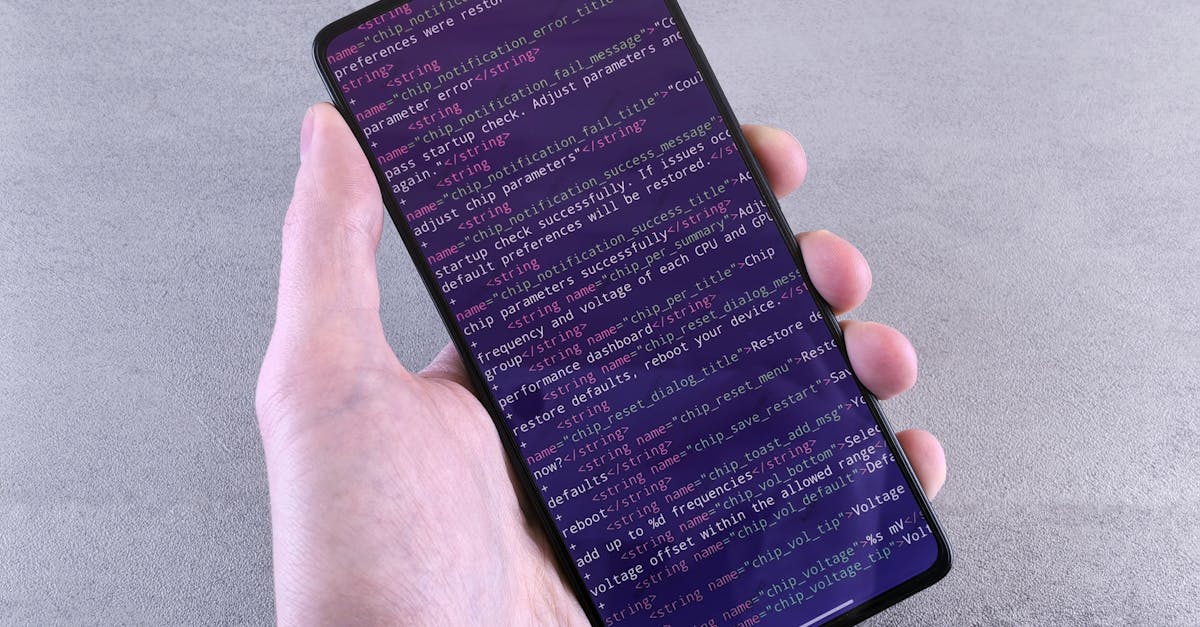
Photo by Airam Dato-on on Pexels
Project Solara swaps apps for AI agents
Microsoft unveiled Project Solara, an Android‑based operating system that runs AI agents instead of traditional apps. The shift flips the usual mobile model on its head.
Project Solara is built on Android and targets an ecosystem where agents handle tasks that users would normally launch from an app store, according to Ars Technica. Microsoft frames the move as a response to its earlier failure to dominate the app market. By placing agents at the core, the company hopes to make interactions feel like a conversation rather than a click.
The agent‑first design raises immediate technical questions. Android already supports background services, but agents require persistent state and tighter integration with voice and vision models. Microsoft will need to ship a runtime that can host large language models on‑device while still allowing cloud fallback. That duality mirrors the broader industry trend of pushing intelligence to the edge.
China tests a reusable heavy‑lift rocket
China launched a new heavy‑lift rocket that emphasizes reusability, echoing the engineering philosophy behind SpaceX’s Falcon 9. The launch marked a surprise entry into the reusable‑rocket club.
The Chinese vehicle follows the same basic pattern as Falcon 9: a first stage that returns to a landing site after separation, a payload fairing designed for rapid refurbishment, and a flight profile tuned for multiple uses. Ars Technica notes that the engineering rationale mirrors SpaceX’s cost‑saving logic.
Reusability could reshape China’s launch market. Current pricing for expendable rockets remains high, limiting access for smaller satellite operators. A reusable system promises lower per‑launch costs, but it also introduces new operational complexity. Ground crews must master rapid turnaround, and reliability data will be scrutinized by commercial customers.
Slate Auto strips connectivity to protect privacy
Slate Auto released a bare‑bones electric pickup that omits an embedded modem, positioning the vehicle as a privacy‑first alternative to today’s connected cars. The move runs counter to the industry’s push for constant telemetry.
Without a built‑in modem, the Slate Truck cannot stream data to cloud services, cannot receive over‑the‑air updates, and cannot be tracked in real time. Ars Technica calls the truck “the antithesis of today’s connected cars.” The design forces owners to rely on external Wi‑Fi or a mobile hotspot for any software changes.
The privacy angle is clear: fewer data streams mean fewer opportunities for third‑party surveillance. However, the trade‑off is functional. Drivers lose remote diagnostics, real‑time traffic integration, and many of the convenience features that have become standard. Slate Auto appears to be betting on a niche of users who value data sovereignty over convenience.
Perplexity Computer blends local and cloud AI models
Perplexity announced a new feature that lets its Perplexity Computer split tasks between local and cloud models. The hybrid approach aims to balance latency, cost, and privacy.
When a query can be answered by a lightweight on‑device model, the system will stay local. For more complex requests, it will forward the work to a cloud‑hosted model. 9to5Mac reports that the feature arrives soon, suggesting a staged rollout.
The split model reflects a broader industry tension. Purely cloud‑based AI offers raw power but incurs network latency and data‑exposure risks. Purely local AI respects privacy but struggles with large‑scale reasoning. By dynamically allocating work, Perplexity hopes to give users the best of both worlds.
What to watch next
Project Solara will need a developer toolkit that lets third‑party teams build agents that can survive on a mobile device. The first wave of agents will reveal whether the model can attract enough usage to justify a new OS.
China’s reusable rocket will undergo a series of test flights. Success will be measured by turnaround time, landing precision, and payload reliability. Commercial satellite firms will watch closely for price signals.
Slate Auto’s privacy stance will be tested when owners demand software fixes. The company’s ability to push updates via user‑provided connections will determine whether the trade‑off stays viable.
Perplexity’s local‑cloud split will generate data on how often each path is used. Metrics on latency reduction and privacy preservation will guide future AI deployments across the industry.
Tracking these developments will show whether agents, reusability, privacy‑first hardware, and hybrid AI become mainstream or remain niche experiments.
Updates
Related Articles

AI startups surge, but privacy battles loom
Etched hits a $21 B valuation, Perplexity adds millions of Indian users, and Proton warns AI must respect privacy. The stakes for the AI market sharpen.
OpenAI Pushes ChatGPT Memory to Free Tier
OpenAI opens ChatGPT memory to free users, Samsung re‑introduces Snapdragon, Cloudflare buys VoidZero, and a pricey Manhattan homeschool sparks debate.
Xiaomi MiMo 2.6, Grok 4.7, and a Wave of Mid‑Month Tech Setbacks
A roundup of Xiaomi's MiMo 2.6 launch, x.ai's Grok 4.7 update, NASA's Mars Sample Return cancellation, and other mid‑September tech headlines.