

NASA’s Moon Base Plans Clash With Selection Bias and Crew Strain

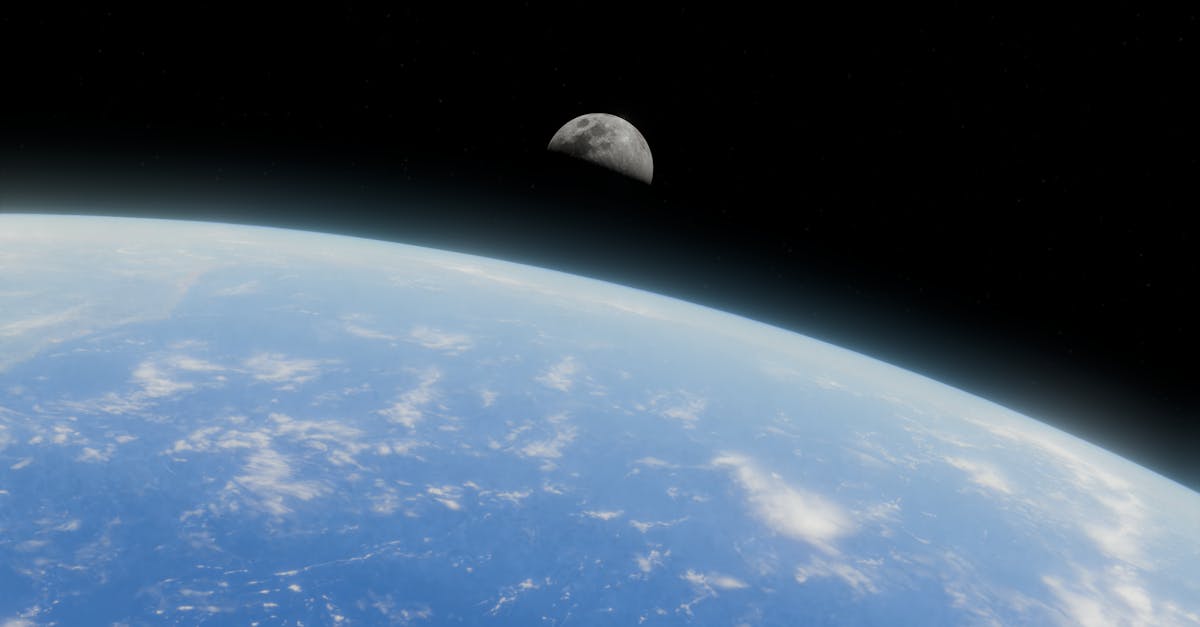
Photo by Zelch Csaba on Pexels
NASA’s Moon Base Perimeter Talk
NASA officials raised the idea of a “perimeter” for a future Moon base during a recent policy briefing. The term signals a shift from vague aspirations to concrete boundary planning. At the same time, officials reminded the audience of the Outer Space Treaty, which bars sovereign claims on celestial bodies. The juxtaposition shows NASA wrestling with both engineering and legal frameworks.
The agency’s public documents stopped short of defining the perimeter’s dimensions. What is clear is that any structure must respect the treaty’s prohibition on national appropriation. This legal constraint will shape everything from habitat placement to resource extraction strategies.
Mission Selection Bias Shapes Solar System Knowledge
In June, NASA green‑lit the Dragonfly mission, a nuclear‑powered dual quadcopter bound for Titan in 2026. Dragonfly beat out eleven rival proposals, including the Comet Astrobiology Exploration Sample Return (CAESAR) concept. The CAESAR team, led by University of Arizona researcher Dante Lauretta, now faces an indefinite delay that may end the project.
The selection process, used for both Discovery‑class (≈$600 M cap) and New Frontiers‑class (≈$1 B cap) missions, pits dozens of proposals against each other. Review panels trim the field through multiple rounds, and the final decision rests with a single associate administrator for NASA’s Science Mission Directorate. That concentration of authority creates a bias toward certain destinations. Mars and Titan see repeated investment, while Venus and other viable targets languish.
The consequences extend beyond individual careers. When a mission like CAESAR never flies, whole classes of scientific questions remain unanswered. The planetary‑science community feels the loss keenly, as years of effort evaporate with each selection round.
Crew Rotations Reveal Operational Strain
NASA launched Crew‑10 on a Falcon 9 from Kennedy Space Center at 7:04 p.m. EDT on March 14. The top‑mounted Dragon capsule carried Nichole Ayers, Anne McClain, Roscosmos astronaut Kirill Peskov, and JAXA astronaut Takuya Onishi. Docking is scheduled for 11:30 p.m. EDT on March 15.
Crew‑10’s launch ends a nine‑month stay for Butch Wilmore and Suni Williams, who were stranded after Boeing’s Starliner suffered five helium leaks and five reaction‑control‑system thruster failures on its June 5, 2024 debut. The Starliner mission was abandoned on August 24, and the empty capsule returned on September 6.
While Crew‑10 prepares for a March 19 return aboard the docked Crew‑9 capsule, NASA announced an early return for Crew‑11 on January 7 due to an undisclosed medical issue. The affected astronaut remains stable, but the agency will bring home Mike Fincke, Zena Cardman, and two others ahead of the planned mid‑February launch of Crew‑12. A spacewalk slated for January 8 was postponed, highlighting how health events can disrupt the tightly choreographed ISS rotation.
These incidents expose the fragility of human‑spaceflight schedules. A single technical glitch on Starliner forced months of extra workload for the ISS crew, while a medical hiccup now forces an unscheduled repatriation. The cumulative effect strains both crew morale and mission planning.
What’s Next for Lunar Outpost and Policy
The next public decision point will be NASA’s formal definition of the Moon‑base perimeter. That definition will dictate habitat layout, power‑distribution networks, and the legal arguments needed to stay within treaty bounds. Stakeholders will watch the agency’s upcoming briefing for clues on how much autonomy NASA expects for commercial partners.
Simultaneously, the planetary‑science community will monitor the upcoming New Frontiers competition. If NASA adjusts its risk appetite, we may see a proposal for Venus or a comet sample‑return finally break through the bias that has favored Mars and Titan.
Finally, the ISS crew schedule will be a barometer for NASA’s resilience. The agency must balance crew health, launch vehicle reliability, and the need to keep the station staffed for upcoming lunar gateway integration. Tracking the return dates for Crew‑10, the medical outcome for the unnamed Crew‑11 astronaut, and the launch readiness of Crew‑12 will reveal whether NASA can maintain operational tempo while expanding its lunar ambitions.
What to watch: the official perimeter definition at NASA’s next lunar‑base policy meeting, the selection criteria released for the upcoming New Frontiers call, and the health update for the Crew‑11 astronaut before the mid‑February Crew‑12 launch.
Updates
- 2026-09-14 — Pre-orders for the Android-based Googlebook laptops open on September 21 (source)
- 2026-08-26 — Surprise: Z.ai is the AI lab behind the mysterious Ox Alpha model (source)
- 2026-08-14 — Samsung has new Galaxy headphones in the works (source)
- 2026-06-03 — The Hisense L9Q short-throw projector perfectly nails the low-profile theater room feel (source)
Related Articles
Europe Goes Solo on Venus Mission as NASA Shifts Funding Focus
NASA pulls a radar instrument, prompting Europe to pursue its Venus probe alone while the agency asks states for money.
Starship's final test flight clears the way for bigger rockets
SpaceX’s Oct 13 Starship test ends Version 2, NASA rescues stranded ISS crew, and researchers warn megaconstellations could thin Earth’s magnetosphere.
NASA cuts 900 shuttle jobs as fleet winds down
NASA announced the layoff of 900 manufacturing workers while it prepares to retire the space shuttle fleet, signaling a shift in the agency’s focus.