

Human Archive's Gig Work for AI Training Data Sparks Debate

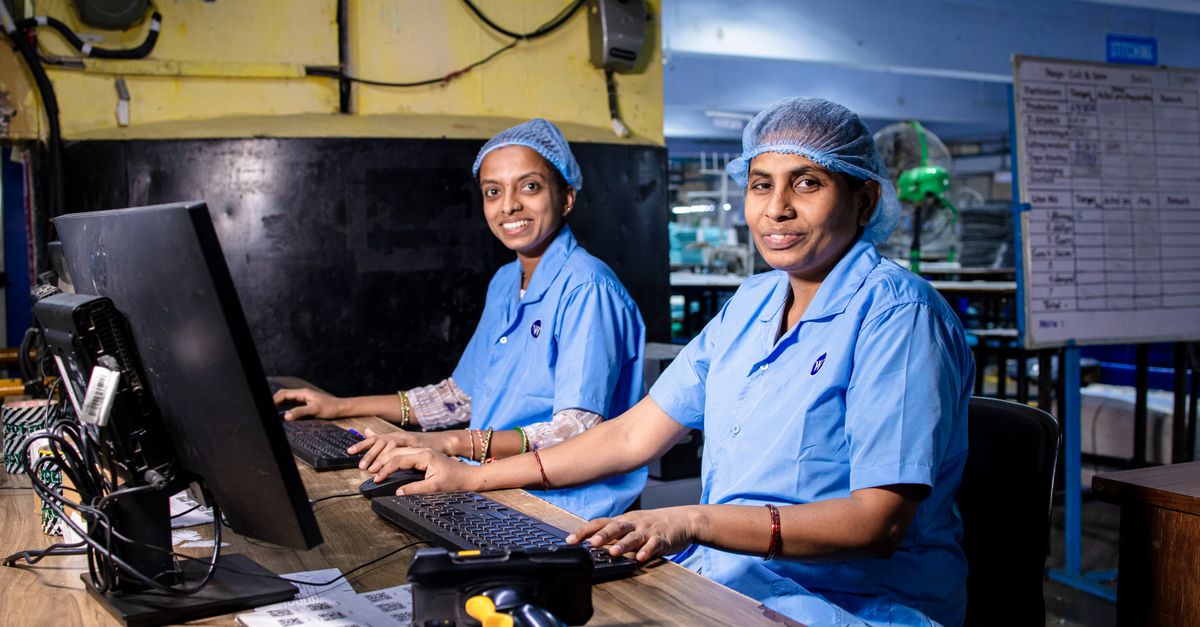
Photo by EqualStock IN on Pexels
Human Archive has deployed camera-equipped headsets on gig workers in India to gather physical training data for robotics development. The startup, founded by UC Berkeley and Stanford researchers, is capitalizing on India’s growing gig workforce to create datasets that AI labs and robotics companies require for real-world testing. This approach raises questions about labor conditions and data ethics in an industry racing to commercialize physical AI systems.
The project involves equipping workers with wearable sensors that capture three-dimensional spatial data and motion patterns. According to the startup’s public documentation, this creates training sets for tasks ranging from household maintenance robots to industrial automation. The workers receive hourly compensation through digital payment platforms, with data collection spanning urban and rural locations across multiple Indian states.
A Shift in AI Development Economics
The economic model reflects broader trends in AI development. A recent Signalbloom AI analysis demonstrated that combining outsourced data collection with local AI processing can reduce costs by up to 70% compared to traditional research labs. This mirrors the Hacker News discussion about local AI solutions becoming more economically viable as frontier labs face diminishing returns. Human Archive’s approach aligns with this shift, leveraging geographic arbitrage to maintain competitive advantage.
However, the cost-cutting strategy introduces new risks. The same Signalbloom post notes that while outsourcing reduces capital expenditures, it creates dependency on third-party data quality. This tension is evident in Human Archive’s documentation, which acknowledges variations in worker sensor calibration techniques across regions. The startup has not disclosed how it handles data normalization or error correction for these disparities.
Ethical and Privacy Concerns
The initiative overlaps with growing concerns about AI data provenance. The FBI’s recent demonstration of how AI-generated content can be traced back to individuals highlights the potential for misuse of such datasets. Human Archive’s collection method includes not just environmental data but also worker biometrics - a combination that raises privacy issues not addressed in the startup’s public statements.
Industry observers have noted a pattern of under-disclosure in similar projects. A hackernews discussion about AWS’s recent termination of a “caregiver” employee for the company’s AI initiatives shows how corporate AI programs often lack transparency about their human components. The parallel is clear: when companies prioritize algorithmic efficiency over human factors, both ethical and operational failures emerge.
Technical Limitations and Competition
Despite the strategic advantages, the technical execution faces challenges. The Hacker News thread on language models needing “sleep” suggests that current AI architectures may not be optimized for the continuous physical processing required by robotics applications. Human Archive’s datasets, while extensive, may not resolve the fundamental issues of sensor fatigue and environmental prediction errors inherent in physical systems.
The competitive landscape is also intensifying. Traditional robotics labs are augmenting their datasets with similar gig-worker approaches, creating a market for training data that mirrors the content moderation industry’s gig workforce challenges. This arms race has yet to produce clear benchmarks for what constitutes “sufficient” training data for physical AI applications, leaving companies like Human Archive to define quality metrics internally.
What’s Next
Regulatory scrutiny appears inevitable as the scale of physical data collection expands. The FBI’s high-profile case demonstrating AI traceability suggests law enforcement will soon demand transparency about data sources. Investors should watch for two developments: first, whether Human Archive secures partnerships with major robotics manufacturers by Q3 2025, and second, any formal complaints from Indian labor rights groups about the working conditions of data collect workers. The Signalbloom AI analysis predicted as much, noting that the current economic model creates a “perfect storm” of regulatory, technical, and ethical pressures.
Updates
Related Articles
The AI Paradox: Innovation's March Meets a Crisis of Trust
As AI rapidly integrates into industries and daily tools, groundbreaking innovation is increasingly shadowed by critical concerns over privacy, data ethics, and corporate accountability.
GPT-6 drives robot arms as AI weapons warnings grow
OpenAI's GPT-6 Astra can control robot arms, sparking debate over hype, safety and the looming threat of autonomous weapons.

Open‑Weight AI Sparks Self‑Improvement, Acquisitions
Anthropic's self‑improving models, Nvidia's $13B Hugging Face deal, and rising ethical lawsuits illustrate the tension around open‑weight AI.