

Psyche Spacecraft

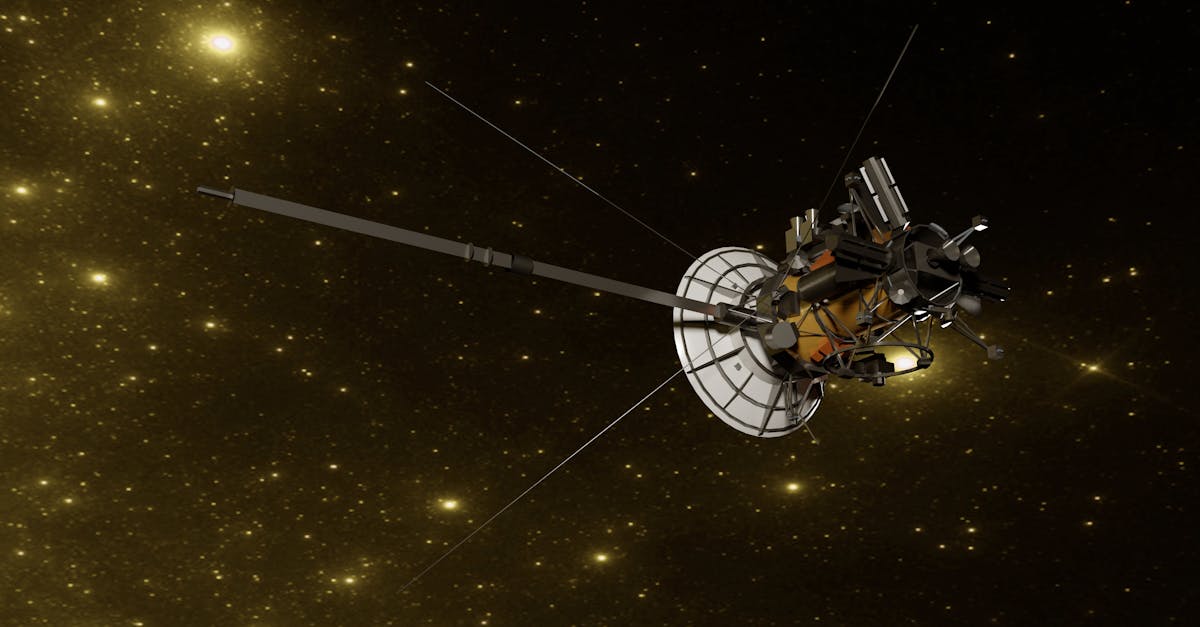
Photo by Paul Seling on Pexels
Introduction to Psyche Spacecraft
The Psyche spacecraft, launched in October 2023, is on a six-year journey to explore a metal-rich asteroid of the same name. This asteroid, located in the main asteroid belt between Mars and Jupiter, is believed to be the partial core of a planetesimal, a building block of an early rocky planet.
The Mission’s Objective
The primary objective of the Psyche mission is to study the asteroid’s composition, geology, and magnetic field. The spacecraft is equipped with three science instruments: a multispectral imager, a gamma-ray and neutron spectrometer, and a magnetometer. These instruments will help scientists understand the asteroid’s surface and subsurface composition, as well as its magnetic properties.
Technical Challenges and Innovations
One of the significant technical challenges of the Psyche mission is its propulsion system. The spacecraft uses solar electric propulsion, which is more efficient than traditional chemical thrusters. The propulsion system starts with large solar arrays that convert sunlight into electricity, providing the power source for the spacecraft’s thrusters. The thrusters, known as Hall thrusters, use electromagnetic fields to accelerate and expel charged atoms, or ions, of xenon, creating thrust that gently propels the spacecraft through space.
Recent Developments and Findings
During its journey, the Psyche spacecraft has encountered some technical issues. In April, the spacecraft’s propulsion system experienced a decrease in fuel pressure, which caused the spacecraft to shut off its plasma thrusters. However, the issue did not affect the spacecraft’s trajectory, and engineers are working to determine the cause of the problem.
In addition to its technical challenges, the Psyche spacecraft has also achieved some significant milestones. In November, the spacecraft successfully tested its Deep Space Optical Communications (DSOC) system, which uses laser light to transmit data back to Earth. This technology has the potential to greatly increase the speed of data transmission for future spacecraft.
Context and History
The Psyche mission is part of a larger effort to explore the asteroid belt and understand the formation and evolution of our solar system. The mission builds on previous asteroid exploration missions, such as the Dawn mission, which orbited the asteroid Vesta and the dwarf planet Ceres. The Psyche mission will provide valuable insights into the composition and properties of metal-rich asteroids, which are thought to be the remnants of planetary cores.
Industry Context and Competitive Landscape
The Psyche mission is a collaboration between NASA, the Jet Propulsion Laboratory, and several universities and private companies. The mission’s success will depend on the effective integration of various technologies and systems, including the spacecraft’s propulsion system, communication system, and science instruments. The mission’s findings will also have implications for the asteroid mining industry, which is seeking to extract valuable resources from asteroids.
History of Asteroid Exploration
The exploration of asteroids has a long history, with several spacecraft visiting asteroids in the past. One of the most notable asteroid exploration missions was the Dawn mission, which orbited Vesta and Ceres. The Dawn mission provided valuable insights into the composition and geology of these asteroids, and helped scientists to better understand the formation and evolution of the asteroid belt.
Technical Mechanics of the Psyche Spacecraft
The Psyche spacecraft is equipped with several advanced technologies, including its solar electric propulsion system and DSOC communication system. The spacecraft’s propulsion system uses solar arrays to generate electricity, which powers the Hall thrusters. The DSOC system uses a laser to transmit data back to Earth, which has the potential to greatly increase the speed of data transmission for future spacecraft.
Downstream Implications
The success of the Psyche mission will have significant implications for future asteroid exploration missions and the development of new technologies for deep space communication and propulsion. The mission’s findings will also have implications for the asteroid mining industry, which is seeking to extract valuable resources from asteroids. As the Psyche spacecraft continues its journey to the asteroid Psyche, several key events and milestones are worth watching. The spacecraft is expected to arrive at the asteroid in August 2029, marking the beginning of a 26-month science investigation.
What to Watch
The Psyche mission is a complex and challenging endeavor, and several key events and milestones are worth watching. The spacecraft’s arrival at the asteroid Psyche in August 2029 will mark the beginning of a 26-month science investigation, during which the spacecraft will study the asteroid’s composition, geology, and magnetic field. The mission’s findings will be closely monitored by scientists and engineers, who will be eager to learn more about the asteroid’s composition, geology, and magnetic field.
Additional Insights into Solar Electric Propulsion
The solar electric propulsion system used by the Psyche spacecraft is a critical component of its mission. The system uses solar arrays to generate electricity, which powers the Hall thrusters. The Hall thrusters use electromagnetic fields to accelerate and expel charged atoms, or ions, of xenon, creating thrust that gently propels the spacecraft through space. This technology has the potential to greatly increase the efficiency of spacecraft propulsion, enabling longer and more complex missions.
Future Applications of Deep Space Optical Communications
The successful test of the DSOC system on the Psyche spacecraft has significant implications for future deep space missions. The technology has the potential to greatly increase the speed of data transmission for future spacecraft, enabling more efficient and effective communication between spacecraft and Earth. This technology could be used in a variety of future missions, including asteroid exploration, planetary exploration, and even interstellar travel.
Updates
Related Articles
NASA's Kepler Telescope Discovers New Solar System
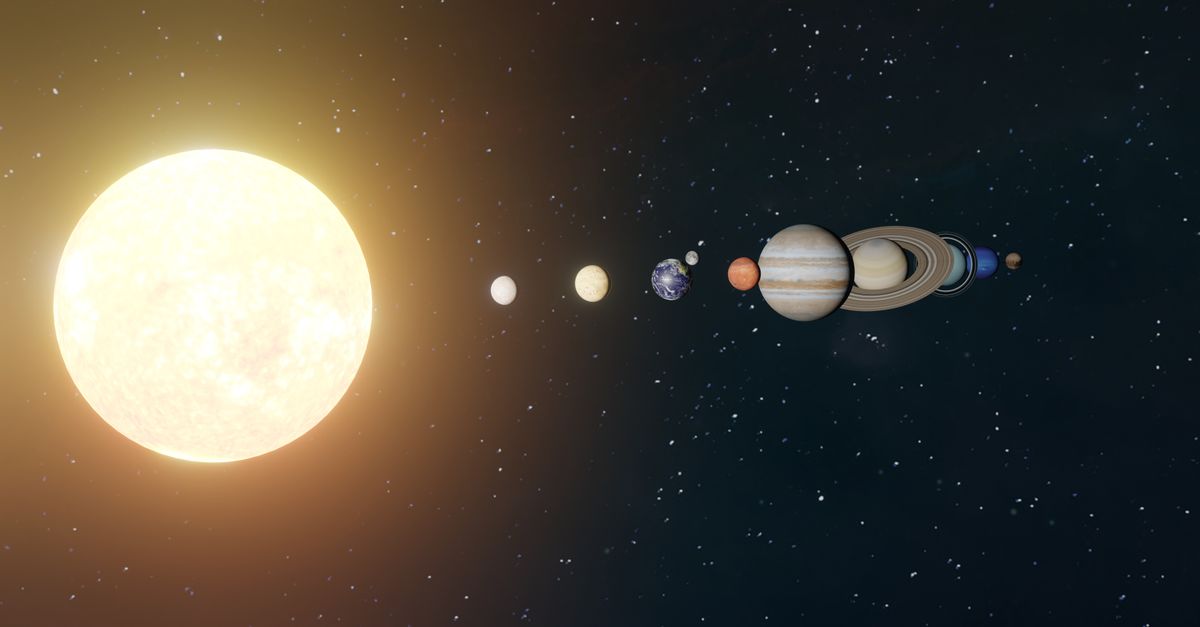
NASA's Kepler telescope discovers a new solar system with eight planets, similar to our own solar system, using Google's machine learning technology.