

Talkie releases 13B language model trained on 1930s text


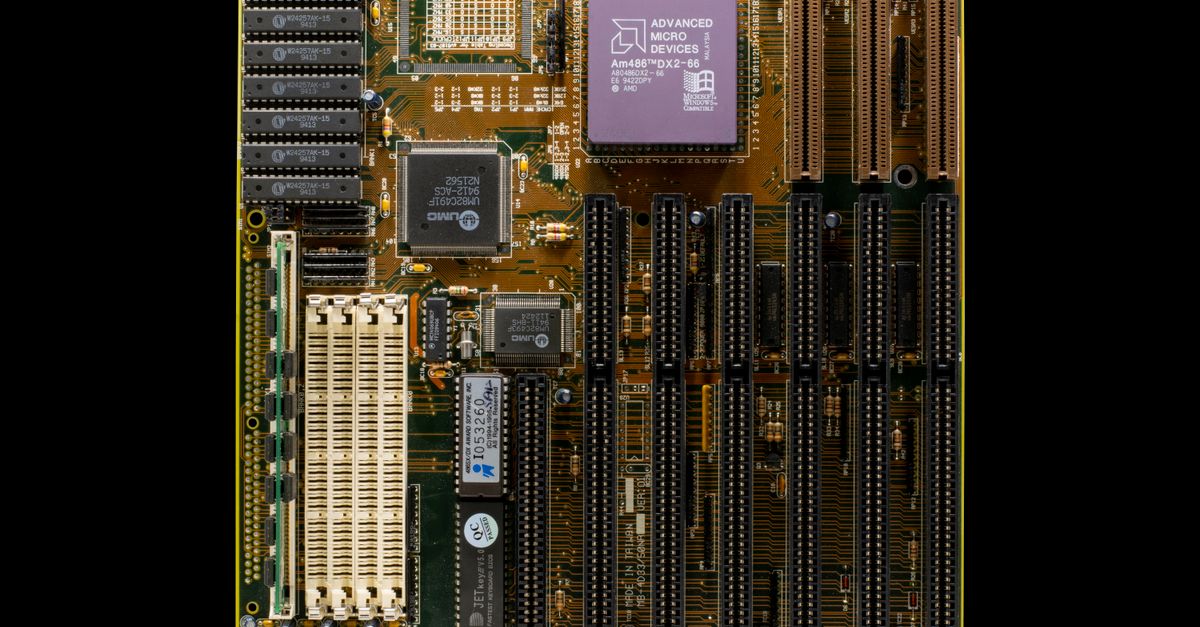
Photo by Brett Sayles on Pexels
Talkie’s announcement
Talkie released a 13‑billion‑parameter language model built on texts from the 1930s. The project’s website describes the model as “vintage” and points to a download page for the checkpoint.
The announcement landed on Hacker News and earned 270 points. The discussion thread shows 77 comments. The site lists the model size, the era of the source material, and a link to the code repository. No pricing or commercial licensing is mentioned. The developers frame the release as an experiment in historical language modeling.
Technical trade‑offs of vintage data
Training on 1930s literature limits vocabulary breadth. The era predates many modern terms, so the model struggles with contemporary jargon. Tokenizers trained on modern corpora will split many historic words into sub‑tokens, inflating sequence length.
Older prose also carries stylistic bias. Sentences are longer, punctuation differs, and narrative voice is formal. The model inherits those patterns, which can feel stilted when prompted with modern queries. Researchers note that such bias is a double‑edged sword: it preserves historical style but hampers practical utility.
Memory usage remains comparable to other 13B models. The parameter count dictates GPU requirements, not the age of the data. However, the training pipeline needed custom preprocessing to digitize scanned texts, clean OCR errors, and align paragraph breaks.
Community reaction on Hacker News
The post attracted 281 points overall, indicating strong curiosity among the tech community. Commenters praised the novelty but warned against over‑hyping the model’s capabilities.
One user noted that the model’s perplexity on modern benchmarks would likely be high. Another pointed out that the project could serve as a research testbed for domain‑specific LLMs. A few skeptics asked whether the effort would translate into real‑world applications or remain a curiosity.
The thread also highlighted a broader conversation about data provenance. Participants asked how the developers sourced the 1930s corpus and whether copyright clearance was verified. The developers responded that the texts are in the public domain, but some commenters remained cautious.
Market context: niche LLMs versus commercial giants
Talkie joins a growing list of hobbyist models that prioritize unique datasets over raw scale. Projects such as Llama‑2, Mistral, and open‑source fine‑tunes have shown that specialized data can yield useful behavior without billions of parameters.
Commercial providers continue to push larger models, but they rarely experiment with historic corpora. Talkie’s focus on a single decade differentiates it from mainstream releases that aim for broad coverage.
The trade‑off is clear: a model that excels at reproducing 1930s prose will underperform on tasks like code generation or recent scientific literature. For developers interested in period‑specific content generation, Talkie offers a ready‑made tool. For most downstream applications, the model remains a niche asset.
What to watch
The next milestone will be independent benchmarking. If researchers publish perplexity or downstream task results on modern datasets, the community can gauge Talkie’s practical limits. Watch for a GitHub issue thread where contributors attempt to fine‑tune the model on contemporary data. A successful fine‑tune could demonstrate whether vintage pre‑training offers any regularization benefit. Conversely, poor results would reinforce the view that historic data is a curiosity rather than a foundation for production‑grade LLMs.
Future updates from the Talkie team may include larger checkpoints or additional decades. Tracking those releases will show whether the project intends to build a series of era‑specific models or consolidate into a broader historic‑language suite.
Updates
Related Articles
Amiga Unix resurfaces on modern hardware
A community revives the 1990 Amiga Unix port with AI‑assisted tools, new drivers, and a modern package manager for classic 68k machines.

Open‑Weight AI Sparks Self‑Improvement, Acquisitions
Anthropic's self‑improving models, Nvidia's $13B Hugging Face deal, and rising ethical lawsuits illustrate the tension around open‑weight AI.

OpenAI halves GPT‑5.6 Sol price as Moonshot AI rolls out cheaper
OpenAI cuts GPT‑5.6 Sol fees by 50% while Moonshot AI launches Kimi K2.5 and K3, models that beat GPT‑5 on reasoning and bring trillion‑parameter open‑source to the market.