

Chrome’s UI overhaul and MV2 kill‑switch reshape the browser

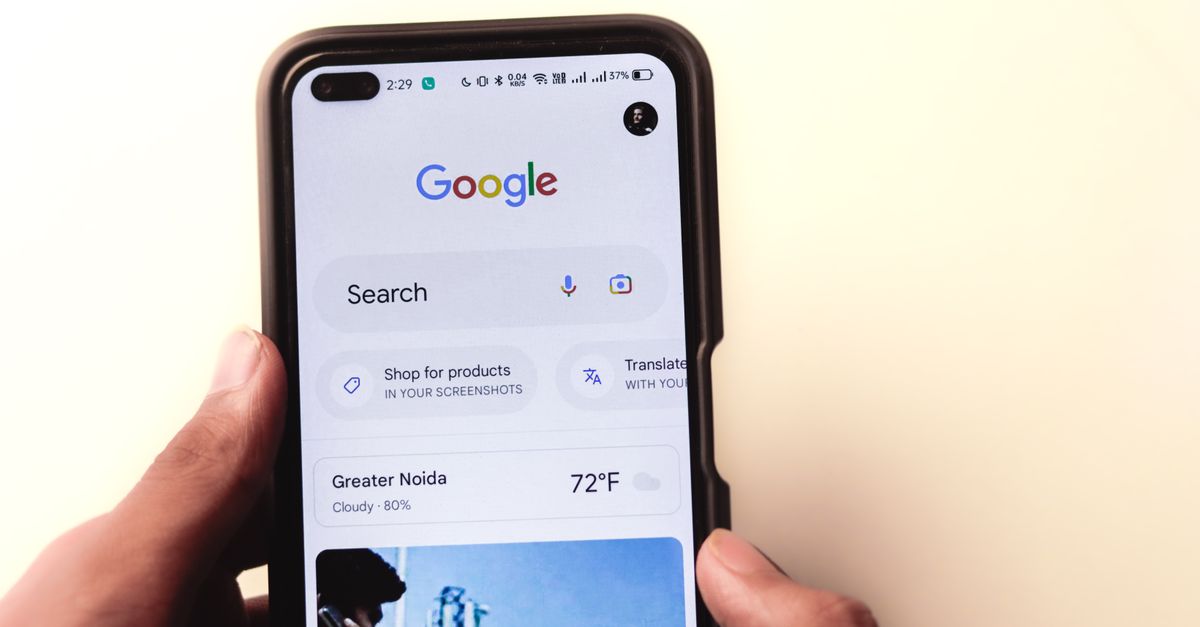
Photo by Sanket Mishra on Pexels
Chrome’s Android navigation bar redesign adds more chrome than clarity
The latest Android Chrome redesign swaps the familiar, minimal bar for a crowded control strip that feels more like a web page than a browser. Long‑time users notice the change immediately because the interface has hardly moved since 2012, a consistency that many found reassuring amid a sea of phone UI churn.
According to a 9to5Google review, the new layout piles extra icons and menus onto the bottom bar, turning a clean navigation surface into a visual overload. The reviewer praised Chrome’s historical steadiness but called the redesign a misstep, arguing that the added elements distract from core browsing tasks rather than enhance them. For power users who rely on swift gestures and unobstructed content, the shift feels like a regression.
The redesign also hints at a broader trend: Google is willing to sacrifice the minimalist experience that made Chrome a default for developers in favor of feature parity with competing browsers. The trade‑off may please casual users who crave visible controls, but it alienates the very audience that built Chrome’s reputation for speed and simplicity.
Manifest V3 finally shutters Manifest V2 ad blockers
Google’s Chrome 150, slated for release later this month, will strip the “kExtensionManifestV2Disabled” flag, a lingering loophole that let Manifest V2 (MV2) extensions run despite the official deprecation. The removal marks the end of the MV2 era, and with it, the final lifeline for ad‑blocking extensions like uBlock Origin that still depend on the older manifest.
Hacker News reports that the change follows a Chromium commit labeling the flag as “dead code” and cites security concerns: “we won’t be able to provide / maintain this functionality indefinitely due to the complexity and tech debt, as well as the security risks it entails.” The commit notes that bugs specific to MV2 have surfaced recently, reinforcing the decision to close the door.
Chrome 151 will purge the remaining MV2 remnants, effectively ending support for any MV2‑based extension in all supported Chrome versions. The move forces developers to rewrite extensions for Manifest V3, a permission model that limits background processing and network requests—features that ad blockers rely on heavily. Microsoft Edge and Opera are expected to follow Chrome’s lead, meaning the impact will ripple across the Chromium ecosystem.
The practical result for users is immediate: popular ad blockers that once filtered network requests at the browser level will lose functionality unless their developers ship a V3‑compatible version. For a community that values open‑web principles, the shift feels like a forced concession to Google’s own advertising interests.
Emergency patch for the eighth zero‑day of 2022 lands in Chrome 107
In parallel with UI and extension overhauls, Google pushed an emergency update to address CVE‑2022‑4135, a heap‑buffer overflow in the GPU process discovered by Clement Lecigne of Google’s Threat Analysis Group on 22 November 2022. The vulnerability, tracked as high severity, has an active exploit circulating in the wild, according to the update notice.
The fix arrives in Chrome 107.0.5304.121/122 for Windows and 107.0.5304.122 for macOS and Linux. Users are instructed to navigate to Settings → About Chrome, let the download finish, and restart the browser. Google deliberately limited details about the flaw to prevent further exploitation, a standard practice when an exploit is known to be active.
While the patch resolves the immediate threat, it underscores a pattern: Chrome’s massive user base makes it a prime target for sophisticated attackers. The rapid response—leveraging AI to close 1,072 bugs across two releases, as Google claims—shows the company’s growing reliance on automation to keep pace with the attack surface.
The broader fallout for browsers, developers, and power users
The convergence of a UI redesign, the MV2 kill‑switch, and a high‑profile security patch signals a decisive shift in Chrome’s strategic priorities. By tightening extension permissions and shedding legacy code, Google reduces its maintenance burden and limits attack vectors, but it also narrows the toolbox available to developers who built sophisticated workflows around MV2.
For developers, the transition to Manifest V3 means rearchitecting extensions to work within tighter sandbox constraints. The effort is non‑trivial; many open‑source ad‑blocking projects have already flagged the need for substantial code rewrites. Smaller teams may lack the resources to adapt, potentially shrinking the diversity of extensions in the Chrome Web Store.
Power users, who often rely on ad blockers to improve page load times and reduce data usage, now face a degraded browsing experience unless they switch to alternative browsers that still support MV2 or adopt new V3‑compatible tools. Edge and Opera’s likely alignment with Chrome’s policy suggests the ecosystem is moving toward a homogenized extension environment, limiting user choice.
Meanwhile, the UI overhaul may push some users toward browsers that retain a cleaner interface. The added chrome on Android could increase touch‑target errors and consume valuable screen real estate, especially on devices with smaller displays. Early adopters report a learning curve that outweighs any perceived benefit from the extra controls.
Collectively, these changes could accelerate migration to privacy‑focused browsers like Brave or Firefox, which have resisted Google’s extension model and maintain distinct UI philosophies. The net effect may be a fragmentation of the market as users and developers seek platforms that align with their expectations for control, performance, and visual simplicity.
What to watch
Track Chrome 150’s rollout this month and the subsequent Chrome 151 update for the complete removal of MV2 support. Monitor how uBlock Origin and other popular blockers respond—whether they ship Manifest V3 versions or retreat to alternative browsers. Keep an eye on Edge and Opera’s extension policies; any announcement to deprecate MV2 will confirm the industry‑wide shift. Finally, watch for post‑patch security reports on CVE‑2022‑4135 to gauge whether the emergency fix fully mitigates exploitation or reveals further vulnerabilities in Chrome’s GPU stack.
Related Articles

Google's AI push spans cloud, Chrome, weather, and maps
Google ties Accenture to its AI cloud, doubles Chrome updates, frees Gemini Daily Brief, upgrades AI weather, and wrestles with Android Auto bugs.

Apple Warns of Rising Memory Costs
Apple warns of rising memory costs, Chrome rolls out restart‑free patches, and EA moves to private ownership amid broader industry pressures.

Google speeds Chrome patches with AI, adds mute and link shields
Google ramps up Chrome bug fixes using AI and rolls out permanent mute and link‑shield features, while a health‑tech breach highlights the stakes.