

Qwen 3.8 Reverse‑Engineered in 30 Minutes


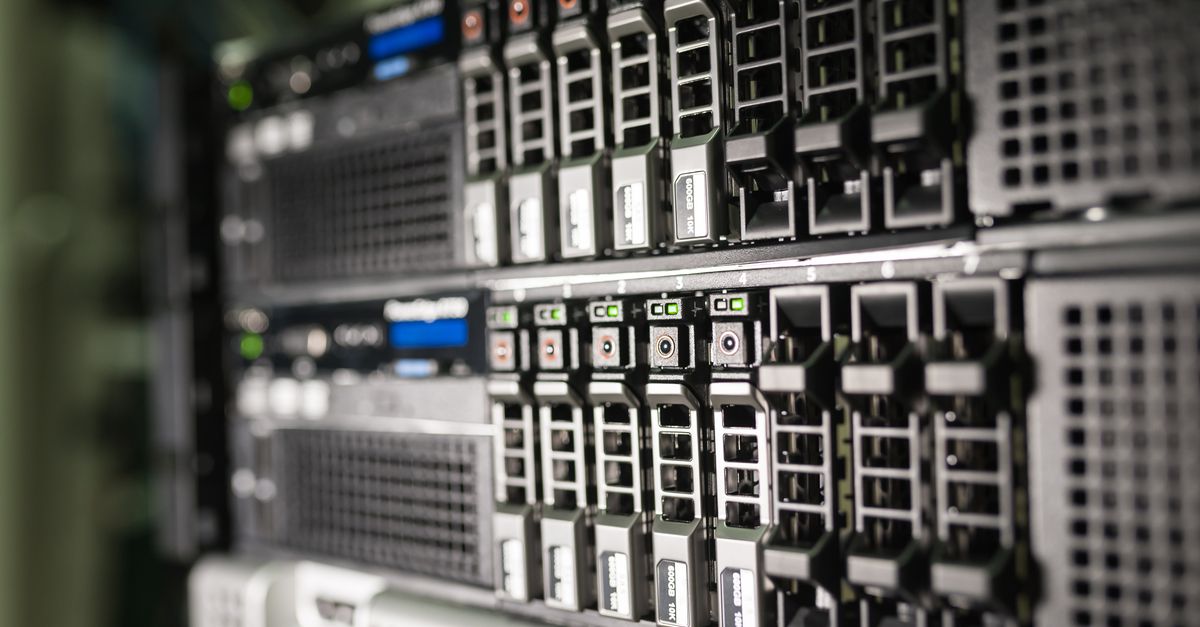
Photo by Jakub Zerdzicki on Pexels
Qwen 3.8 27B Reverse‑Engineering Hits 30‑Minute Mark
A reverse‑engineering job on the Qwen 3.8 27B model completed in thirty minutes. The XDA‑Developers post that sparked the discussion earned 159 points on Hacker News, indicating strong community interest.
The effort involved extracting the model’s weights and architecture from a publicly available checkpoint. The author reported that the entire pipeline—downloading, unpacking, and converting the files—finished within the half‑hour window. No new code was required beyond standard PyTorch utilities. The result is a usable replica that can be loaded into any compatible inference framework.
The speed of the job raises questions about the maturity of tooling for large language models. Where a year ago a similar task would have taken days, today a single developer can finish it in a coffee break. The community’s ability to reproduce models quickly also lowers the barrier for independent research.
NanoGPT Speedrun on Frontier Demonstrates Training Gains
PrimeIntellect AI posted a NanoGPT speedrun that targets the Frontier model, showing that a minimalist training loop can finish in minutes rather than hours. The research note, which also appeared on Hacker News with 127 points, details the configuration used: a single‑GPU setup, a batch size of 64, and a learning‑rate schedule that decays after the first few hundred steps.
The speedrun achieved convergence on a language modeling benchmark in a fraction of the time typical for comparable models. The authors attribute the result to NanoGPT’s stripped‑down codebase, which eliminates unnecessary abstraction layers. They also note that the Frontier model’s architecture aligns well with NanoGPT’s assumptions, further reducing overhead.
Critics point out that the experiment sacrifices model size and dataset breadth for speed. The authors acknowledge the trade‑off, stating that the goal is to prove a point rather than to produce a production‑ready model. Still, the demonstration suggests that rapid prototyping of LLMs is becoming more accessible.
Why Local LLMs Appear Dumber Than Their Cloud Counterparts
A Level1Techs forum thread titled “Why your local LLM feels dumber than it is” argues that perception gaps stem from hardware limits, quantization, and context‑window constraints. Participants cite the latency introduced by CPU‑only inference as a primary factor. Even when a model runs on a consumer‑grade GPU, the throughput often falls short of cloud APIs that benefit from specialized accelerators.
Quantization is another pain point. To fit a 27‑billion‑parameter model on a 24 GB card, users typically convert weights to 4‑bit or 8‑bit formats. The thread notes that reduced precision can alter token probabilities enough to change the model’s apparent reasoning. Context‑window size also matters; many local setups truncate inputs to 2 k tokens, whereas cloud services routinely handle 8 k or more.
The discussion does not deny that local models can be useful. Participants highlight that offline inference protects data privacy and eliminates API costs. However, they caution that the “dumber” feeling is not a flaw in the model itself but a symptom of the deployment environment.
Implications for the Emerging LLM Ecosystem
The rapid reverse‑engineering of Qwen 3.8 and the NanoGPT speedrun together signal a shift toward democratized model access. When a 27 billion‑parameter model can be unpacked in thirty minutes, the barrier to entry drops dramatically. At the same time, the speedrun shows that training loops can be compressed to a few minutes, encouraging more frequent experimentation.
These trends put pressure on cloud providers that currently dominate the LLM market through scale and convenience. If developers can run sizable models locally with modest hardware, the value proposition of expensive API calls erodes. Yet the Level1Techs thread reminds us that local deployments still suffer from latency, quantization artifacts, and limited context.
The tension between accessibility and performance will shape the next wave of tooling. We can expect tighter integration of quantization‑aware training, better GPU kernels for inference, and perhaps hybrid models that offload heavy layers to the cloud while keeping a lightweight core on‑device.
What to Watch
Track the next release of Qwen’s model family for changes in licensing and distribution. Monitor PrimeIntellect’s follow‑up experiments that may push NanoGPT training times even lower. Finally, watch for benchmark suites that compare locally quantized models against cloud APIs on latency, token quality, and context length. Those data points will reveal whether the current convenience gap narrows or widens.
Related Articles

Laya runs offline on M4, ChatGPT tracks ads
New offline inference benchmarks, cross‑site data collection, and rescue services raise fresh questions for AI developers.
Cognition's SWE-2 and DeepSeek Flash Shift Low‑Cost LLM
Cognition launches SWE‑2, DeepSeek releases v4.1 Flash, and a community project trains a 3.8B model for under $1k, reshaping cost expectations.

Offline AI markdown and iOS WordPress upgrades raise the bar
Allein adds local LLM assistance while WordPress iOS 2.9 overhauls its editor, sparking debate on performance trade‑offs for mobile creators.