

SpaceXAI’s Grok Bot and the Rise of Autonomous AI Workmates

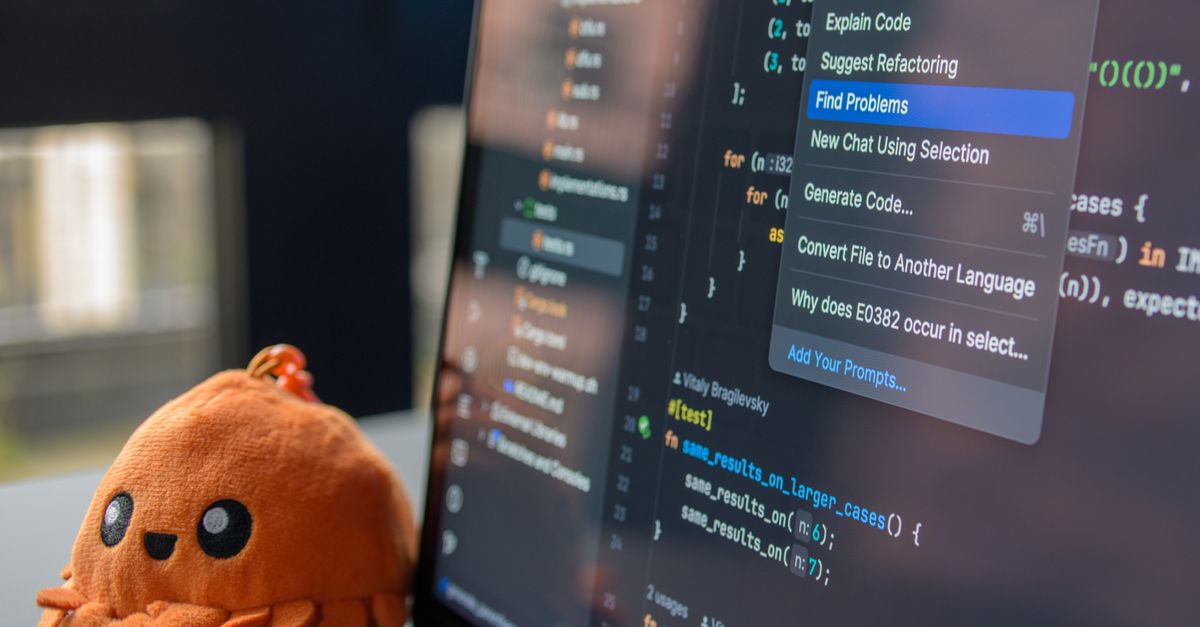
Photo by Daniil Komov on Pexels
Grok Bot enters the enterprise AI arena
SpaceXAI rolled out Grok Bot as an always‑on AI agent that can sign into a user’s online accounts and complete multi‑step workplace tasks. The service runs in a shared cloud‑based computer environment and returns only when the assigned work finishes or when a human approval is needed. By handling logins, tool interactions, and web navigation, Grok Bot aims to offload routine chores that normally require a person to be present in the UI. The launch puts SpaceXAI in direct competition with OpenAI’s ChatGPT Work, Anthropic’s Claude Cowork, and Microsoft’s business‑focused AI extensions. All of those services expose an agent‑style interface, but Grok Bot distinguishes itself by persisting in the background and maintaining its own session state across tasks. The product description does not include pricing, performance benchmarks, or a rollout timeline, leaving enterprises to test the service on a case‑by‑case basis. Critics note that granting an AI unrestricted sign‑in access raises immediate security questions. The Verge article flags the requirement to “be fine with letting Grok sign into your online accounts,” a concession that may deter organizations with strict compliance regimes. Without third‑party audits or transparent credential‑handling policies, the trade‑off between convenience and risk remains unresolved.
Open‑source alternatives echo the same ambition
The open‑source community has responded with frameworks that mimic the agent model. Barongsai, a Python‑based AI agent framework, offers an async‑first design, enterprise middleware, and a modular architecture that can be deployed with Docker alongside Open WebUI, PostgreSQL, and Redis. Its documentation describes a “Perplexity‑style search chatbot” as the flagship application and provides an EchoAgent template for developers building new agents. Barongsai’s core orchestration layer is described as solid, but the project admits that production infrastructure is still in progress. The repository lists pending items and invites contributors to open pull requests, indicating that the framework is usable but not yet battle‑tested at scale. Unlike Grok Bot, Barongsai does not claim to sign into external accounts; instead, it focuses on web‑research and cited synthesis within a self‑hosted stack. The existence of Barongsai demonstrates that the agent concept is not confined to a single vendor. By exposing the underlying plumbing—async I/O, middleware patterns, and pluggable sub‑agents—open‑source projects give engineers the ability to audit security, customize integrations, and avoid vendor lock‑in. The trade‑off is a higher operational burden compared with a managed service like Grok Bot.
From code assistants to autonomous agents: xAI’s Grok Build
xAI announced an early‑beta version of Grok Build, a terminal‑based coding agent that moves beyond the classic “ask‑question‑get‑answer” model. The tool can plan, execute, review, and operate directly against a code repository. In plan mode, the agent proposes a step‑by‑step plan, which the developer can approve, comment on, or rewrite before any changes are applied. Grok Build surfaces changes as clean diffs after plan approval, giving developers a visible audit trail. The release notes stress “supervised autonomy”: the agent performs repetitive work but leaves meaningful modifications behind a human approval gate. The product integrates with AGENTS.md, plugins, hooks, skills, and MCP servers, positioning itself as a extensible platform rather than a single‑purpose code generator. The shift to a terminal interface matters because professional developers already run builds, tests, and deployments from the command line. By embedding the agent in the same environment, Grok Build reduces context switching and can invoke existing tooling without additional UI layers. However, the early‑beta label signals that stability, error handling, and integration depth are still being evaluated.
Technical and security trade‑offs of always‑on AI teammates
Both managed services and open‑source agents rely on sub‑agents that can perform actions outside the language model’s core. The Grok CLI project, for example, adds a built‑in computer sub‑agent for macOS desktop automation and supports headless operation via a batch API. It can ingest voice notes from Telegram, transcribe them with the Grok Speech‑to‑Text endpoint, and execute shell commands defined in custom sub‑agents. These capabilities broaden what an AI can do, but they also expand the attack surface. Any sub‑agent that can invoke system commands or manipulate files must be sandboxed, and the surrounding infrastructure must enforce least‑privilege credentials. The Grok CLI disclaimer makes clear that the project is community‑built and not endorsed by xAI, underscoring the lack of official security guarantees. Enterprises weighing Grok Bot against self‑hosted options must balance convenience against auditability. A managed service can hide credential handling behind proprietary APIs, simplifying deployment but obscuring the exact flow of secrets. An open‑source stack like Barongsai or Grok CLI lets teams inspect network traffic, enforce custom authentication, and lock down sub‑agents, but it demands ongoing maintenance and expertise. The decision ultimately hinges on risk tolerance, regulatory constraints, and the organization’s capacity to manage complex AI pipelines.
What to watch
Watch for the first enterprise‑level security audit of Grok Bot, which SpaceXAI has promised to release but not yet delivered. Track the migration of Barongsai from a developer sandbox to a production‑grade deployment, as indicated by upcoming pull‑request milestones. Monitor xAI’s rollout of Grok Build beyond early beta, especially any public benchmark of plan‑mode success rates and diff acceptance ratios. Finally, keep an eye on the adoption of Grok CLI’s computer sub‑agent in macOS automation workflows, as community feedback will reveal whether the convenience outweighs the added surface for privilege escalation.
Related Articles

Anthropic Shows AI Agents Can Clash, Raising Safety Gaps
Anthropic’s multi‑agent test reveals unexpected conflict and coordination, prompting fresh scrutiny of safety frameworks as new agent tools hit the market.

Meta’s Smart Glasses Spark Privacy Outcry as Workers in Nairobi
Meta’s new AI glasses raise alarm over covert data collection and reveal a hidden workforce in Kenya, while open‑source tools aim to curb the privacy fallout.
Public Domain Surge: Free Images and Apollo Code Now Open
A new image archive and NASA's Apollo 11 code release illustrate how public domain resources are reshaping developer workflows and creative projects.