

Pentagon loan, biogas reactors

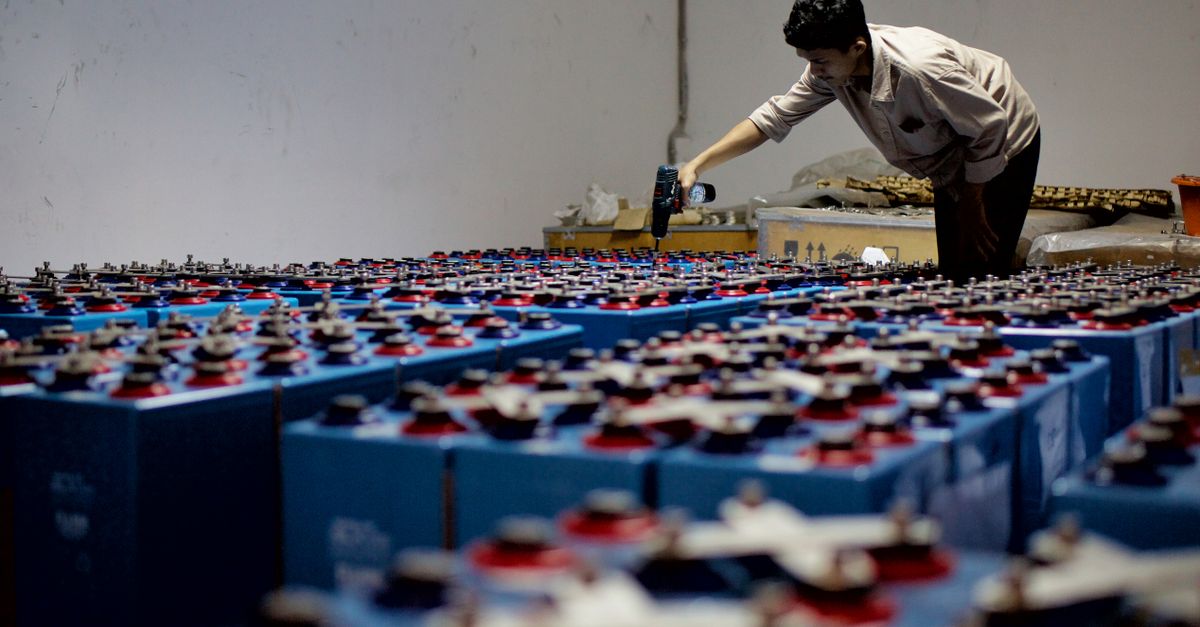
Photo by Heru Dharma on Pexels
Pentagon cash fuels Sila’s scaling push
Sila secured a $1.4 billion loan from the U.S. Department of Defense to crank out silicon‑rich anodes at its Washington‑state plant. The money arrives as the Pentagon tightens its demand for higher‑energy batteries to power everything from unmanned vehicles to forward operating bases.
The loan ties Sila’s production line directly to military procurement schedules. In practice, the DoD will likely place large orders once the factory reaches volume, forcing Sila to prove that its silicon‑graphite blend can survive harsh field conditions. The deal also signals that the government sees private‑sector silicon chemistry as a faster path to performance than traditional graphite.
Biogas‑to‑chemicals: Rise Reforming’s container labs
Rise Reforming, a YC S26 graduate, turned a shipping container into a plug‑and‑play biogas reactor at a Chicago wastewater plant. The pilot unit now sits on‑site, converting raw biogas into dimethyl ether (DME) and other green chemicals without moving the gas to a central refinery.
Because the system fits inside a standard container, installation sidesteps the permitting delays that plague large‑scale gas plants. The company already signed a binding supply agreement with a biogas producer and a conditional DME offtake for its first commercial unit. Those contracts give Rise a revenue pipeline while it scales the modular stack.
Rise’s process claims price parity with petrochemical DME and claims to undercut the cheapest green methanol and dimethyl carbonate on the market. If the chemistry holds at scale, it could shave years off the timeline for decarbonizing sectors that rely on liquid fuels.
Self‑charging cells blur generation and storage
Engineers at Georgia Tech demonstrated a coin‑type Li‑ion cell that charges itself when stressed. They replaced the usual polyethylene separator with a PVDF film that generates a piezoelectric charge under compression.
When the battery sat under a shoe and the wearer walked at 2.3 Hz, the cell voltage rose from 327 mV to 395 mV in four minutes—a 65 mV jump that dwarfs the 10 mV gain seen when the generator and battery are split into separate units. The experiment proves that mechanical energy can flow directly into chemical storage, skipping the intermediate electric step.
After the stress stops, the piezoelectric field collapses and Li ions drift back, delivering about 1 µA of current. The output is tiny, but the principle could power low‑energy wearables without a charger. The researchers stress that the design is meant for “small, portable electronics,” not grid‑scale storage.
Consumer battery market: myths, control, and real ROI
Ian Murray of UK‑based Powerflow warned that sales scripts aimed at baby‑boomers often inflate savings. One homeowner was told a 2.0 kWh Sundial battery would save £1,000 a year, yet his solar array produces only £600 annually. Because the homeowner consumes roughly half of that output, only £300 could ever be stored, making the promised £1,000 figure impossible.
Murray says the decisive factor is the control system’s speed. Accurate, sub‑second measurement of the export power value determines whether the battery captures excess solar or needlessly dumps energy back to the grid. Powerflow’s patented F‑POINT tech samples the home’s balance twice per second, a rate the team calls “faster than a heartbeat.” Faster sampling reduces waste and improves the round‑trip efficiency that most marketing materials ignore.
The industry also suffers from “trigger value” limits. Some units cannot modulate output below a fixed threshold, forcing them to run at full power even when only a fraction of that is needed. The result is higher wear and lower overall efficiency, a nuance that rarely makes it into sales pitches.
What to watch
Track the DoD’s next procurement milestone for Sila; a contract award will reveal whether the silicon anodes meet the durability specs the military requires. Follow Rise Reforming’s commercial rollout schedule, especially the first off‑take shipment of DME, to gauge whether container reactors can compete with traditional gas‑to‑liquid plants. Finally, monitor regulatory guidance on home‑energy measurement accuracy, as tighter standards could push manufacturers toward faster control loops like Powerflow’s F‑POINT. The convergence of funding, modular chemistry, and smarter control will dictate which battery‑related startups survive the next wave of clean‑energy investment.
Related Articles

Listen Labs Walks From $1.5B Deal as AI Governance Tensions Rise
Listen Labs drops a $1.5 billion Series C as AI startups face funding shifts, board changes, and mounting regulatory pressure.

AI and Infrastructure Startups Land Billion-Dollar Rounds
Tech firms XDOF, Krafton, Crusoe, and Anthropic secure massive funding, reshaping data, gaming, and AI markets.
Gamma snaps up Lica as robot funding hits new highs
Gamma acquires design startup Lica while self-driving truck firm Gatik secures $200M, underscoring a surge in robotics financing and strategic consolidation.