

GuliKit launches $49.99 ES Max with anti‑drift thumbsticks

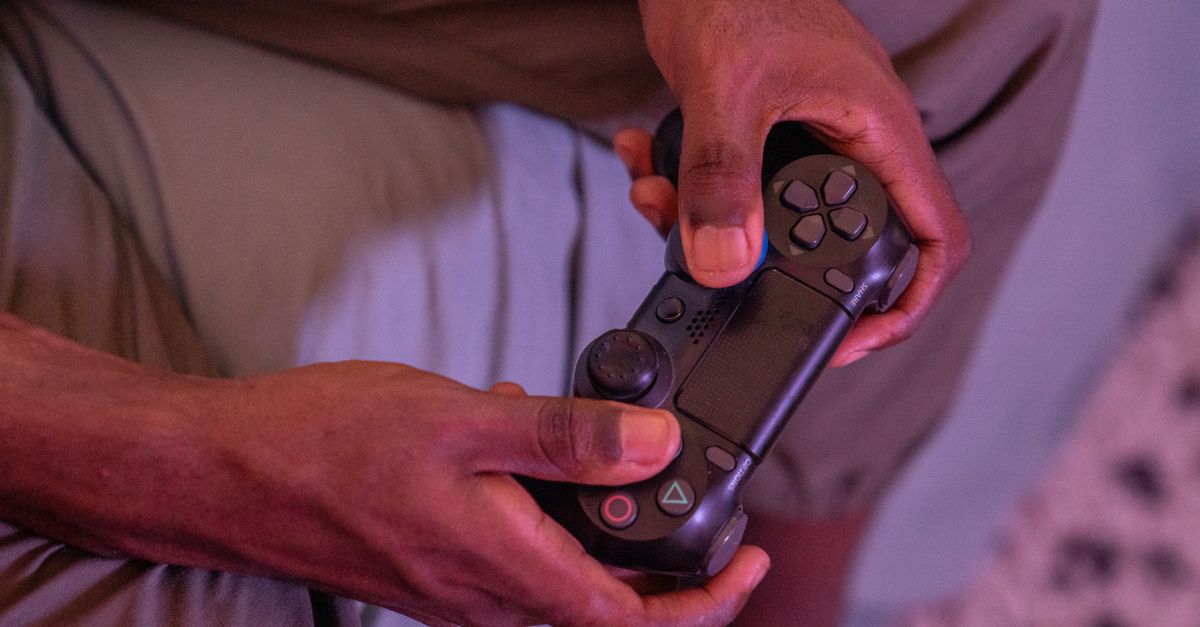
Photo by Kevin Malik on Pexels
GuliKit ES Max hits the market
GuliKit released the ES Max, a $49.99 wireless controller for Nintendo Switch that claims to eliminate stick drift. The device arrives as the company’s first controller to ship with an upgraded version of the tunneling magnetoresistance (TMR) thumbsticks that debuted in the budget‑friendly ES Pro nearly a year ago. The ES Max costs $20 more than the $29.99 ES Pro, but it remains cheaper than Nintendo’s Switch 2 Pro Controller, which sits at a higher price tier. GuliKit markets the price gap as a value proposition for players who want a drift‑free experience without paying a premium.
The new controller retains the same form factor as the ES Pro, but it adds a slightly different measurement approach for the thumbsticks. GuliKit says the revised TMR sensors capture stick movement in a way that improves performance, reducing the jitter that can trigger false inputs. The company does not claim a complete redesign of the technology; instead, it emphasizes incremental engineering that translates into smoother analog response. The ES Max is already available for purchase online, and early buyers report that the controller pairs with the Switch via Bluetooth without the latency issues that have plagued some third‑party wireless sticks.
How the tweaked TMR thumbsticks work
Tunneling magnetoresistance sensors detect changes in magnetic fields as a thumbstick pivots, converting those fluctuations into digital position data. In the original ES Pro, the TMR chip reported raw magnetic flux directly to the controller’s microcontroller, which then mapped the values to an on‑screen cursor. GuliKit’s update modifies the read‑out algorithm, shifting how the sensor data is interpreted before it reaches the MCU. By smoothing the transition between magnetic states, the controller reduces the micro‑spikes that can be misread as drift.
The practical effect is a more consistent analog curve across the full range of motion. Testers have noted that the ES Max feels tighter around the center position, with less deadzone than many native Switch sticks. Because drift often originates from microscopic wear on the sensor’s magnetic layers, the new measurement method can mask early wear patterns, extending the usable life of the stick. The change does not involve new hardware components; it is a firmware‑level adjustment that GuliKit rolled out across all ES Max units.
Stick drift remains a pain point for Switch owners
Since the Switch launched, users have complained that the left analog stick on the official Joy‑Con and Pro controllers can develop drift after months of use. The issue stems from the cheap Hall‑effect sensors Nintendo employs, which lose calibration as dust and wear accumulate. Drift forces players to compensate with thumb adjustments or to replace the controller entirely, a cost that can add up for families with multiple units.
Third‑party makers have tried to address the problem with alternative sensor technologies, but few have offered a solution that balances price and reliability. GuliKit’s TMR approach is notable because it leverages a magnetic sensor that is less susceptible to mechanical wear. While the ES Max does not guarantee a drift‑free lifespan, its revised sensor handling gives early adopters a measurable improvement over the standard Switch sticks. For competitive gamers, even a modest reduction in drift can translate to more precise inputs in fast‑paced titles.
Pricing and feature comparison with rivals
At $49.99, the ES Max sits between the $29.99 ES Pro and Nintendo’s higher‑priced Switch 2 Pro Controller. The price differential reflects the added firmware work on the thumbsticks, but it also positions GuliKit as a mid‑range alternative for players who refuse to pay Nintendo’s premium. The controller retains wireless connectivity, a standard layout of buttons, and a battery life comparable to other third‑party Switch sticks.
Because the ES Max does not introduce a brand‑new sensor architecture, its manufacturing cost remains close to that of the ES Pro. The modest price increase therefore appears to be a direct pass‑through of the development effort required to refine the TMR read‑out. Competitors such as PowerA and 8BitDo continue to sell controllers in the $40‑$60 range, but most rely on conventional Hall‑effect sticks. GuliKit’s claim of reduced drift gives it a technical edge that could sway buyers who have experienced the issue on first‑party hardware.
What to watch
The next few months will reveal whether the ES Max gains traction among the Switch community. Key signals include user‑reported drift rates on forums, third‑party benchmark videos, and any response from Nintendo regarding third‑party sensor standards. If GuliKit can demonstrate a statistically lower drift incidence, larger console manufacturers may adopt similar TMR tweaks in future revisions. Watch for firmware updates that could further refine the sensor algorithm, and keep an eye on price movements as competitors react to the ES Max’s market entry.
Updates
- 2026-08-12 — ‘The Worst I’ve Ever Seen’: Cargo Thefts Have Turned Violent in Pursuit of AI Hardware (source)
Related Articles
New hardware quirks ring note‑taker AI feeder retro upgrades
A ring‑sized note taker, AI‑driven cat feeder, free retro‑handheld upgrades, E Ink tablets, and Android UI tweaks illustrate niche hardware shifts.

Samsung pushes Ultra hardware while hiding data bloatware
Samsung rolls out a smaller Ultra phone and a 1,100 Hz gaming monitor, even as privacy‑busting AppCloud bloatware haunts its mid‑range devices in the MENA region.
Devolver's Mascot Platformer Challenges GTA 6 Release Day
Devolver Digital drops a mascot platformer on GTA 6's launch day, while ASUS, Xbox and IKEA roll out new hardware and furniture for gamers.