

AUO Unveils 800Hz 24-Inch Monitor, Gaming Tech Shakes Up

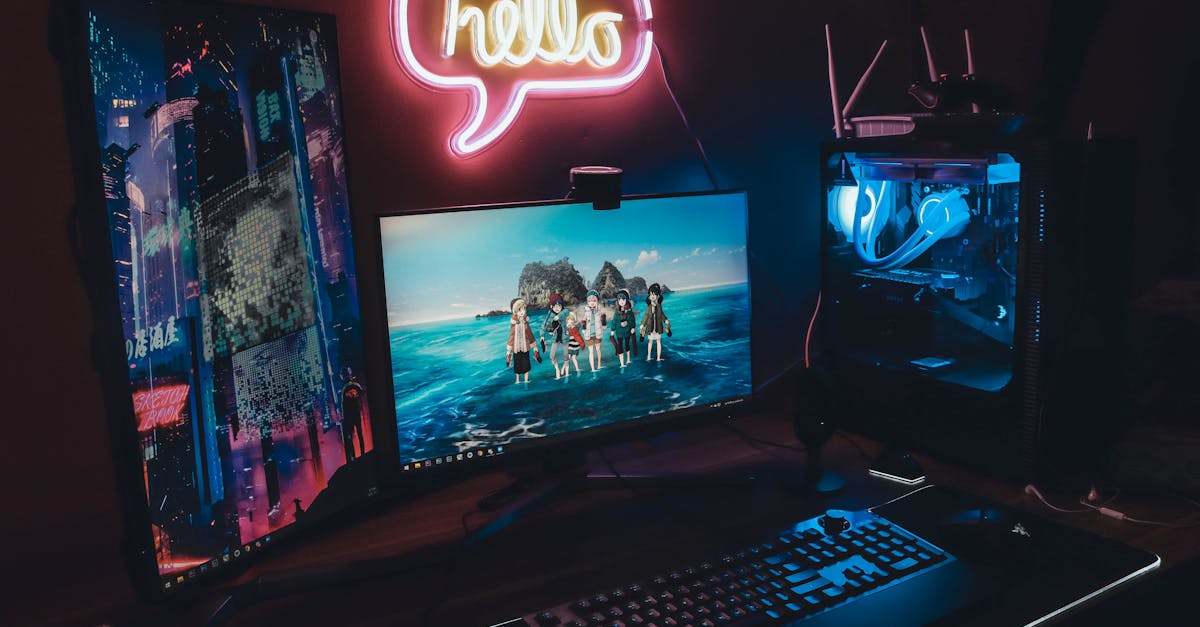
AUO Launches 800Hz Monitor in 24-Inch Form
AUO announced a 24-inch FHD monitor with an 800Hz refresh rate at Touch Taiwan 2026, claiming it as the first of its kind. The panel targets competitive gamers needing low latency and rapid frame updates. While not the fastest (Antgamer’s 1000Hz models loom), AUO’s version balances resolution and speed on a standard 1080p panel. The company also previewed dual-mode displays: 32-inch 4K@360Hz and 27-inch 5K@180Hz, but availability and pricing remain unannounced.
The 800Hz model joins a crowded high-refresh-rate market. HKC and AOC recently pushed 750Hz and 1000Hz limits, but AUO’s 24-inch size offers a compact option for esports and streaming. No date for mass production yet, but the tech is already drawing comparisons to NVIDIA’s Reflex SDK, which optimizes competitive latency.
Microsoft and NVIDIA Updates Turn Gamers Into Luddites
One player’s Windows 11 KB5077181 update broke GPU compatibility, while NVIDIA’s 595.71 driver caused overclocking failures. These incidents are part of a pattern: in 2026 alone, Microsoft pushed three emergency patches, and NVIDIA rolled out four driver versions with known flaws. The result? Gamers disabling automatic updates to avoid “breaking” stable systems.
The erosion of trust stems from AI’s growing role in code generation. Microsoft claims 30% of its updates are AI-written, but users see only the fallout. NVIDIA’s drivers, meanwhile, have added so many features (DLSS, ray tracing, etc.) that stability is a collateral casualty. For now, manual patching is the norm, even as security risks rise.
Xbox Leadership Shakeup Signals Strategic Reboot
Phil Spencer’s retirement from Xbox (effective 2026) and Sarah Bond’s exit mark a pivotal transition. Asha Sharma, Microsoft’s CoreAI Product head, becomes Gaming CEO, pledging to avoid “soulless AI slop” in content. Matt Booty shifts to Chief Content Officer, a role that may prioritize third-party partnerships over Microsoft’s first-party struggles.
The overhaul arrives as Xbox’s 2025 performance floundered. Forza Horizon 6 and Fable offered brief hope, but 2026’s roadmap remains murky. With Sharma’s CoreAI background, expect more hybrid-genre experiments—but also tighter integration of AI tools in game development, a double-edged sword for creators and players alike.
New Games and Playtests Test Genre Boundaries
The creator of Citizen Sleeper 2 announced two projects: a TTRPG and a new video game, both leaning into narrative depth. Meanwhile, Horizon Hunters Gathering opens a PS5/PC playtest on May 22, expanding the Horizon universe into multiplayer. The TTRPG’s success will hinge on its ability to replicate the emotional weight of its predecessor, while Horizon Hunters must balance open-world exploration with shared-server chaos.
Sony’s recent remaster of Ico and Shadow of the Colossus in 1080p/30fps highlights a trend: legacy titles get modern makeovers to appeal to new audiences. But as one review noted, these games are best understood as artifacts of gaming’s history—beautiful, but niche. Their $40 bundle price tags them as collector’s items, not casual picks.
What to Watch
AUO’s 800Hz monitor needs a 2027 launch date and real-world latency tests. Xbox’s new leadership will face its first major push with Fable’s 2026 sequel and potential Halo reboots. For Microsoft-NVIDIA trust to rebuild, both must deliver a clean 2027 update cycle—no small feat given AI’s role in their code pipelines.
Updates
- 2026-09-15 — Former TikTok execs built an app that uses AI to teach you how to pose for a photo (source)
- 2026-09-03 — Google Home update fixes alarms, improves media & smart home voice controls (source)
- 2026-08-25 — Android is getting its own weird dots to cure car sickness (source)
- 2026-08-19 — Flock is testing a new AI tool that tracks and identifies people based on their driving habits (source)
- 2026-05-28 — Spotify adds playlist folders, bulk editing and background downloads (source)
- 2026-05-07 — New Pride wallpapers, $599 Mac mini goes away, Apple earnings call tidbits (source)
Related Articles
CarPlay chatbots, FaceTime on PC, Xbox mode, TV standby explained
CarPlay now runs third‑party chatbots, FaceTime can be joined from Android and Windows, Xbox mode reshapes Windows gaming, and smart TV standby does work.
Devolver's Mascot Platformer Challenges GTA 6 Release Day
Devolver Digital drops a mascot platformer on GTA 6's launch day, while ASUS, Xbox and IKEA roll out new hardware and furniture for gamers.
Microsoft hikes Xbox controller price as new model drops Chatpad
Microsoft raises Xbox controller cost to $64.99, removes the Chatpad port, and pushes its $99.99 Adaptive Controller amid broader price hikes and Apple’s new sales channel.